


ContiLifeCycle: An Integrated Solutions Provider Approach
Continental takes a holistic approach to reducing truck tire costs with our ContiLifeCycle solution. We offer a cradle-to grave approach to tire management that prolongs the life of your bus and truck tires at every stage. The ContiLifeCycle process begins with a new tire and continues with digital tire monitoring and our premium retreading process based upon our durable casings.


NEW TIRES
Our premium commercial tires meet the needs of different vehicles, road conditions, customer requirements and driver behavior.

RETREADS
Continental offers a cradle-to-grave approach to tire management that prolongs the life of your bus and truck tires at every stage.

3G CASING
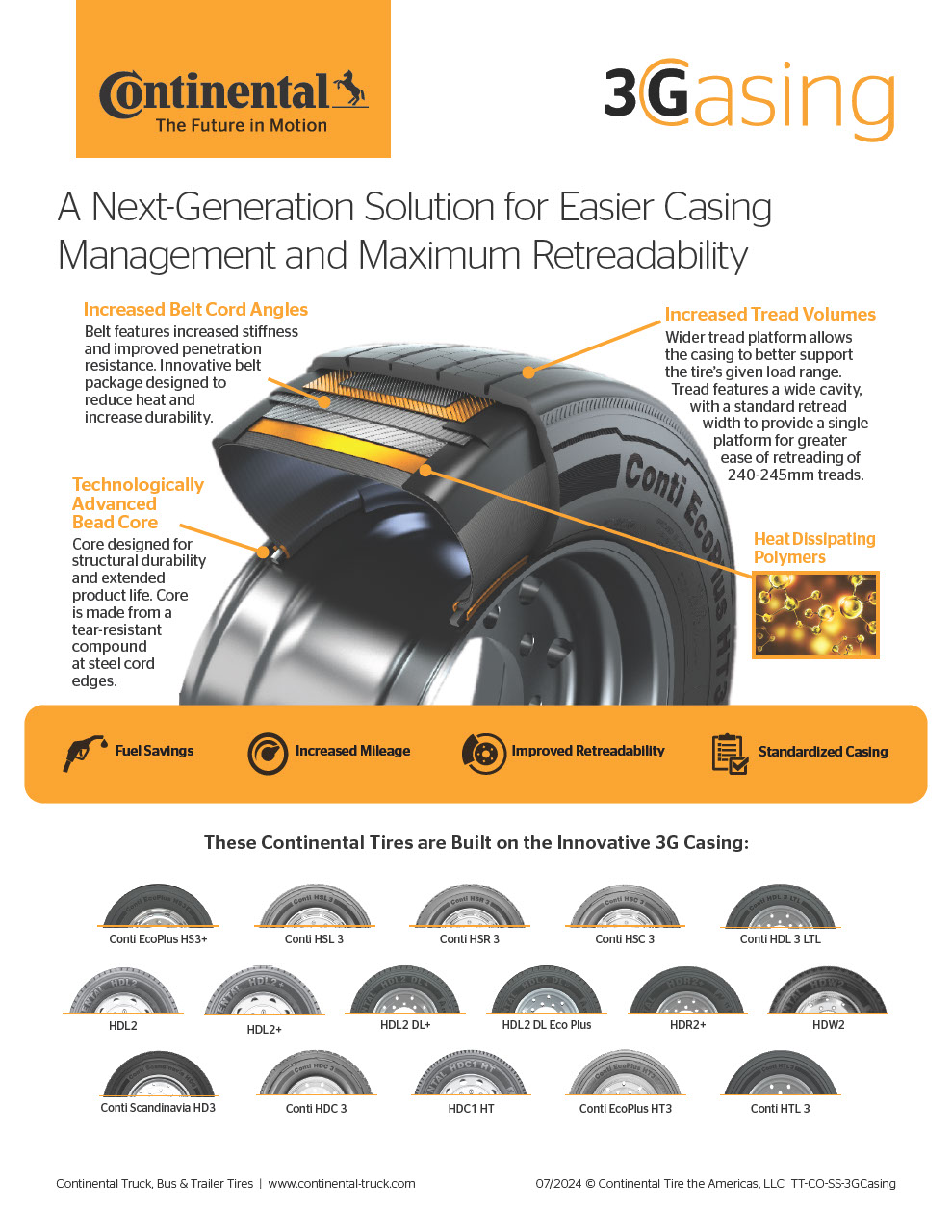
Continental’s innovative 3G Casing offers standardized construction across all axle positions to simplify your casing management program.
ContiLifeCycle Retread Process
Technology-Driven for High Quality Retreading
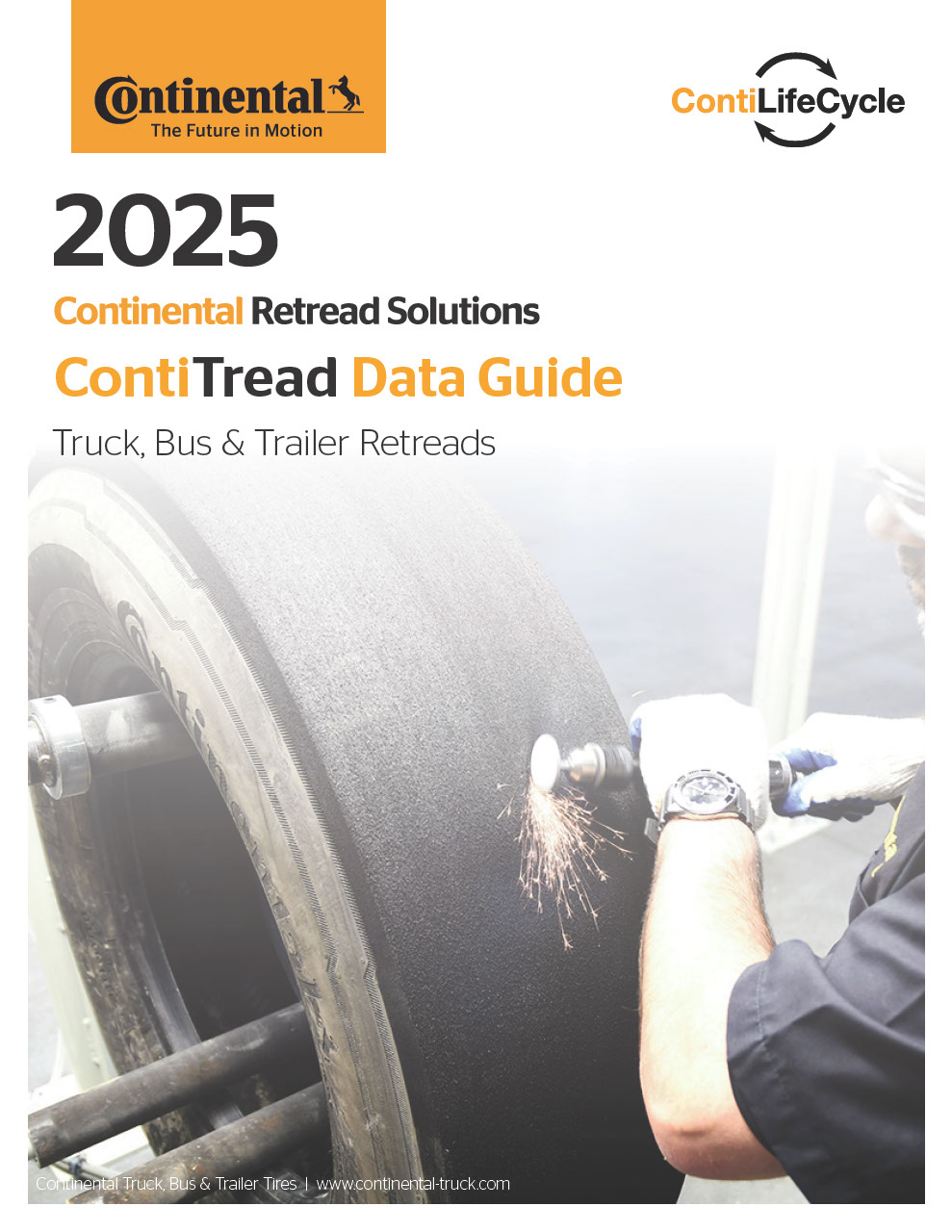
Our ContiTread retread tires are crafted with precision using our advanced cold retreading method with pre-cured and vulcanized tire treads and our audited 10-step ContiLifeCycle retread process.
Only Grade A, carefully inspected casings are used during this process. Each retread undergoes rigorous quality control, from the initial inspection and repairs to tread application, curing, and final inspection.
Protecting your tire casing for retreading

The casing of a truck tire or bus tire represents up to 80 percent of its value. Protect your casing to ensure it is suitable for retreading and discover your Lowest Overall Driving Cost. Follow these simple tips to maximize the life of your tire casing and help ensure suitability for a bus or truck tire retread.
- Maintain proper inflation pressure – Monitoring tire pressure and temperature is the key to getting the most from your tire. Proper inflation helps ensure maximum removal miles for the new tire, protects the casing from damaging heat build-up caused by excessive deflection, and improves fuel efficiency.
- Monitor for penetrations – In addition to examining your tire pressure, it is also vital to inspect tires for nails, stones, and other invasive materials that can damage the casing. Continental tires are designed with an angled belt package to help reduce penetrations, and many tread patterns feature stone ejection technology to reduce stone drilling.
- Stay within the tire load range – Overloading a tire causes its internal components, such as the belt package, to deteriorate, meaning the casing may not have the structural integrity required for retreading.
- Establish pull points – By U.S. government standards, fleets must pull steer tires at 4/32nds remaining tread depth, and drive and trailer tires at 2/32nds. Your Continental Retread Solutions Partner can provide precise recommendations for your particular fleet.
- Use the right tire for your application – Using a tire that is not designed for your specific vocation can cause irregular wear or poor performance, and could even jeopardize the health of the casing. Continental offers new tires designed for maximum performance in each application, ensuring access to the right tires for your needs.