



Sustainability
Our Ambition

Our ambition is to become the most progressive tire manufacturer in terms of environmental and social responsibility
Taking responsibility for our products, people and the environment is central to everything we do. We believe that tomorrow's mobility will be cleaner and more sustainable We are committed to driving this change.
Innovation is our greatest strength. We develop technologies and solutions aimed at lowering environmental impact along our entire value chain – from sourcing renewable and recycled materials to recycling end-of-life tires.
All materials used in our tires, whether conventional, renewable or recycled, undergo extensive testing to ensure safety, performance and efficiency.
Through all the progress we are making, one thing will never change: the safety of our products will always remain our top priority.
Responsibility Along our Entire Value Chain




Continental Tires Sustainability Ambitions
We continuously improve the sustainability of our products and processes in line with our global strategy.
Key Ambitions
- Sourcing natural rubber responsibly
- Increasing the share of renewable and recycled materials in our tires
- Reducing our environmental impact on energy, water and waste
- Recovering and recycling tire materials at end-of-life through advanced technologies
- Achieving low-carbon tire production
- Continuously improving the carbon footprint and sustainability of our supply chains
Guidelines, Policies and Ratings
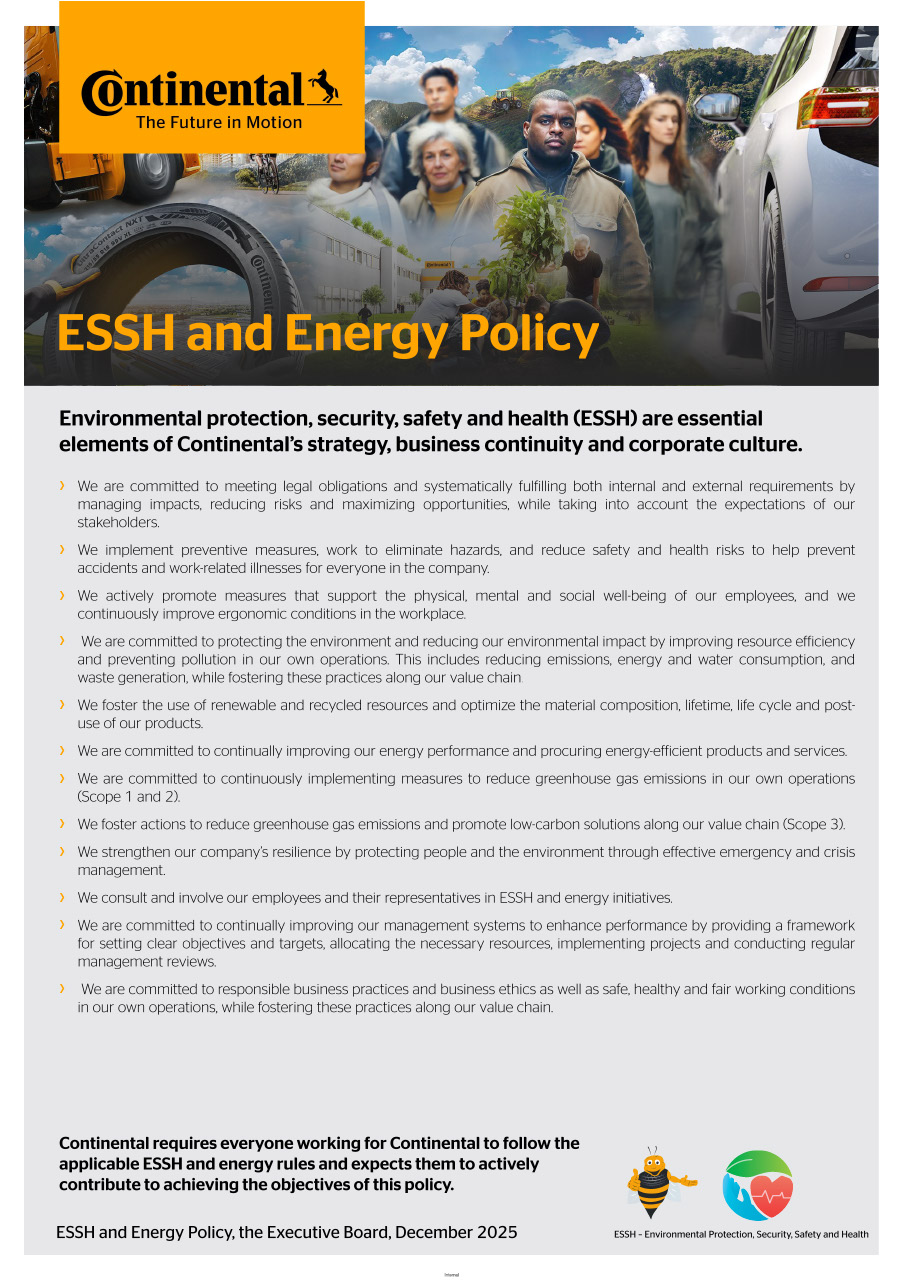
Our Sustainability Report covers Continental management approaches on environmental, social, and governance sustainability matters. The sustainability report is now part of the annual report.
Learn more here.
In its Sustainable Natural Rubber Sourcing Policy, Continental sets out clear responsibilities and obligations for itself and all suppliers and service providers along the entire value chain for natural rubber. Its sustainable sourcing policy is intended to minimize risks in connection with the environment, human rights, and society.
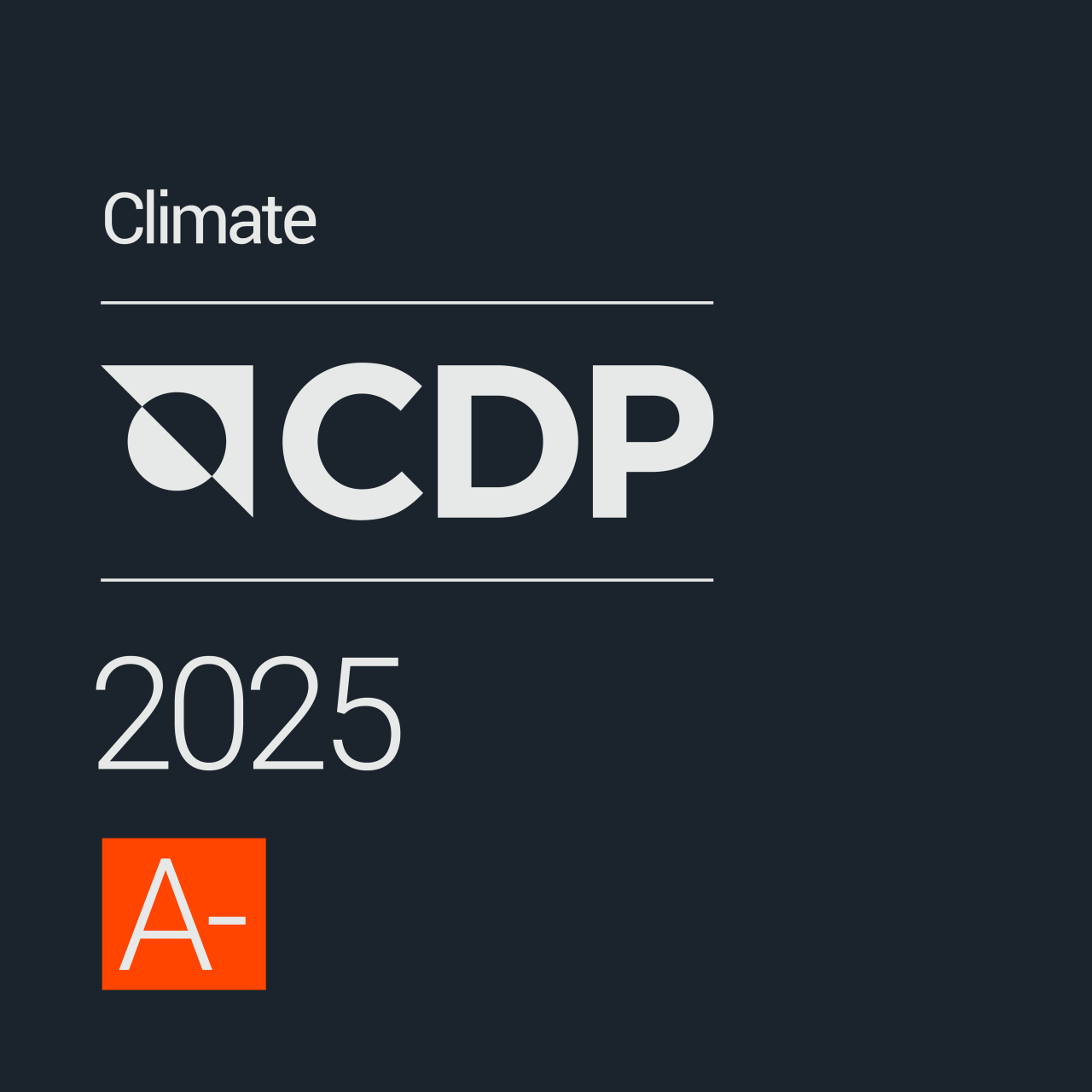
Climate change mitigation: A- / Leadership Status
Water management: B
Supply chain: A / Leadership Status
Scoring: A to D- (A= Leadership score / D- or D= Disclosure)
Latest update: December 2025
CDP is a non-profit organization that runs the global disclosure system for investors, companies, cities, states and regions to manage their environmental impacts. Each year, CDP takes the information supplied in its annual reporting process and scores companies and cities based on their journey through disclosure and towards environmental leadership. Through an independent scoring methodology, it measures corporate and city progress on climate change, forests and water security.

Definitions established by the Tire Industry Project (TIP)
| Definition | A renewable material is defined as a biobased material that returns to its previous stock levels by natural growth or replenishment processes at a rate in line with use cycles. Therefore, it is replenished/regrown at a rate equal to or faster than harvested/extracted. |
| Examples Continental Tires | natural rubber from rubber trees or oils from plants |
| Definition | A recycled material is defined as a material that has been reprocessed from a recovered (or reclaimed) discarded material by means of a manufacturing process and made into a final product or a component for incorporation into a product. A distinction is made between post-consumer and pre-consumer recycled materials:
1. Post-consumer recycled material: 2. Pre-consumer (post-industrial) recycled material:
The combined proportion of pre-consumer and post-consumer recycled material, by mass, in a product or packaging is defined as recycled content for the tire industry. |
| Examples Continental Tires | recycled steel, silica from the ashes of rice husks or polyester from recycled PET bottles
|
1 Resource derived from biomass excluding any materials embedded in geological formations or transformed to fossilized material. Examples include trees, crops, grasses, algae, microorganisms, animals and wastes of biological origin (E.g. manure). Source: ISO 59004:2024
2 Excluding energy recovery