Post-Use
Read more




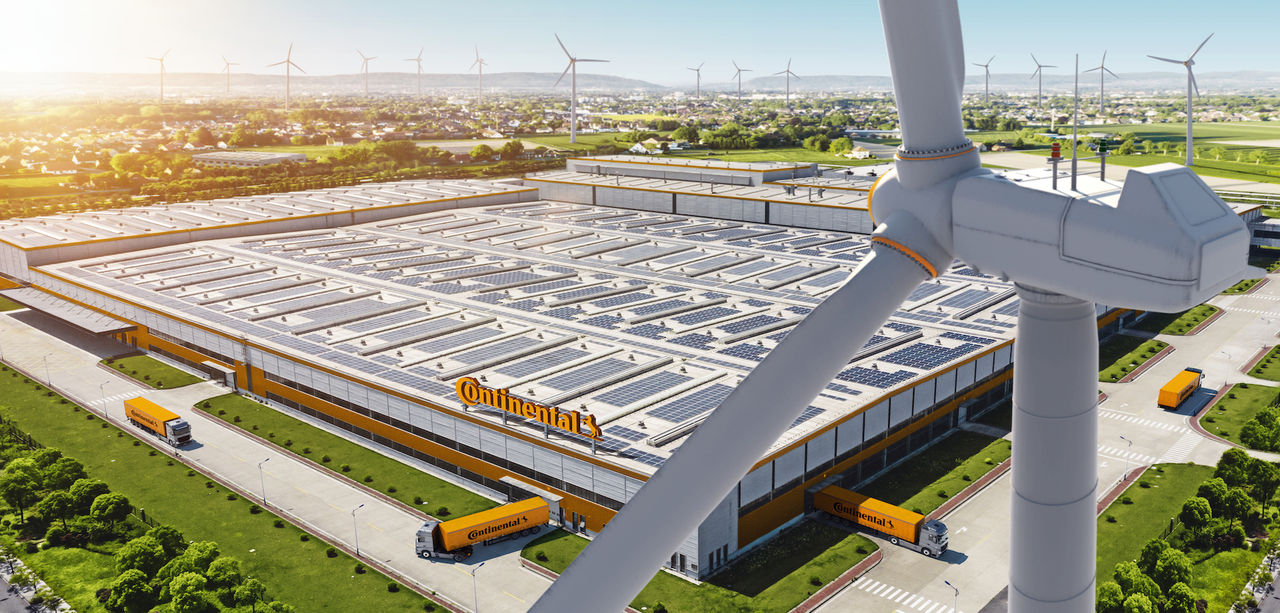
To make tire production even more environmentally friendly in the future, Continental is investing in energy-efficient, resource-efficient and low-emission production processes.
We are working systematically toward:
Energy plays a vital role in tire manufacturing – for example, in generating steam for tire vulcanization. That’s why we are increasingly producing renewable energy ourselves by expanding photovoltaic systems at our production plants worldwide, for example.
Since late 2020, all the electricity purchased for our tire production facilities worldwide has been carbon-neutral and derived from renewable sources. To verify this, we secure energy attribute certificates in accordance with the criteria of the RE100 initiative.
At the same time, we have implemented a wide range of measures to make our operations even more energy efficient. In 2025, we reduced the greenhouse gas intensity of our production by more than ten percent compared to the previous year and by around 70 percent compared to 2019. Especially by switching to lower-emission energy sources, Continental has cut around 180,000 metric tons of CO₂ from tire production over the past four years.
Since January 2026, all plants have adopted alternative energy sources to generate the steam required for manufacturing tires and heating. These alternatives include biomass, biogas, electricity from renewable sources, and alternative fuels such as liquefied petroleum gas (LPG) and natural gas in order to ensure a constant energy supply. Coal and heavy fuel oil have been fully phased out across all tire production sites.
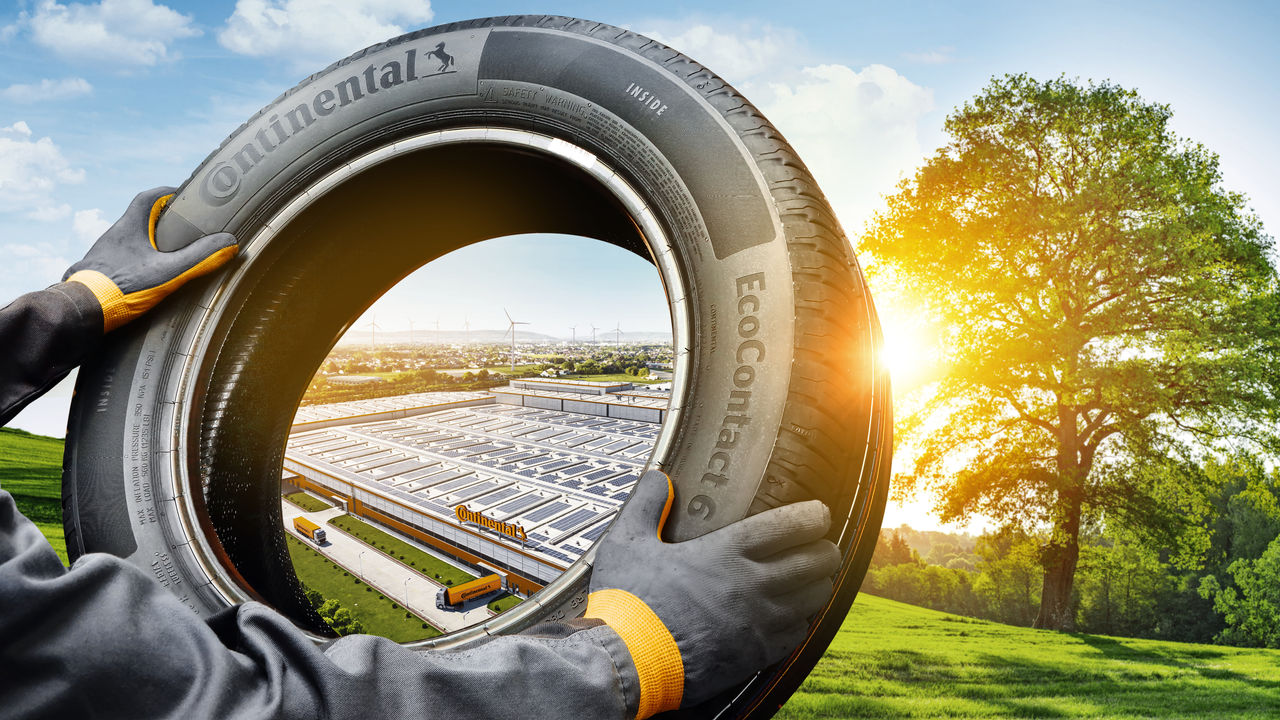
Water is an essential resource in tire manufacturing – used for heating, cooling, and cleaning. That’s why we focus on technologies and processes that reduce consumption and increase reuse. From 2020 to 2024, we already reduced our water withdrawal per ton of product by more than 10 percent.
This progress is supported by risk assessments and water audits, especially in regions facing higher water stress. Advanced filtration and membrane technologies – some with 3D-printed pores – already enable the reuse of 90 percent of treated wastewater.
We also optimize our production processes for efficiency: cooling water and steam are reused multiple times, online leakage detection systems prevent unnecessary losses, and steam condensate is recovered. Switching to reverse osmosis and replacing inefficient filters further improves water treatment in our plants.
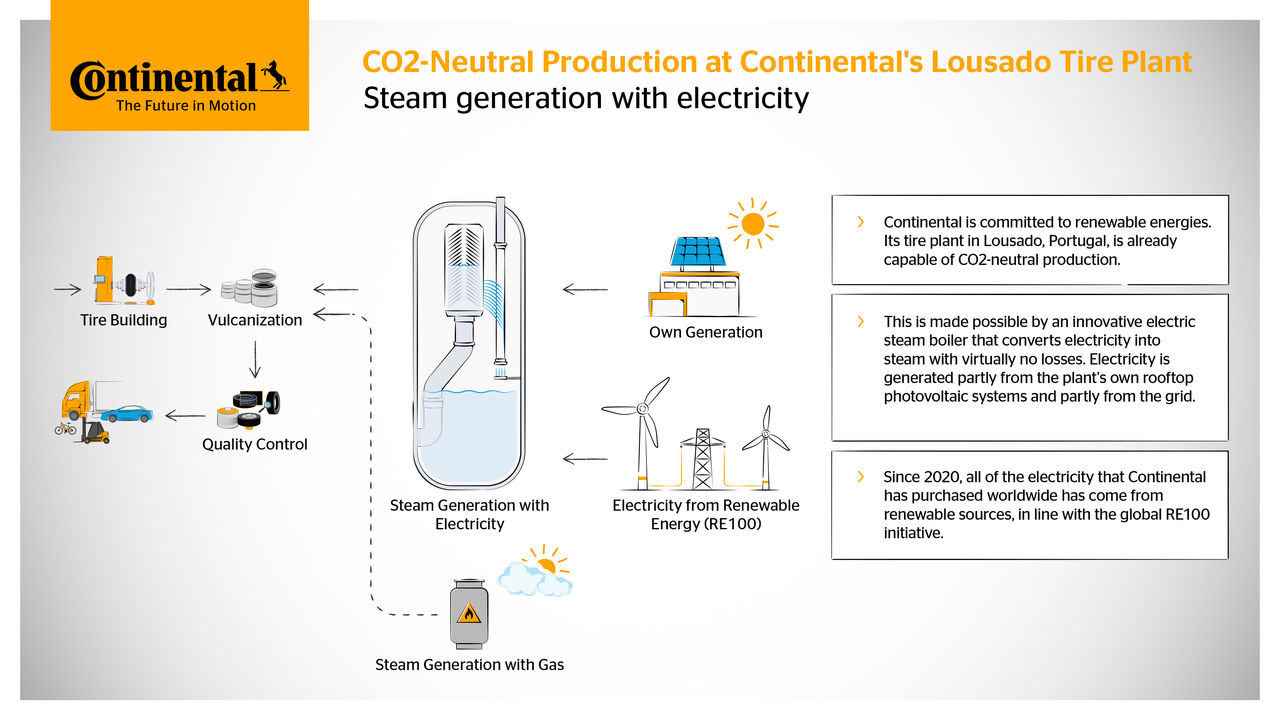
In Lousado, we are showing that even very large tire plants can produce CO2-neutrally.
Since 2024, we have been able to produce tires in a CO2-neutral manner at our tire plant in Lousado, Portugal. This is made possible by the generation of steam with the help of a boiler that is operated purely electrically. We use both self-generated solar power and renewable electricity from the power grid to generate steam.

"In Lousado, we are showing that even very large tire plants can produce CO2-neutrally. The availability of renewable energy sources at competitive prices is crucial for this," explained Dr. Bernhard Trilken, Head of Production and Logistics at Continental Tires.
He added: "We are preparing our plants to be able to use as much renewable energy as possible. The commissioning of our electric steam boiler in Lousado is the beginning of an exciting learning curve."
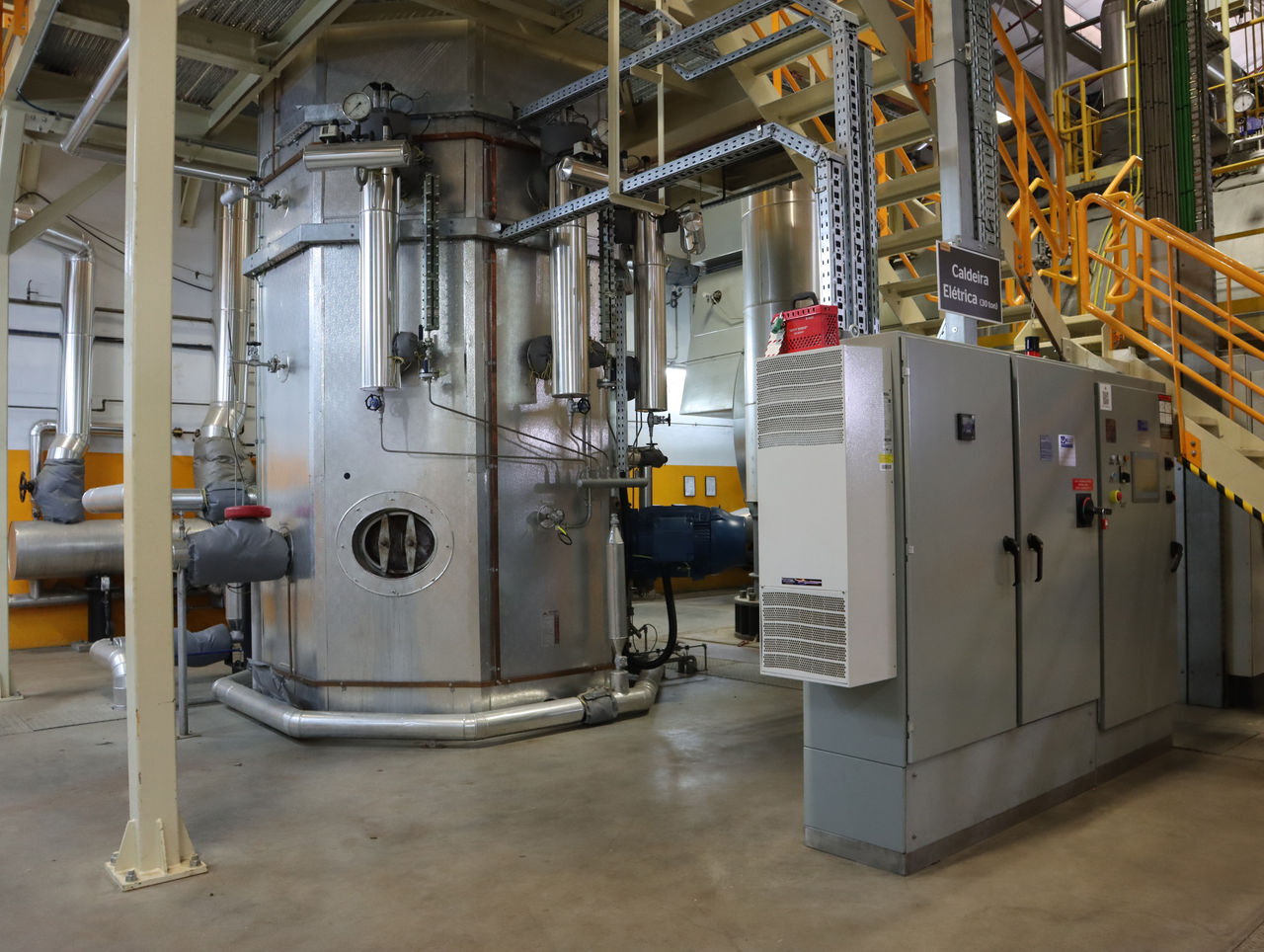 The electric boiler can generate steam from green electricity instead of gas