Tire-related use phase emissions
What are tire-relates use phase emissions, and how does Continental reduce them through innovative solutions?
Read more




Tire wear is an unavoidable result of friction between tires and the road. Friction is crucial for road safety, as it provides the necessary grip for safe braking and driving. In the sections below, we explain more about this process and how Continental is using innovative technologies to maximize grip and minimize wear.
When a vehicle is driven, friction and the transfer of force between the tire and the road cause particles to be released from both the tire tread and the road surface. These are known as tire and road wear particles (TRWP).
This abrasion is a natural and unavoidable part of driving. The friction that causes it is what enables a car to accelerate, brake and corner safely and in a controlled manner. Without friction, vehicles would not be able to grip the road. This is why friction is essential for road safety.
According to the United Nations Environment Programme (UNEP), tire and road wear particles (TRWP) are classified as secondary microplastics. These particles are a mixture of rubber, road surface material and mineral components. Because of this composition, they differ significantly from most other forms of microplastics in terms of their structure, behavior and environmental impact.
Studies from the Tire Industry Project (TIP) show that TRWP typically consist of tire tread material combined with fragments from the road surface, along with other particles such as sand and road dust.
These elongated wear particles are denser than water (1.8 g/cm³) and average 100 µm in size – roughly the diameter of a human hair.
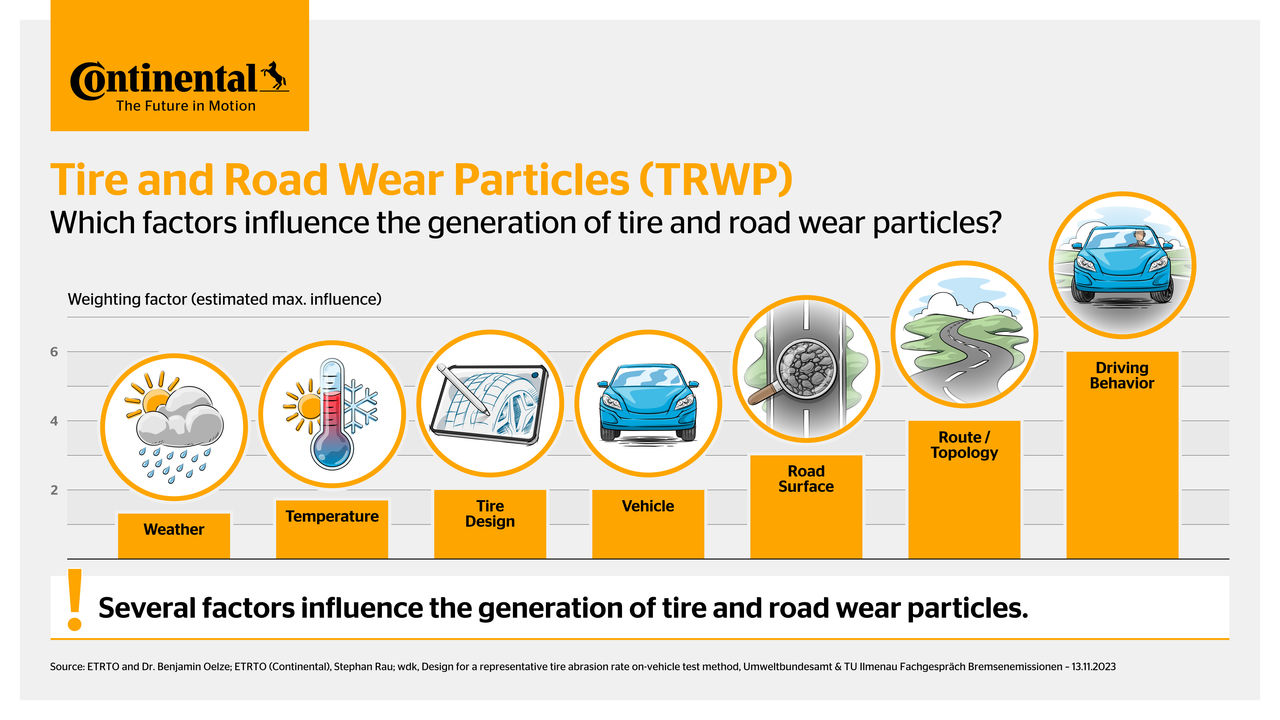
The amount of tire and road wear particles released into the environment depends on many factors.
Some factors that influence tire and road wear can be controlled, such as a person’s driving style:

Driving style: Driving fast, braking hard and accelerating quickly all increase tire abrasion. Smooth acceleration and gentle braking, on the other hand, can prevent unnecessary tire abrasion and extend tire life.
Vehicle: Heavier vehicles and cars with sport-tuned suspension and wheel alignment tend to wear out tires faster. Lightening a vehicle’s load can help reduce abrasion and make tires last longer. If your car is heavier than usual, for example when going on vacation, adjust the tire pressure and check it regularly. Tires can wear out faster if the pressure is too low or too high. Irregular wear may also point to issues with the axle alignment, which should be checked and corrected by a specialist.


Road surface and infrastructure: Concrete is harder on tires than asphalt, and potholes can increase abrasion too. Winding mountain roads and stop-and-go traffic in cities also put constant stress on the tires.
Weather conditions: Wet roads and extreme temperatures can influence tire abrasion, so it’s important to choose tires that fit the conditions.

Studies show that driving style, road surface and road design have a much greater influence on tire and road wear than tire design. In fact, driving style affects tire abrasion three times more than tire design.
Tire and road wear particles (TRWP) can enter the environment through various emission pathways:
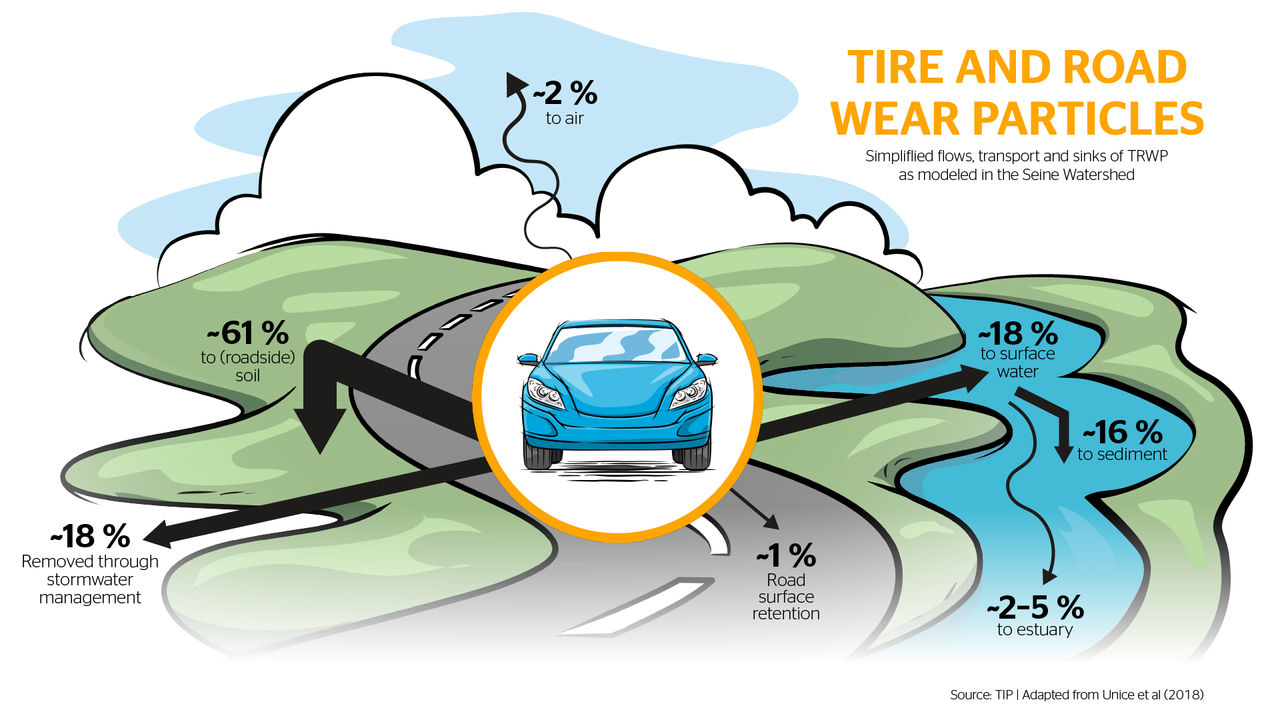
Continental participates in numerous research projects to better understand these pathways and further reduce tire abrasion.
We are continuously working to increase the share of renewable and recycled materials in our tires while further reducing their environmental impact. In 2024 alone, the company invested €349 million in research and development in its Tires group sector.
To gain a comprehensive understanding of the many aspects of tire and road wear particles, Continental is actively involved in industry associations as well as several internal projects and research collaborations, including for example:
Continental is a co-chair and founding member of the Tire Industry Project (TIP), a voluntary, CEO-driven initiative with a mission to anticipate, understand and address global environmental, social and governance (ESG) issues relevant to the tire industry and its value chain. Re-elected as co-chair until 2029, Continental has been actively shaping TIP’s strategic direction since the initiative’s founding in 2005.
TIP brings together 10 leading tire companies, representing more than 60% of global tire manufacturing capacity. Hosted by the World Business Council for Sustainable Development (WBCSD), TIP commissions independent research, fosters multistakeholder dialogue, and develops practical tools for greater sustainability across the tire value chain.
As part of our involvement, we contribute resources and long-standing expertise in areas such as tire and road wear particles, end-of-life tires, sustainability assessment methods and supply chain transparency. We support industry-wide collaboration and the advancement of science-based solutions.
Research collaboration with the University of Braunschweig, Germany. Continental engineers develop innovative tire designs and materials to reduce wear without compromising safety or performance.
Improving the technical understanding of the origin, process, occurrence and behaviour of tire and road wear particles.
Led by the United Nations Economic Commission for Europe (UNECE) and the International Organization for Standardization (ISO), reference test methods have been developed for the environmental and safety-related properties of tires. These methods aim to establish uniform and binding criteria for evaluating tire performance, for example with regard to wear rate, noise emissions, wet grip and rolling resistance. Continental has actively participated in this effort within the relevant technical groups of the European Tyre and Rim Technical Organisation (ETRTO).
As part of the OLRAP research project (“Online Analysis of Airborne Tire Wear Particles at the Point of Origin and Differentiation from Other Sources”), completed in 2025, Continental, together with the Technical University of Braunschweig, developed an innovative method for analyzing tire wear.
The process uses a specially adapted vacuum device mounted behind a drive wheel. Combined with advanced particle sensors, this method enables the detection of even the finest airborne particles - both behind the wheels and at other points on the vehicle.
The insights gained feed directly into Continental’s tire development, enabling targeted improvements.
More information in our press release.
We are committed to optimizing both the mileage and wear of our tires without compromising safety or performance. Our EcoContact 6 tire line delivers around 20 percent higher mileage and about 30 percent less wear per kilometer compared to its predecessor.
The General German Automobile Club (ADAC) test in 2022 confirmed that the EcoContact 6 has the lowest wear of all summer tires tested (type 185/65 R15) on both dry and wet roads (59 g/1000 km).
The latest ADAC evaluation1 of tire tests from 2023 to 2025 confirms that Continental tires generate 11% less abraded material than the competitor average.
To put this into perspective: a typical mid-size car driving 15,000 kilometers per year produces around 2.25 kilograms of tire wear material with an average tire – but only 1.78 kilograms with Continental tires. That’s a reduction of 470 grams per set of tires².
In the truck segment, the Conti Hybrid Gen3 delivers around 11 percent more mileage and 10 percent less wear per kilometer compared to its predecessor.
1 ADAC: Allgemeiner Deutscher Automobil-Club
2 Simplified calculation based on abrasion values from the ADAC study (mg/km/t) and an assumed vehicle weight of 1.5 tons. The figures are not taken directly from the study but are consistent with the published data.
EURO 7 is a new European standard for vehicle emissions that regulates vehicle emissions. The new Euro 7 standard, which will come into force in 2026, also sets limits for brake and tire wear for the first time. The first requirements for tires will come into force in 2028. Similar regulations are expected in the American and Asia-Pacific regions.
Through ongoing research and development as well as collaboration with international partners, we are committed to reducing the impact of tire wear particles on the environment, while ensuring that our products meet the highest safety and performance standards.
This study investigates tire based particles from different emissions - pristine tires abrasion, testbed, road, airborne ultrafine particles and total atmospheric deposition. Via HPLC-MS antiozonants and DPG are investigated on their observance and degradation products.
Read the whole study in Environmental Science & Technology, Vol 60, Issue 2.
Published January 6, 2026 by Elisabeth Eckenberger, Myriam Younes, Tobias Mayer, Manuel Loeber, Linda Bondorf, Tobias Schripp, Sarmite Kernchen, Christian Laforsch, Anke C. Nölscher
The focus of this article is on the measurement of tire and road wear particles (TRWPs) during vehicle operation utilizing rather simple Pm1, PM2.5, PM10 and PM100 sensors.
Published September 9, 2025 by Guido Lehne, Sven Brandt, Frank Schiefer, Benjamin Oelze (Continental), Nadine Aschenbrenner (Continental), Malte Hothan (Continental), Georg-Peter Ostermeyer, Carsten Schilde
Non-exhaust emissions have become an increasingly important issue as their levels continue to rise and the health effects of particulate matter (PM) are more widely discussed. To address this issue, a vehicle demonstrator with integrated emission reduction of tires and brakes was developed as part of the Zero Emission Drive Unit Generation-1 (ZEDU-1) project.
Published August 28, 2024 by Manuel Löber, Linda Bondorf, Tobias Grein
This paper presents a novel experimental method to study the abrasion mechanism of car tires. It is based on the detection of microscopic movements associated with material damage (cracking) on the rubber tread ... To measure and analyze the microscopic movements, a new camera-based method with feature point matching using video stabilization was developed
Published September 9, 2023 by Johann Licher (Continental), Frank Schmerwitz (Continental), Meisam Soleimani (Continental), Philipp Junker
Plastic in the environment poses an increasing challenge. Microplastics, which include tire wear, enter the aquatic environment via different pathways, and increasing vehicle traffic leads to increased tire wear. This paper describes an approach for how inner-city tire wear hotspots can systematically be identified by sampling road-deposited sediments (RDS) by sweeping. Within the investigations herein described, six inner-city monitoring sites were sampled.
Published August 5, 2023 by Daniel Venghaus, Johannes Wolfgang Neupert, Matthias Barjenbruch
The dynamics of how tyre wear particles behave prior to their entrainment are still poorly understood. In wind tunnel experiments, the particle detachment from an idealized glass substrate was monitored. For particle sizes above 80 μm, smaller and more rounded particles were mobilized by wind shear first, whereas larger and more angular particles require stronger wind shear, highlighting strong surface adhesion and particle morphology as the major factors influencing microplastic detachment.
Published July 20, 2026 by Bashir Olasunkanmi Ayinde, Wolfgang Babel, Johannes Olesch, Daniel Wagner, Seema Agarwal, Christian Laforsch, Julian Brehm, Anke Nölscher, and Christoph Karl Thomas
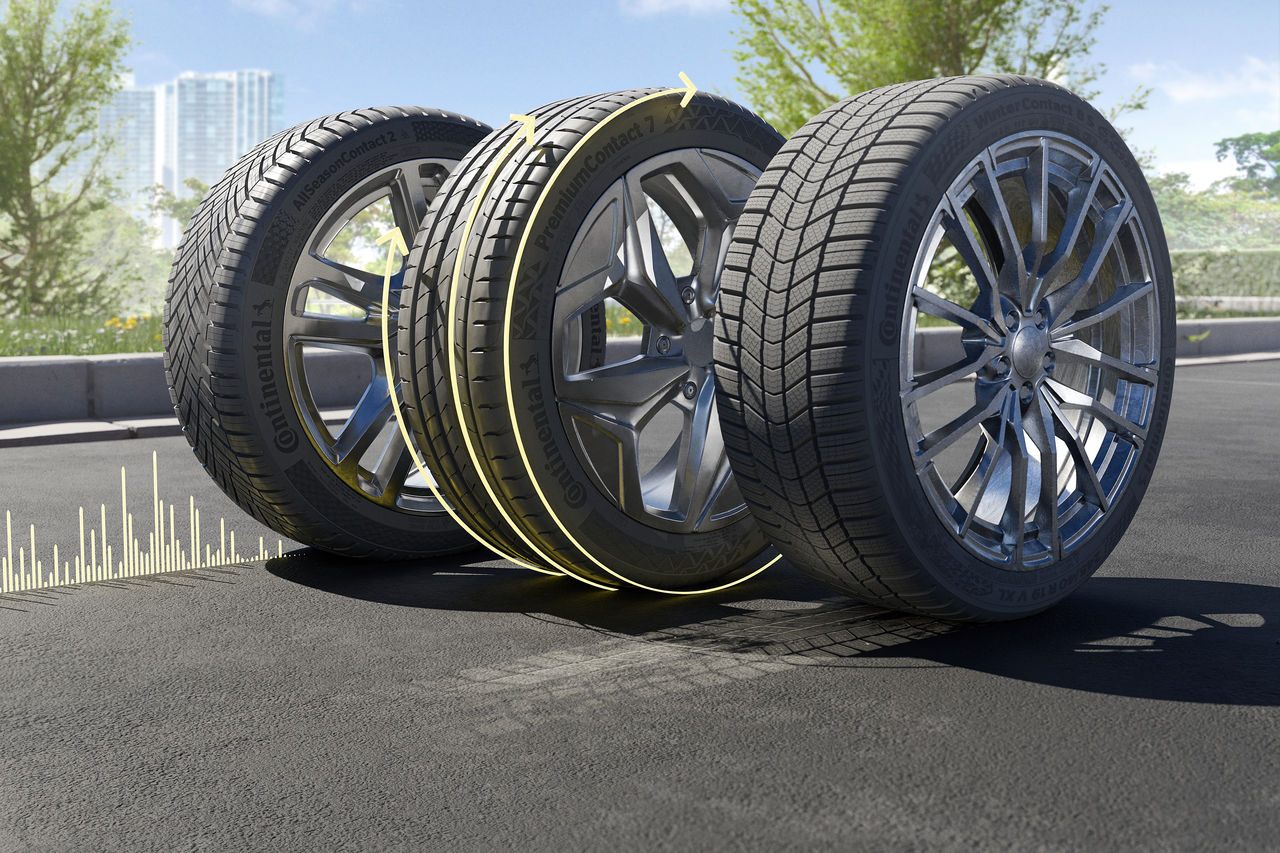
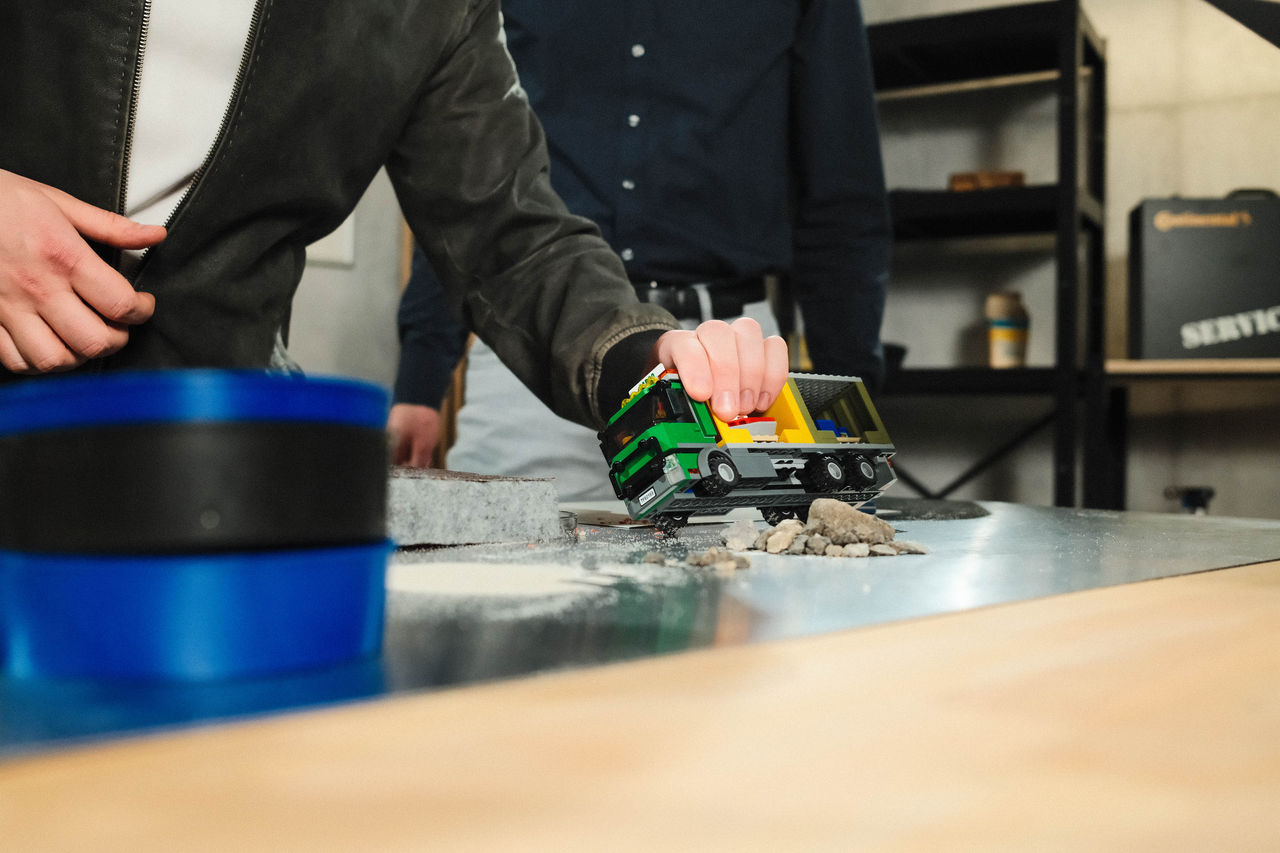 The amount of tire and road wear particles is influenced different factors such as the surface.