# Tire Care and Maintenance

Tire Pressure Monitoring System (TPMS)

Continuously monitor tire pressure in real-time


Fast facts

Advantages of tire pressure monitoring systems

  • The TPMS continuously monitors the tire inflation pressure, and alerts the driver if it falls below a certain level.
  • This safety feature also lowers your car's fuel consumption and CO2 emissions.
  • Tire performance characteristics are optimized and tire life is extended.

Driving safety and comfort are directly related to the long-term condition of your tires. If they're in poor condition, then it's only a matter of time before disaster strikes. Approximately 40 percent of all incidents of unexpected tire failure, for example, are caused by underinflated tires.

To address this problem, Continental has developed a tire-pressure monitoring system (TPMS) that works with wheel sensors and brake systems to alert the driver of low tire pressure levels via a car dashboard warning light.
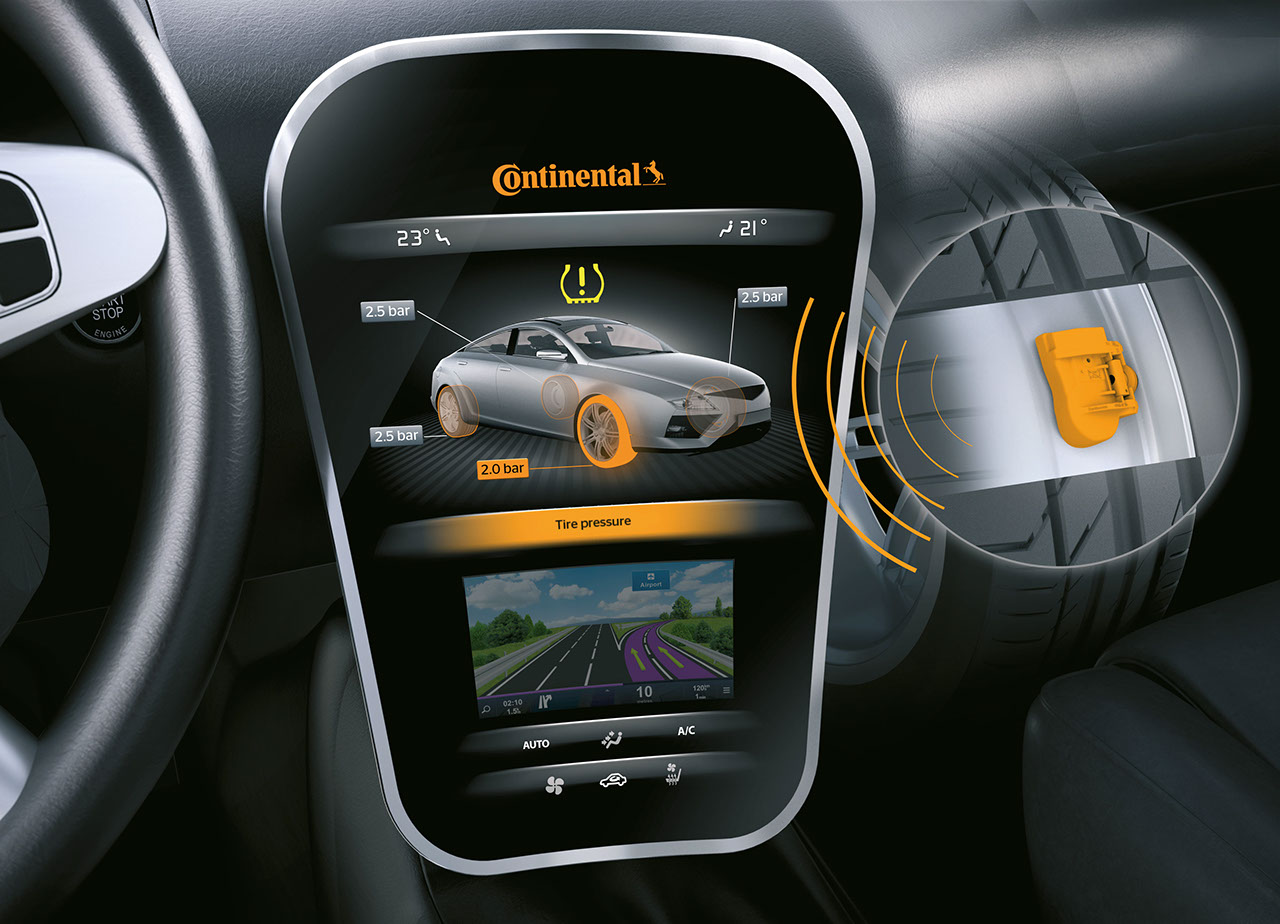

Display with TPS in the cockpit.

What is the tire-pressure monitoring system (TPMS)?

The TPMS continuously and reliably monitors the inflation pressure in real-time. In the event of pressure loss below a safe threshold, it immediately alerts the driver to take action. When used correctly, the TPMS can enhance driving safety by eliminating a frequent cause of accidents.


Different types of TPMS

  1. Direct systems: These are the most common tire-pressure monitoring systems because they are the most accurate. A sensor in each tire (often in the valve stem) measures the actual pressure and temperature, transmitting the data wirelessly to the car's computer. If an issue is detected, the system creates an alert in your dashboard. It usually sends an alert if air pressure drops by 25 percent or more. In newer cars, the TPMS display already shows you which tire is low in air pressure and provides real-time pressure readings. With other TPMS, you may need to check manually.
  2. Indirect systems: These TPMS use the vehicle's ABS wheel speed sensors. A flat tire rotates faster than the others, which the system detects and flags. Sensors look for an increase in speed and revolution. Indirect systems are less accurate because they monitor speed instead of directly measuring air pressure.

The benefits of your TPMS

Flat tires can become a critical problem very quickly: They cause unsafe driving and can lead to accidents. Before TPMS technology, there was no direct way to inform you about a drop in tire pressure – you needed to check the tire manually and regularly. Now, the TPMS lets you know that there is an issue that you need to take care of.

Another benefit of this invaluable safety feature is that it reduces your car's fuel consumption and CO2 emissions and also helps reduce energy consumption in electric vehicles. If a car's tires are underinflated by only 0.3 bar, for example, the vehicle consumes 1.5 percent more fuel – and produces a correspondingly higher amount of CO2 emissions.

There are many more advantages to a TPMS, including:

  • Optimizing tire performance characteristics, from braking performance to hydroplaning protection;
  • Extended tire life;
  • Reduced risk of tire damage, since underinflated tires are more prone to overheating and failure;
  • Longer tire lifespan, thanks to maintaining the correct pressure;
  • Lower maintenance costs, by preventing premature tire wear.

Explore Continental Tires

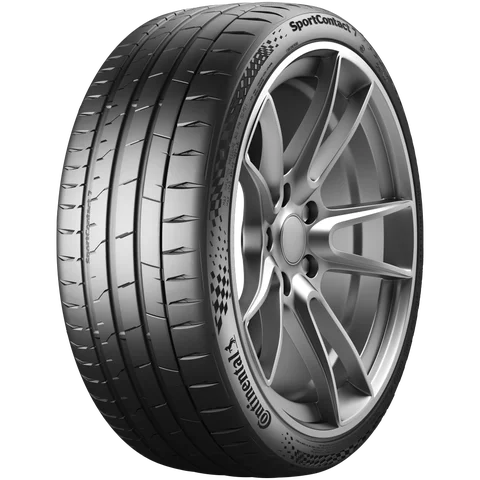
Product picture SportContact 7
Sporty Hero
SportContact 7

Stick to your dreams. And to the asphalt.

View details
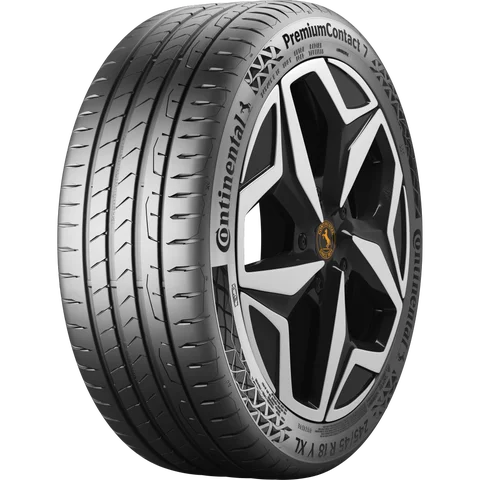
PremiumContact™ 7
Comfortable Rider
PremiumContact 7

Driving safely has never felt better.

View details
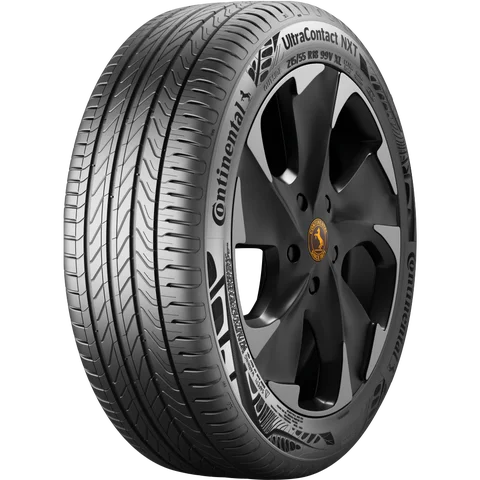
Continental UltraContact NXT tire
Durable Performer
UltraContact NXT

Driving the future of sustainability.

View details
Find your tire

How TPMS Works?

Let's take a closer look at the inner workings of a tire-pressure monitoring system. How does it work?

  1. Readings are taken directly from the tire: Battery-powered sensors mounted on the rim and integrated into the valve measure the tire pressure.
  2. Information is transmitted: This data is coded and transmitted in a high-frequency signal to a receiver.
  3. Display on the dashboard: Dedicated software in the control device then processes the information and displays it on the dashboard of the vehicle.
  4. Driver is warned: In effect, thanks to these dedicated sensors, the driver now has complete oversight of tire pressure changes. And most importantly, they're warned before a critical situation arises.

Enhanced TPMS software functions

TPMS software is so sophisticated that, after evaluating the collected data, it can calculate the rate of pressure leakage. Additional software functions are standardized warnings when approaching specific limits, an ongoing comparison of tire temperature, automatic tire identification, and checks on spare tires.

TPMS can even distinguish whether the vehicle is moving or standing still, and adjusts the frequency of the sensors accordingly. When a vehicle is moving, for example, tire pressure and tire temperature are monitored every few seconds, and TPMS delivers the readings continuously. If the vehicle is standing still, however, the monitoring system takes measurements between longer intervals. The readings are only transmitted after a pressure change has been detected.

Signs of low tire pressure

Recognizing the early signs of low tire pressure can help prevent unsafe driving situations, avoid premature tire wear, and maintain optimal vehicle performance. Even before the TPMS warning light turns on, you may notice several physical and handling-related indicators:

  1. Reduced steering precision: When a tire is underinflated, its contact patch and structure change, leading to:
    • Less responsive steering
    • A “floating” or unstable feeling in corners
    • The need to make constant small corrections to stay on course
  2. Longer braking distances: Underinflated tires deform more under load, which can:
    • Increase stopping distances
    • Reduce stability during hard braking
    • Negatively affect ABS and other driver-assistance systems
  3.  Visible tire sagging: A quick visual inspection may reveal:
    • A tire that looks flatter or lower on one side
    • A less uniform tire profile
    • A vehicle that appears slightly tilted
  4. Increased fuel consumption: Low pressure increases rolling resistance. If you notice higher fuel usage without another clear reason, it may be due to underinflation.
  5. Vibrations or unusual driving feel: Low tire pressure can create:
    • Steering-wheel vibrations
    • Unusual humming or droning sounds
    • A heavier, less smooth driving experience
  6. TPMS warning light: The TPMS warning light is the most direct indicator of low pressure. However, depending on the system, it typically triggers only after pressure drops by around 20–25%. This is why noticing early physical signs is just as important.

Statutory regulations in Europe for TPMS

The European Commission has passed a law which requires integrated tire-pressure monitoring systems on all new cars manufactured since 2014.

Many vehicles already include TPMS as standard equipment. These systems can also make their data available to other vehicle systems, e.g., the braking system. However, even if your vehicle does come equipped with a TPMS, it doesn't mean you should entirely stop conducting a manual tire pressure check now and then. Continental recommends checking the tire pressure once every two to four weeks as a routine precautionary measure.


Statutory regulations in Europe for TPMS

The European Commission has passed a law which requires integrated tire-pressure monitoring systems on all new cars manufactured since 2014.

Many vehicles already include TPMS as standard equipment. These systems can also make their data available to other vehicle systems, e.g., the braking system. However, even if your vehicle does come equipped with a TPMS, it doesn't mean you should entirely stop conducting a manual tire pressure check now and then. Continental recommends checking the tire pressure once every two to four weeks as a routine precautionary measure.

Frequently asked questions about Tire Pressure Monitoring Systems

It is never recommended to drive with an unchecked tire pressure warning. The light is an indication of underinflation, which can lead to problems like poor handling, increased tire wear or reduced fuel efficiency. But of course, safety is always essential. You don’t need to pull over immediately, but you should take action as soon as possible. While driving, find a safe spot to pull over and stop to check your tires.

Yes, in most cases the TPMS light goes away after you corrected the tire pressure and drove for a bit. The sensors recalibrate on their own. However, sometimes you need to manually reset the sensors – or replace them if the light stays on.

We would not recommend replacing the TPMS sensor yourself as it is an important task to ensure that your vehicle remains safe and efficient. A professional replacement is always the best and safest choice.

It’s not always necessary to replace all four sensors when one fails. However, it is likely that the other sensors also are close to failing, due to old batteries. So, changing all four sensors at once can save you future costs and helps to avoid multiple service appointments.
Dealer Locator


Related content