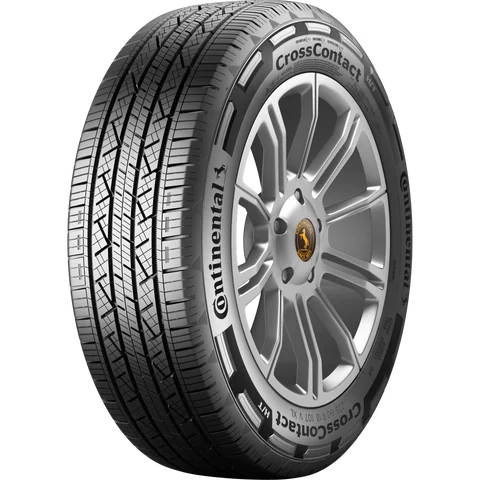
Wide tires
Read more




The tire is so much more than an air-filled ring of rubber. It’s a complex piece of engineering that comes in many shapes and forms and is designed to tackle a myriad of challenges. In this article, we go through the different types of tires on the market and the specific advantages they can offer your vehicle.

There are two key areas where one type is distinguishable from another – the rubber compound and the tread pattern. These, in turn, are determined by the environment and conditions where the tire is in use. As long as the right tire technology is applied, you can rest assured that the wheels of your car or truck will have superior handling and traction.
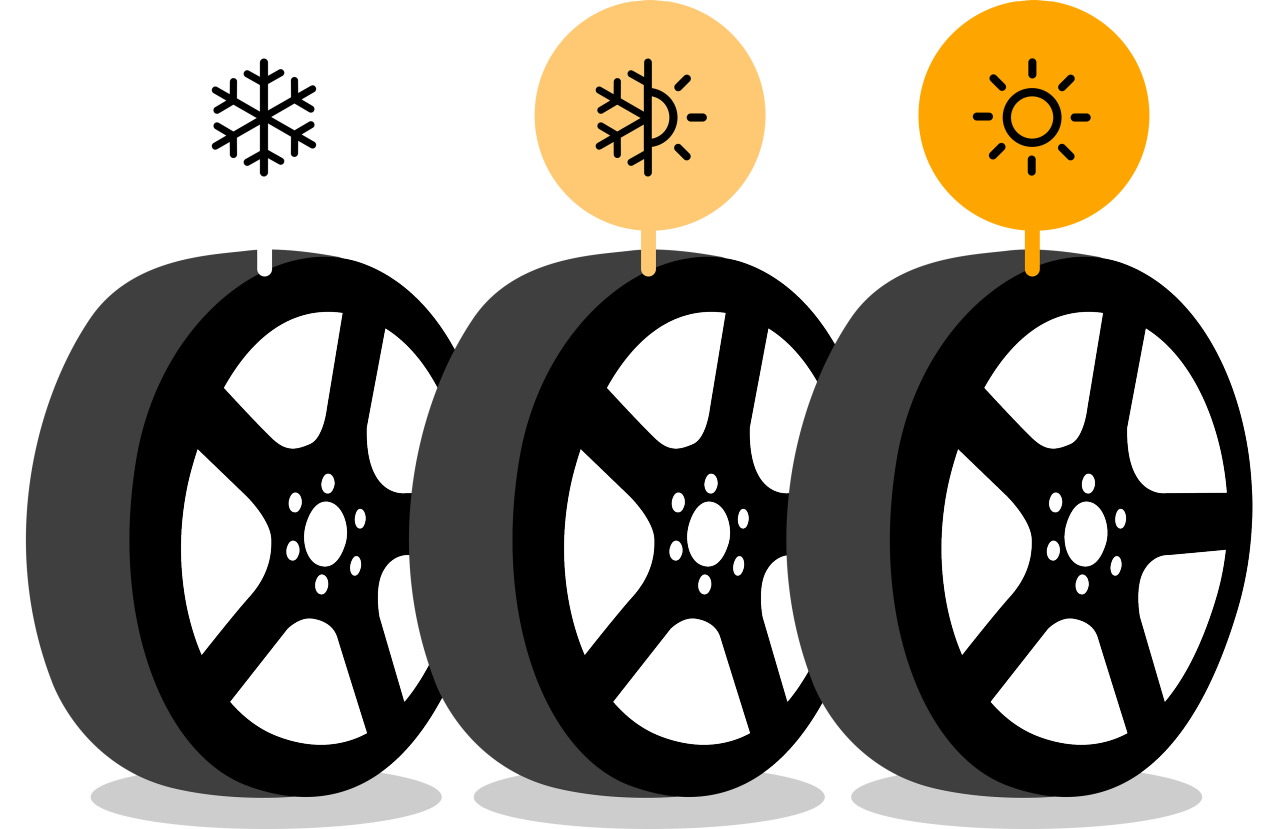
Car tires can be grouped into several main categories based on seasonality, intended use, and driving conditions and styles. These categories make tire selection easier, as each type is designed with a specific rubber compound and tread pattern to meet particular requirements such as climate, comfort, efficiency, or performance.
Seasonal tires are developed to deliver optimal performance within a defined temperature range and set of weather conditions. Choosing the right seasonal tire is essential for maintaining reliable grip, safe braking distances, and even wear, ensuring consistent performance throughout the tire’s lifespan.
Summer tires have a dedicated rubber compound that delivers excellent grip and handling on both dry and wet roads in warmer conditions. They also have reduced rolling resistance and therefore can contribute to improved fuel efficiency and generate less road noise.
The tread pattern on a summer tire is more streamlined than a winter tire, with fewer grooves for water clearance, maximizing the contact patch with the road. Consequently, the vehicle has superior traction and braking during summer months.
However, these same characteristics – the specialized summer rubber compound and the tread design optimized for high‑temperature performance– make summer tires unsuitable for winter driving conditions. When the temperature drops below 7 degrees Celsius (45 degrees Fahrenheit), the compound becomes hard and brittle, and the tread design can’t adequately handle snow or ice.
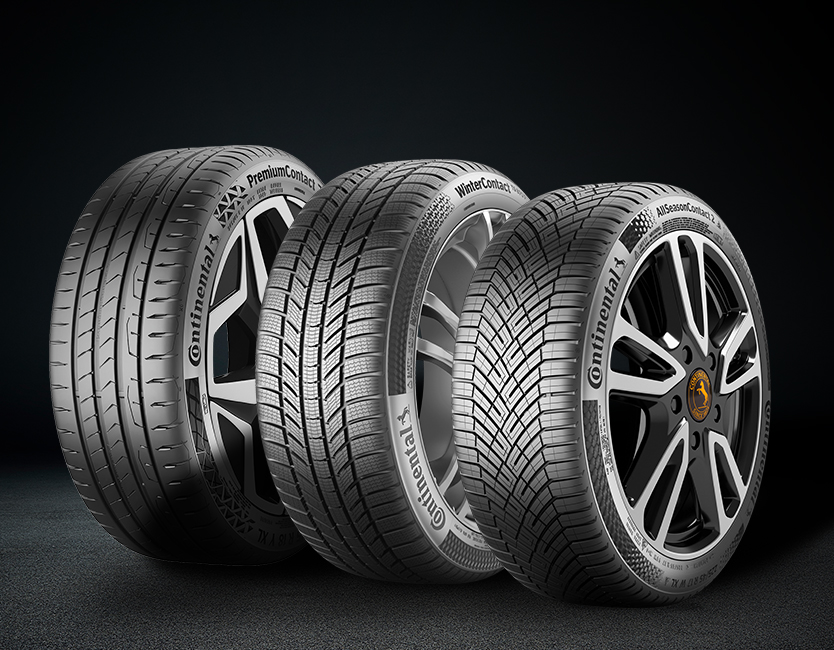
Winter tires provide outstanding grip on road surfaces covered with snow and ice, as well as wet roads in cold conditions.
The tread compound of a winter tire contains more natural rubber, so it doesn’t harden when the temperature drops below 7 degrees Celsius. Instead, it stays flexible and limber in cold climates to reduce the stopping distance when braking.
The tread design has deeper blocks that will dig into snow and ice to provide more grip. The winter tire also has a lot of sipes and grooves, which are excellent for clearing water and slush from the path of the car and mitigating the risk of hydroplaning.
Winter tires shouldn't be used for the summer season, however. The compound is far too soft for warmer temperatures, meaning it will wear out quicker and it will not provide the same grip
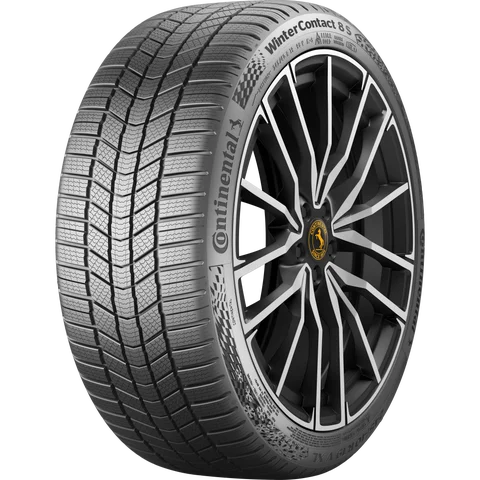
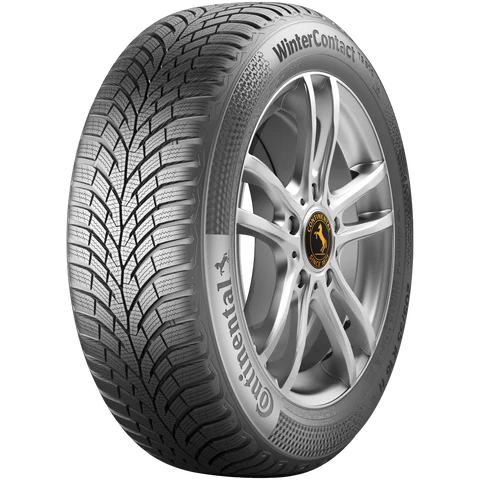
All winter tires are the same. Until the streets turn white.
View details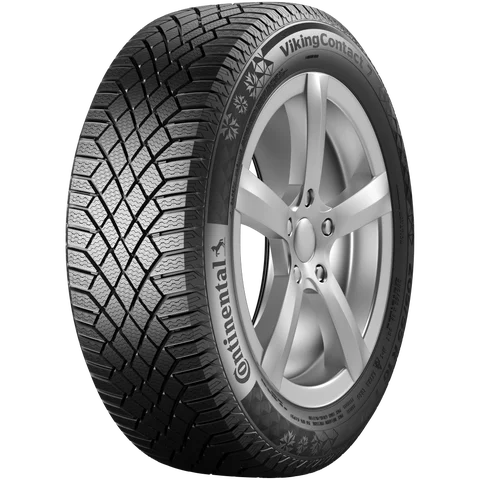
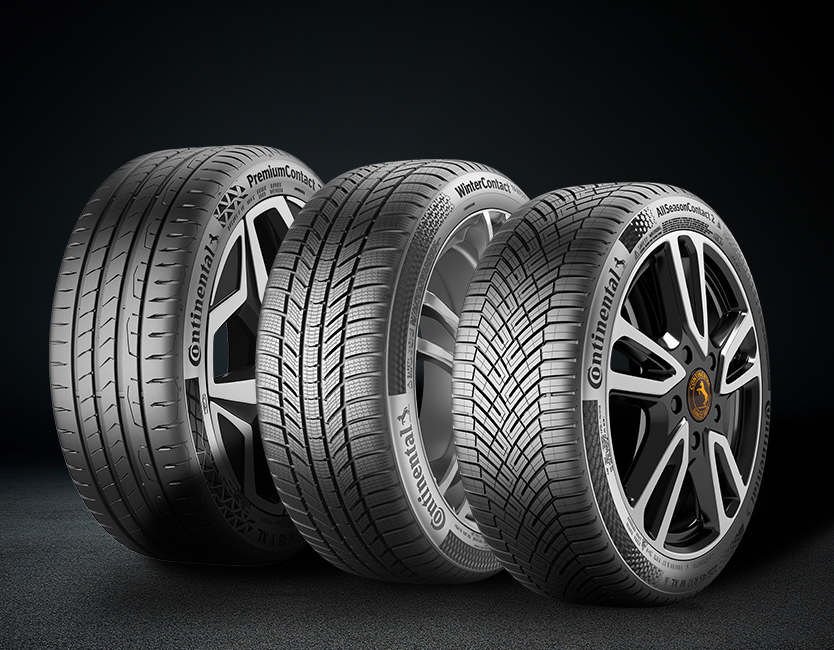
An all-season tire combines characteristics of both summer and winter tires, offering a hybrid solution with the benefits of both. For drivers, living in regions with mild winter conditions (temperatures rarely drop below freezing), all-season tires can be an alternative. Continental all-season tires offer safety and premium performance. In addition, drivers can save money and time, and reduce the effort required for seasonal tire changes. But always remember that summer and winter tires are specifically tailored to the relevant conditions.
If you are unsure about the right tire choice, please contact your local dealer for personal advice.
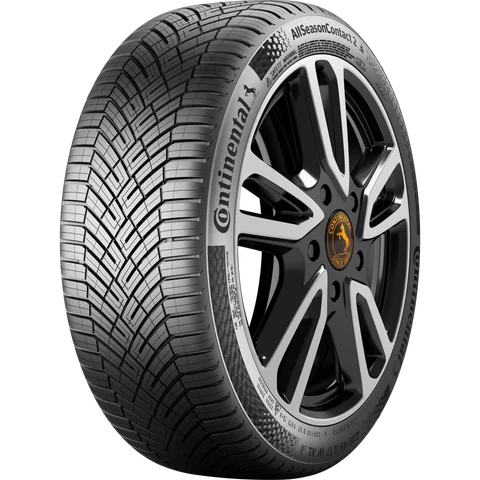
You can’t control the weather. But you can be prepared.
View details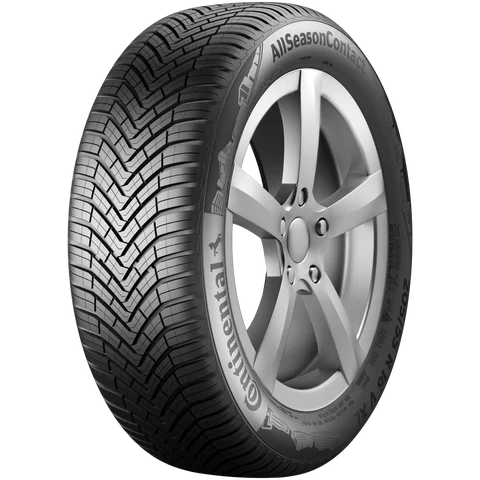
Beyond seasonal conditions, choosing the right tire also depends on how you use your vehicle and how you drive. Factors such as driving style, daily mileage, comfort expectations, efficiency goals, or performance needs all influence which tire type is the best fit. Considering these usage-related criteria helps drivers select tires that better match their real-world driving demands.
Touring tires — a category term more commonly used in the U.S. market — are built for long-distance driving, offering comfort, low noise, and durability. They are well suited for sedans, coupes, and minivans that spend most of their time on highways or in city traffic. Their symmetrical tread layout helps promote even wear over time.
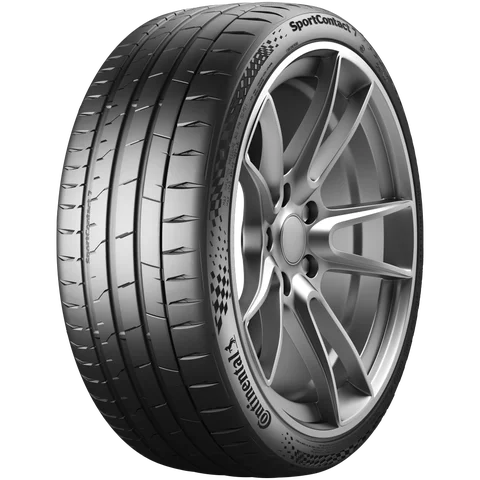
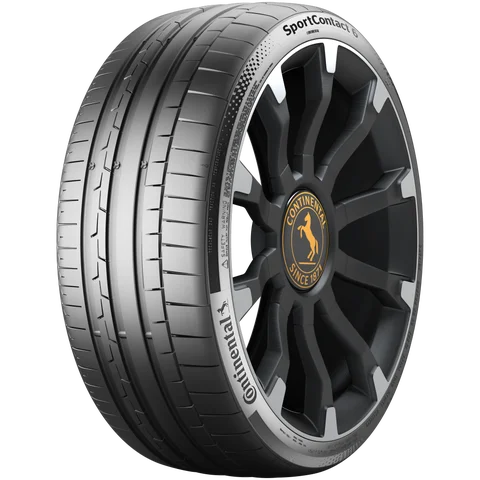
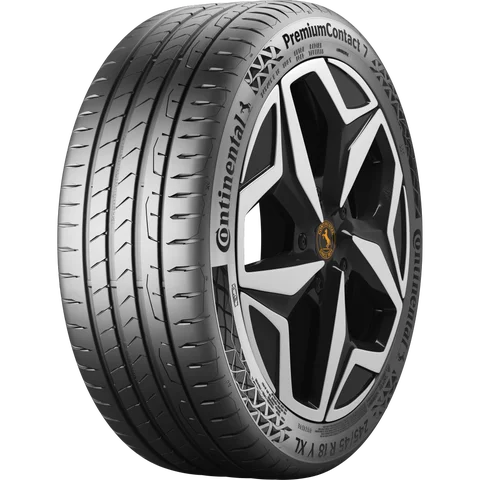
Performance (sport) tires have tread patterns with larger circumferences and lateral grooves for strong traction in wet and dry conditions. They are made for sporty vehicles and provide improved grip with quick, responsive handling. These tires often reduce ride comfort, tread life, and fuel efficiency compared to standard tires. They are not suitable for snowy conditions.
Features include soft rubber compounds for maximum grip, asymmetrical or directional tread patterns for enhanced traction, and lower profiles to improve handling.
When drivers refer to “economical" or "eco tires”, they usually mean tires designed to reduce rolling resistance. Lower rolling resistance may help improve vehicle fuel efficiency, which can contribute to reduced CO₂ emissions depending on vehicle and driving conditions.
They may appeal to drivers seeking lower rolling resistance and reduced fuel consumption. The tread shape is designed to be more aerodynamic.
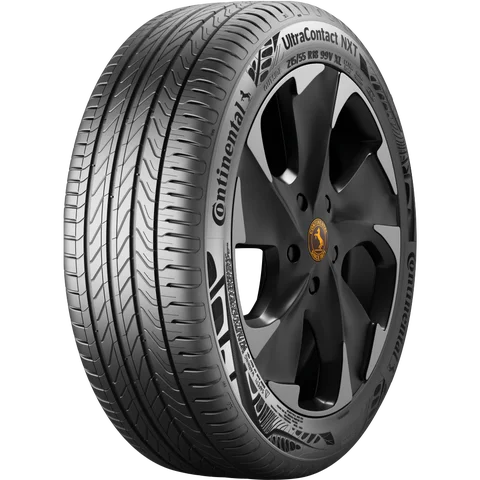
Electric vehicles place different demands on tires due to their instant torque, higher vehicle weight and the need for low noise and energy efficiency.
Continental tires are engineered to deliver strong performance across all vehicle types, including electric vehicles. Features such as optimized rolling resistance, robust construction and advanced tread design are intended to support driving range, durability and handling. They are also designed to manage the extra weight that comes from the vehicle’s large lithium-ion battery packs.
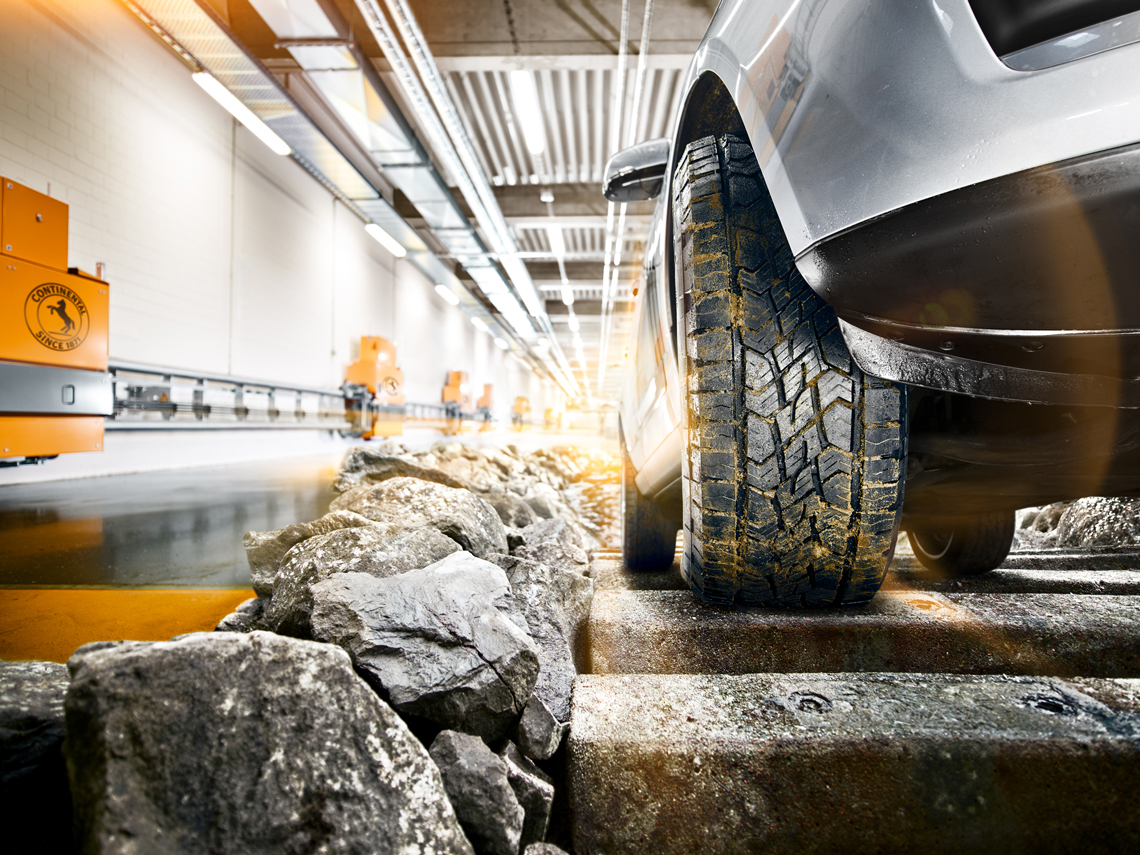
Off-road tires are built for challenging surfaces where standard road tires quickly lose traction. Their design focuses on delivering grip and stability on loose, uneven, or muddy terrain, often with trade-offs in road noise, comfort, and efficiency when driven on paved roads.
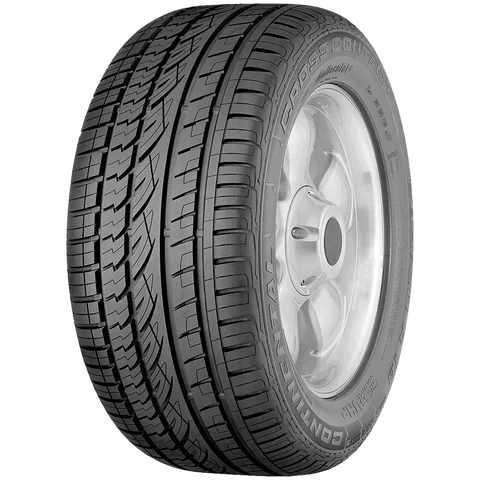
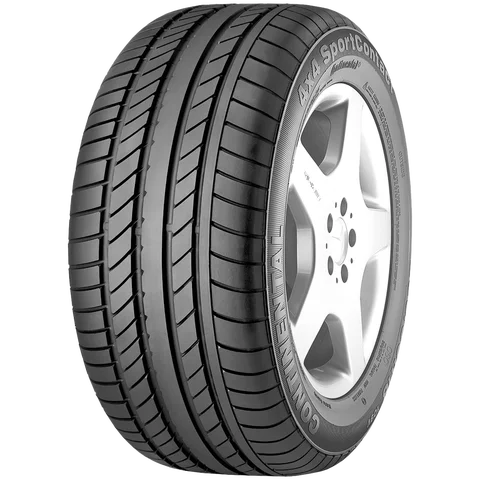
4x4 tires feature a more widely spaced tread design than conventional car tires, chiefly a larger tread block and deeper tire grooves. Standard tires perform poorly on surfaces like muddy ground because the tread quickly fills with mud and the wheel begins to spin uselessly, digging the tire deeper and deeper into a hole. By comparison, 4x4 truck tires have better traction on tough terrains like mud, grass, and snow without the tread area becoming clogged.
All-terrain tires are a good match for off-road use on larger SUVs and trucks. They feature aggressive, detailed tread patterns that help them perform well on dirt, sand, gravel, and other uneven surfaces. Many all-terrain models offer this capability without giving up on-road comfort, keeping the ride stable and smooth even on highways.
The performance of all-terrain tires drops in icy or snowy conditions because the rubber compound is stiffer to resist damage from rocks and debris. This stiffer rubber becomes less flexible in low temperatures, which reduces traction on ice and snow.
Mud-terrain tires are a subtype of all-terrain tires with large, aggressive tread blocks that excel in soft surfaces such as mud or sand. They resemble all-terrain tires but are noticeably louder and less comfortable on regular paved roads. Mud-terrain tires are intended for vehicles that spend a lot of time off-road. They do not hold traction in snowy conditions because their rubber compound is too stiff for proper grip.
Safety and emergency tires are designed to keep drivers mobile and protected when unexpected tire damage occurs. These specialized tire types help maintain control of the vehicle or provide a temporary solution that allows the driver to reach a safe location or repair facility.
Run-flat tires are one of the greatest inventions in the automotive industry since the advent of the pneumatic tire or the transition from bias-ply to radial tires. Why is it so revolutionary? In the event of a puncture, or a sudden drop in inflation pressure, a run-flat tire will remain fully operational until the driver can make it home or to the nearest garage safely.
The functionality of a run-flat tire is provided by strong and thick reinforced sidewalls so that they can be driven on temporarily after a puncture. In general, you should be able to travel up to 80 kilometers (50 miles) on a punctured run-flat tire. But keep in mind that they’re not repairable, and you must replace it with a new tire as soon as possible.
Spare tires come in two general varieties: compact versions and full-size versions. They are typically approved only for reduced driving speeds and shorter travel distances, often around 80 kilometers (50 miles) at roughly 80 km/h. These tires require very high air pressure to function as intended.
A spare is designed to be used only when a regular tire goes flat, not for routine driving. Many vehicles are supplied with a spare tire by the manufacturer, and when included, it is usually the same overall type as the vehicle’s regular tires.
When choosing new tires, consider the weather you drive in, your everyday driving habits, and the type of vehicle you own. Make sure the tire matches how and where you typically drive, whether that’s mostly highways, city roads, or rougher terrain. Also check that the tire size, load index, and speed rating meet your vehicle manufacturer’s specifications. These factors help ensure safety, comfort, and optimal performance.
You can tell what type of tire you have by reading the markings on its sidewall (e.g., size, load index, speed rating).
Replace tires when the tread is worn down (e.g., to the legal minimum) or if they’re too old (many manufacturers suggest replacing tires after around 6–10 years).
It’s generally not recommended to mix very different tread patterns (like all-season and winter tires), because it can affect handling and safety. In some countries, mixing tires with different characteristics—such as summer and winter tires or tires with different tread patterns or performance levels—may also be restricted or not permitted, particularly on the same axle.
Yes, tire types with more aggressive treads or higher rolling resistance (like off-road or mud tires) can worsen fuel efficiency.
All-terrain tires offer a balanced, versatile option. They provide a good mix of everyday drivability and light off-road capability, with quieter on-road performance, longer tread life, and solid traction on light trails, gravel, or snow.
Mud-terrain tires, on the other hand, are built for extreme off-road use. Their rugged, widely spaced tread blocks and reinforced sidewalls deliver far better grip in deep mud and on loose or rocky surfaces – but they’re louder on pavement, wear faster, and are less ideal for daily driving or long highway trips.
Run-flat tires are built with reinforced sidewalls (or support-ring systems) so that, in the event of a puncture you can still drive 80–160 kilometers at moderate speed to reach a repair shop.
Standard tires, on the other hand, lose air immediately when damaged, requiring you to stop right away and change the tire or call for roadside assistance. So, while run-flats offer more safety and convenience in emergencies, standard tires provide a more comfortable ride thanks to softer sidewalls and better repairability