



# Tire Knowledge
Speed rating for tires explained
What the speed index means and how it impacts safety and handling
Tire speed ratings play a crucial role in both safety and vehicle performance. They indicate the maximum speed a tire can safely maintain under controlled conditions. This information helps drivers choose the right tires for their vehicle, driving style, and legal requirements. While many people rarely reach the limits defined by these ratings, matching the correct speed index is essential for preventing tire damage and ensuring compliance with regulations.
Whether you drive a compact car, a motorcycle, or a performance vehicle, understanding speed ratings is key to choosing tires that deliver both safety and optimal road performance.
What is the speed rating for tires?
The speed rating is a standardized code that indicates the maximum speed a tire can safely sustain over time under the load and inflation conditions specified by the manufacturer. You’ll find this rating as a letter on the tire sidewall. Each letter corresponds to a specific maximum speed, e.g., “H” for up to 210 km/h (130 mph) or “V” for up to 240 km/h (149 mph). The speed rating ranges from A to Z – from 5 km/h (3 mph) to above 300 km/h (186 mph).
Generally, the maximum speed increases the further the letter is in the alphabet. However, there are exceptions: “H” used to stand for “high performance” and allows a speed of up to 210 km/h (130 mph). This system was developed to ensure safety and performance at high speeds. It helps drivers and technicians match tires to vehicle requirements and expected driving conditions.
The speed index is determined in laboratory conditions using drum test benches, where the tire is run at progressively higher speeds under simulated loads.
If the tire is used at its rated maximum speed with the recommended air pressure, the manufacturer guarantees reliable continuous operation. Exceeding a tire’s rated speed can lead to safety risks, like excessive heat buildup, reduced handling performance, and increased risk of tire failure. Always check your vehicle manufacturer’s recommended speed rating when selecting tires.
How to find the speed rating on your tire?
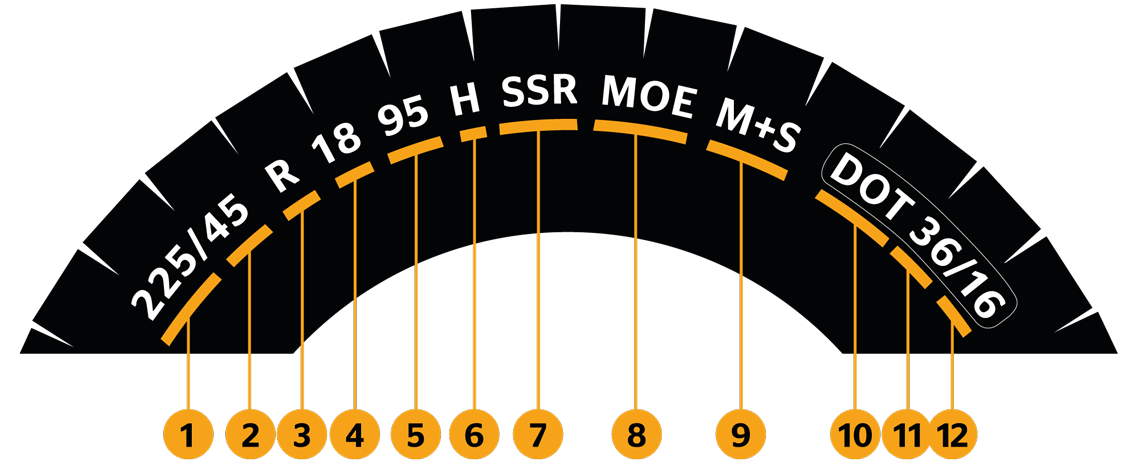
Finding the speed rating on a tire is straightforward once you know where to look. It’s molded directly into the tire’s sidewall as part of the tire size code. When you inspect the sidewall, you’ll see a sequence of numbers and letters such as 225/45R18 95H. The speed rating is the very last letter in this sequence, right after the load index.
For example, in 95H, the “H” is the speed rating that tells you the tire’s maximum sustainable speed capability under proper load and inflation conditions. This marking is standardized across manufacturers, making it easy to identify.
You can also find recommended speed ratings for your vehicle in the owner’s manual or on the tire information label, often located on the driver’s door jamb or in the glove box. Checking this code ensures you match the tires to your vehicle’s performance needs and manufacturer specifications.
Speed rating chart for tires
Before diving into the detailed chart, it’s helpful to understand that each speed rating corresponds to a specific maximum speed a tire can safely maintain under controlled conditions. These ratings allow drivers to efficiently compare performance levels across different tire models.
The following chart provides a clear overview of these ratings and their associated speed limits in km/h and mph, making it easier to choose the right tire for your vehicle and driving style.
Standard speed symbols (A–Z)
| Speed Symbol | Speed (mph) | Speed (km/h) |
| B | 31 | 50 |
| J | 62 | 100 |
| K | 68 | 110 |
| L | 75 | 120 |
| M | 81 | 130 |
| N | 87 | 140 |
| P | 93 | 150 |
| Q | 99 | 160 |
| R | 106 | 170 |
| S | 112 | 180 |
| T | 118 | 190 |
| U | 124 | 200 |
| H | 130 | 210 |
| V | 149 | 240 |
| Z | > 150 | > 240 |
| W | 168 | 270 |
| (W) | > 168 | > 270 |
Y | 186 | 300 |
Important to note:
- The speed index is not a recommendation for actual driving speed, as real-world factors such as road conditions, weather, and tire condition must always be taken into account.
- The letters I, O, and Z are not used in the tire speed index system, mainly to avoid confusion with other similar-looking characters.
- The most common speed ratings fall between T (up to 190 km/h or 118 mph) and Y (up to 300 km/h or 186 mph).
- These speed index letters are not exclusive to passenger cars. Trucks, motorcycles, and scooters also use the same letter-based system to indicate their maximum permissible speeds.
High‑performance and ultra‑high‑performance ratings
High-performance (HP) and ultra-high-performance (UHP) tires can be easily identified by their speed symbols:
- HP tires are typically assigned the H or V speed symbols (210 km/h / 130 mph to 240 km/h / 149 mph).
- UHP tires usually carry W, Y, or (Y) symbols (168 mph / 270 km/h to 186 mph / 300 km/h or more).
Speed ratings VR and ZR explained
Some tire speed ratings include more than one letter:
- “VR” is an older, non-standard designation that was historically used to indicate tires capable of speeds above 210 km/h (130 mph). It isn’t part of the modern standardized single-letter system (like V, W, or Y) and doesn’t correspond exactly to a specific maximum speed the way today’s ratings do.
- On the other hand, the “ZR” rating is used to indicate that a tire is capable of very high speeds beyond the standard single-letter scale. Historically, the letter Z was introduced to show that a tire could safely handle speeds above approximately 240 km/h (149 mph), but it did not specify a precise top limit on its own. As a result, manufacturers later expanded the system with specific letters like W and Y that correspond to defined maximum speeds.
These special codes help better communicate capabilities for high-performance and exotic vehicles where safe operation at speeds far above everyday limits is essential.
Choosing the correct speed rating for your vehicle
Choosing the correct speed rating is critical for vehicle safety. Modern cars and electric vehicles often have speed capabilities that demand specific tire performance. Here is how you choose the correct speed rating:
- Identify the manufacturer's requirement: Use the official recommendation from your vehicle's manufacturer as your baseline. You can find it in the manual, on your current tires, or the driver’s door jamb.
- Remember the "equal or higher" rule: You must install summer tires with a speed rating equal to or higher than the manufacturer’s original specification. Never downgrade to a summer tire with a lower speed rating than recommended.
- Consider driving conditions: Select a rating that matches your vehicle's performance class and your typical driving environment.
Common mistakes when choosing speed ratings
- Downgrading on summer tires: Choosing a lower speed rating than the manufacturer’s recommendation is dangerous and not advised for summer tires, as it increases the risk of high‑speed blowouts or structural failure.
- Mixing different speed ratings: Installing tires with different speed symbols on the same vehicle can lead to unpredictable handling and uneven stability, particularly during emergency maneuvers or hard braking.
- Misinterpreting speed rating as a speed limit: It is risky to assume a tire rated for 210 km/h or 130 mph (H) is always safe at that speed regardless of other factors. Under-inflation, excessive load, and high ambient temperatures may reduce the tire's actual safe speed capacity.
- Ignoring the load index relationship: Selecting the correct speed rating but a lower load index is a mistake. A tire's speed rating is only valid if it is not overloaded.
- Overlooking EV-specific requirements: Using standard passenger tires on high-torque electric vehicles without checking for "EV-rated" or higher speed and load specifications can be dangerous. EVs are heavier and deliver instant power, which can shred the tread of a lower-rated tire more quickly.
What happens if you exceed a tire’s maximum speed?
Tires are engineered to operate safely only up to a specified maximum speed. When that limit is exceeded, the tire can heat up dramatically. Excessive heat weakens both the rubber compound and the internal structure, increasing the risk of cracks, blistering, or even a full tire blowout. At extremely high speeds, overheated tires may also suffer tread separation, where the tread peels away from the carcass – a severe failure that can cause sudden loss of vehicle control.
There are also important legal and insurance-related consequences:
- Vehicle approval: Using tires that do not meet the required specifications can invalidate the vehicle’s road approval. In some cases, authorities may prohibit further driving until an expert confirms that the tires are suitable.
- Fines: Driving with non-compliant tires can result in legal penalties.
- Insurance: If an accident is proven to be caused by tires that were not suitable for the vehicle, the insurer may reduce or deny coverage.
If you’re unsure whether your tires meet the required specifications, it’s best to consult a professional workshop, a tire dealer, or the local registration authority.
Using higher or lower speed ratings: What’s allowed?
In short, it is always permitted to use tires with a higher speed rating than the one required in the vehicle registration. For example, fitting a W-rated tire (270 km/h or 168 mph) is fully acceptable even if the paperwork specifies only a V rating (240 km/h or 149 mph). However, using a tire with a lower speed rating than what is listed is generally not allowed.
Rare exceptions exist when manufacturers have listed tires with performance far above the vehicle’s actual top speed, e.g. with standard summer tires. In these cases, professional guidance from a tire specialist is recommended to clarify what is permissible.
Exception: speed ratings for winter tires
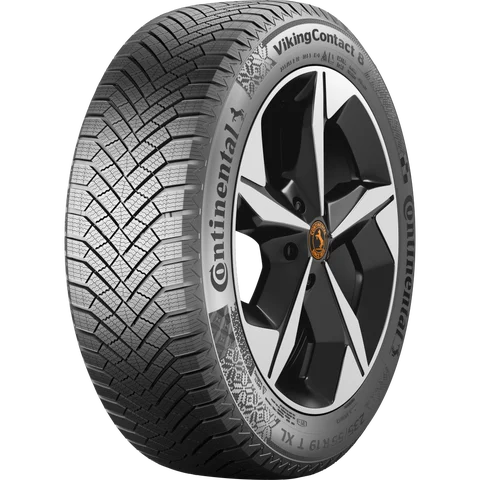
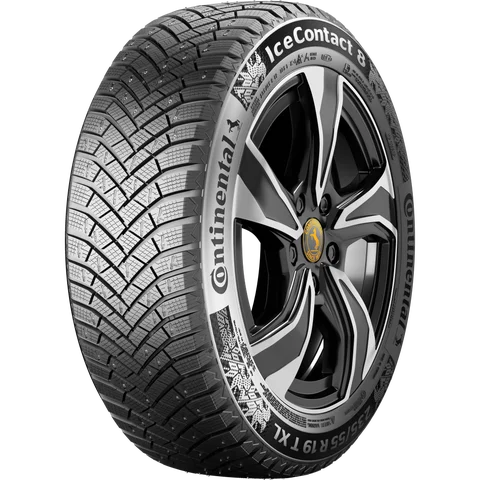
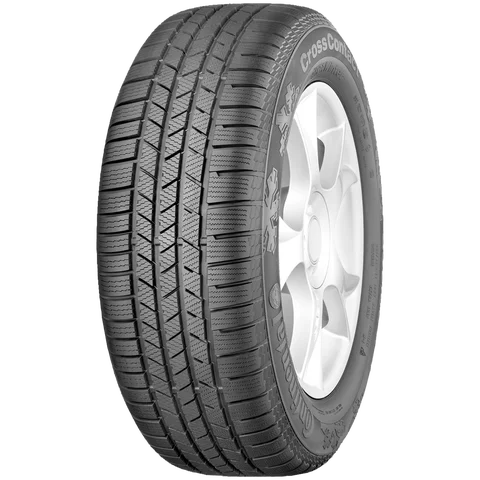
In some countries, like Germany, winter and all-season tires with the Alpine (3PMSF) symbol may be fitted with a lower speed index than what is listed in the vehicle registration – provided the reduced maximum speed is clearly indicated to the driver (e.g., via a sticker or dashboard display) and obeyed.
Some countries like Belgium permit winter or M+S tires with a lower speed rating only within certain seasonal periods and require visible indication of the maximum tire speed as well.
In many countries in Europe there is no similar exception, and tires generally must meet at least the speed rating specified in the vehicle’s documents.
Regulations concerning winter tires, speed rating requirements, and labeling differ by jurisdiction, so drivers planning cross-border travel should check the specific winter tire laws in each country they will visit.
Can you mix tires with different speed ratings?
In general, mixing tires with different characteristics, including different speed ratings, is not recommended. Such combinations can lead to variations in grip and handling, which may negatively affect the vehicle’s overall performance and stability. If mixing tires cannot be avoided, it’s advisable to install the tire with the higher speed rating on the rear axle. However, this applies only to front-wheel-drive vehicles. For cars with rear-wheel or all-wheel drive, it’s best to consult a professional tire service to determine the safest setup.
Frequently asked questions about the speed index
A tire’s code contains several important details: The load index (also called the load rating) comes first, followed immediately by the speed index. The load index consists of two or three digits and indicates the maximum weight that a single tire can support. If a tire is subjected to more load than allowed, the risk of a blowout increases significantly.
Although the two ratings are technically independent, they do influence each other in practice. At high speeds, centrifugal forces change the way a tire is stressed, which can reduce its effective load capacity. That’s why reinforced tires (marked with designations like “XL” or “reinforced”) are built to handle higher loads even when driven at elevated speeds.
Different types of vehicles require different combinations of load and speed ratings. Commercial vehicles typically need high load capacity but lower speed ratings, while sports cars use tires designed for high speeds but comparatively lower loads. Choosing the right combination is essential for safe handling and reliable performance.
The highest standardized speed rating for passenger car tires is Y, which corresponds to a maximum sustained speed of up to 300 km/h (186 mph) under test conditions. (Y) or similar indications can imply even higher capabilities, but these are special cases requiring manufacturer testing.
Tires with a higher speed rating are engineered to handle greater speeds and are often built with more durable, heat-resistant materials. This can translate into improved stability and better temperature performance at high speeds. However, overall driving behavior is also influenced by other factors such as tread design, rubber compound, and the vehicle’s suspension setup. Possible drawbacks are:
- Ride comfort: Because these tires tend to have stiffer constructions, they can produce a firmer, less comfortable ride.
- Wear: Depending on the rubber compound, wear characteristics can vary – but a higher speed rating does not automatically mean faster wear.
Ultimately, whether a higher speed index is the better choice depends on your driving style, your vehicle, and your specific needs.
Tire speed ratings were created in Europe to ensure that tires could be tested and classified for safe use at specific speeds. Early on, the highest category was an “Unlimited V” rating for speeds above 210 km/h (130 mph), but as tire technology advanced and vehicles became faster, new categories were needed. A “Limited V” rating (up to 250 km/h or 149 mph) was introduced, and eventually the Z rating was added for even higher performance. These standardized ratings help ensure that increasingly powerful vehicles can be equipped with tires that are proven safe at the speeds they are capable of reaching.
Yes, speed rating is an important specification for tires because it affects safety, performance, and legal compliance. A tire’s speed rating tells you the maximum speed it has been tested and certified to handle safely under proper load and inflation conditions