
Winter tires in summer
Read more




The weather changes throughout the year, which affects driving conditions on the road. Your vehicle will benefit from having tires fitted to the wheels that are specifically intended for your driving habits and regional weather conditions. In some countries, winter tires are even a legal requirement. In this section, we will discuss the differences between three tire categories; summer tires, winter tires, or all-season tires.
Continental offers a variety of tires designed with leading technology to match all your driving needs. No matter what season it is, Continental will have you covered.
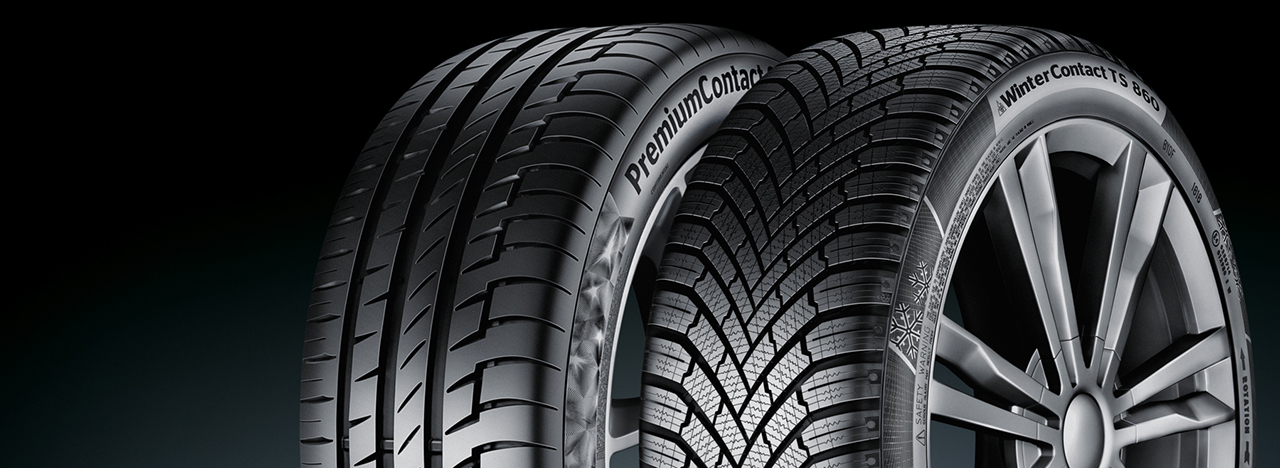
During the warmer season, where temperatures climb above 7 °C, you should fit your wheels with summer tires. They provide high grip levels on wet and dry roads through their dedicated tread patterns and tread compounds. Summer tires also provide high stability in curves and optimal mileage performance at summer temperatures.
This means you can confidently drive your car on both dry and wet slippery roads during the warmer months. Remember, however, that summer tires are not suitable for winter conditions, so be sure to switch your tires when the season calls for it.
When the temperature falls below 7 °C (46 °F), it's time to switch to winter tires. These tires perform well in all winter conditions, ranging from snow and ice to wet and cold dry roads. They provide enhanced braking performance in snowy and icy conditions and feature a highter tread pattern, clearing away slush and digging into snow for greater traction.
Another reason they're so effective is that they are made of an optimized rubber compound that stays soft and flexible at low temperatures for better vehicle control. In addition, using the wrong tires in winter conditions can result in less grip and safety. However, it’s not advisable to use winter tires in warm weather; this softer compound will wear out faster on dry tarmac and need replacing sooner.
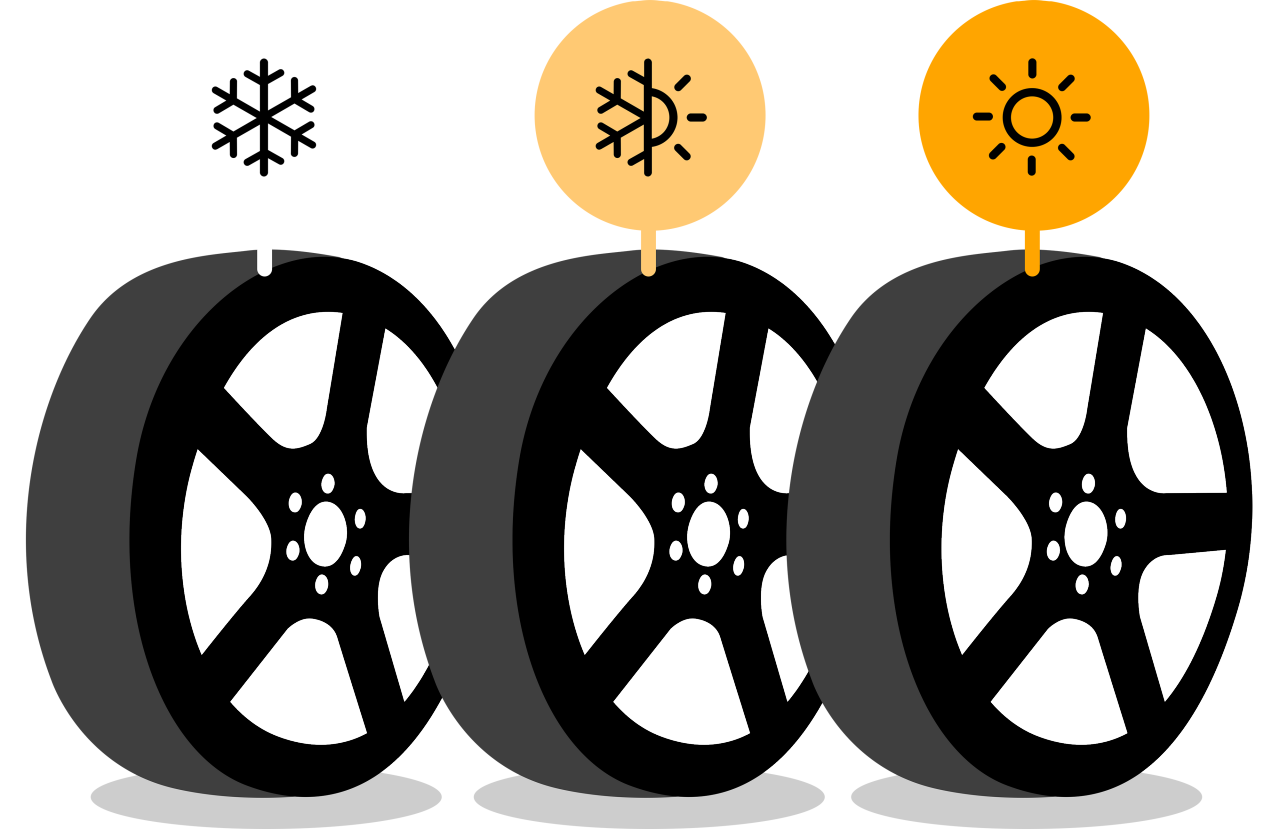
All-season tires are a versatile solution, designed to perform across a broad range of temperatures, from approximately -10 °C (14 °F) up to +30 °C (86 °F). They combine features from both summer and winter tires, providing reliable traction on dry and wet roads throughout the year. These tires can also handle light snow, while generally offering a quieter and more comfortable ride compared to dedicated winter tires.
On warmer roads, typically above 7 °C (45 °F), all-season tires have lower rolling resistance than winter tires, enhancing fuel efficiency and overall performance. However, despite their versatility, all-season tires don’t match the performance of winter tires in severe cold, heavy snow, or icy conditions, where winter tires remain the safest choice.