Tire and Road Wear Particles
Tire wear is necessary for safe driving. Optimal traction and reduced wear with Continental.
Read more




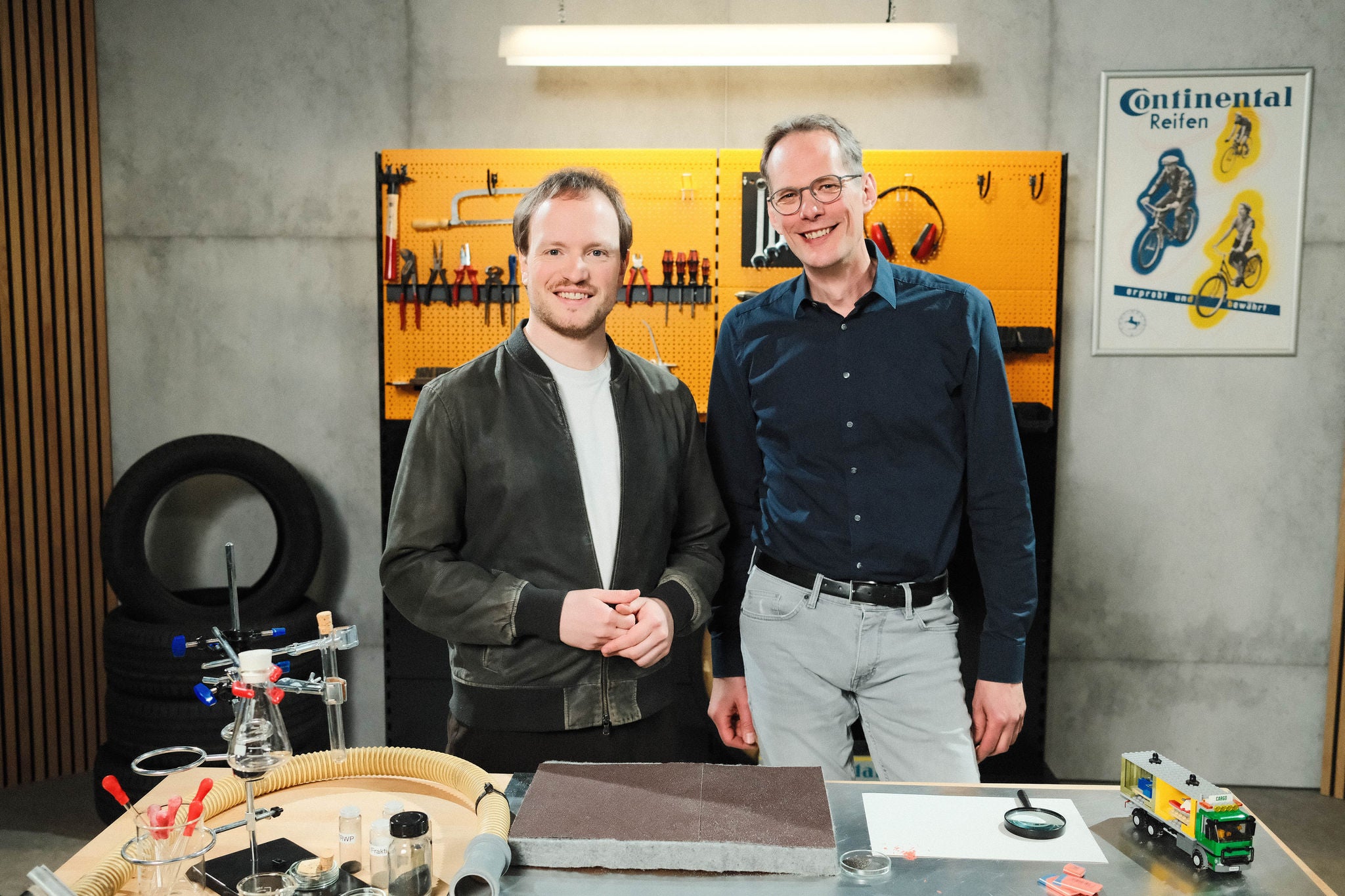
Dr. Thomas Kramer is head of the material wear expert field in Research and Development at Continental. In this interview, he explains why researching tire and road particles is so important – and how a specialized vacuum device is helping to better understand them.
Tires are the only direct connection between a vehicle and the road, making them essential for safety. Whenever you brake, slow down or steer, the tire needs to grip the road surface. And grip is only possible through friction. Without friction, you wouldn’t be able to stop or control your car. This friction causes small amounts of material to be released from both the tire tread and the road surface. These particles mix together to form tire and road wear particles, or TRWP. We’re working hard to continually reduce the level of abrasion. But as things stand today, it’s an integral part of safe mobility. Our job is to optimize this balance: on the one hand, ensuring the highest level of safety – which is non-negotiable for us – and on the other, reducing tire wear as much as possible.
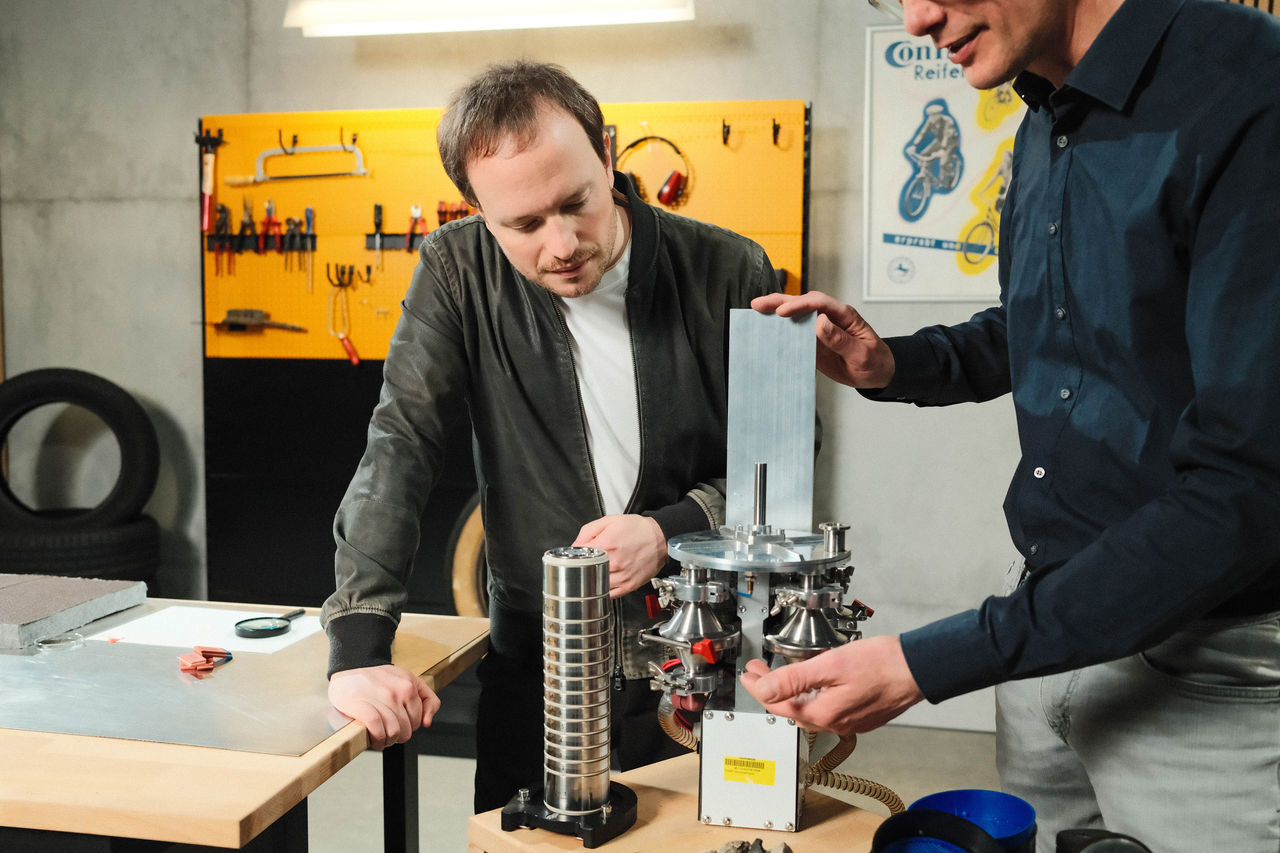 In the laboratory, Dr. Kramer shows how the individual components are separated with a filter.
There is no single, globally recognized definition of microplastics. According to the European Chemicals Agency (ECHA), all particles smaller than 5 millimeters are considered microplastics. However, tire and road wear particles aren’t comparable with conventional microplastics that are intentionally added during manufacturing. They’re generated unintentionally while driving. In other words, while the product is being used. According to the UN’s definition, tire and road wear particles are therefore classified as secondary microplastics.
Tire and road wear particles consist only partly of synthetic materials. They also contain minerals and other components from the road surface. This unique composition means their properties – such as size, density and durability – vary significantly from other microplastic particles.
These properties also influence how the particles behave in the environment. They settle quicker, for example. Studies show that the majority of the particles accumulate in soils near roads and remain close to where they were generated. Only a very small proportion – around 2 to 5 percent – reach river estuaries or the ocean.
The fact is that tire wear exists, regardless of how certain particles are classified. At Continental, we look at this topic in a very nuanced way and make targeted investments in research and development. Emissions studies across seven European countries estimate that roughly one kilogram of tire wear particles per person is released every year – and we’re working hard to reduce this figure.
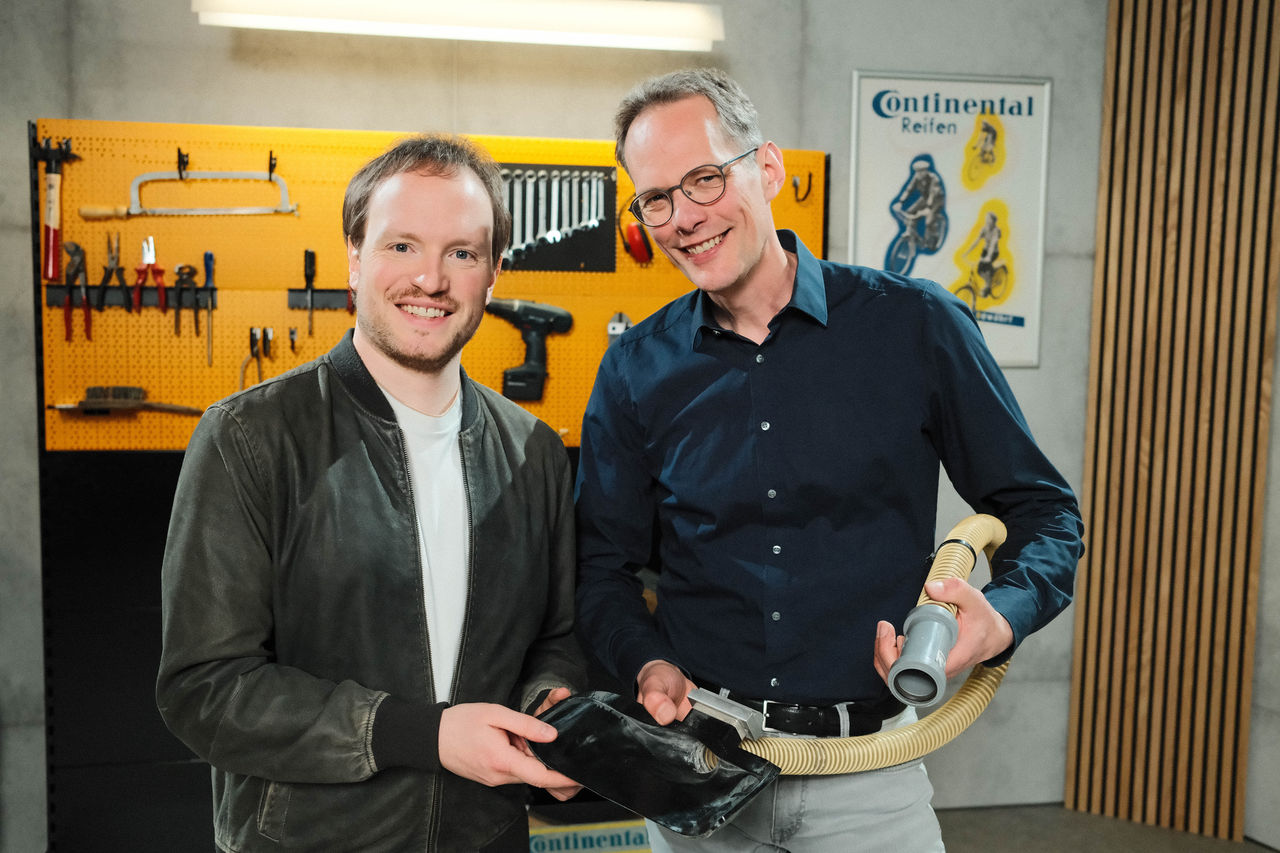 A vacuum is used to collect the tire and road wear particles.
When we collect particles from the road, we don’t know exactly when or under what conditions they were formed. They also tend to be mixed with particles from various sources. Together with the Technical University of Braunschweig, we’ve developed a specially equipped test vehicle featuring a modified vacuum device mounted directly behind a driven wheel. It captures particles as soon as they’re created. At the same time, special sensors mounted at other points on the vehicle measure particle concentration in real time. This allows us to link data on particle formation directly to vehicle dynamics, road surface and weather conditions. By taking targeted samples – for example during cornering or only during straight-line driving – we can precisely analyze in the lab which particles come from the tire, which from the road surface and which may originate from brakes or other sources. This approach generates vast amounts of data that help us continually improve our understanding of tire wear.
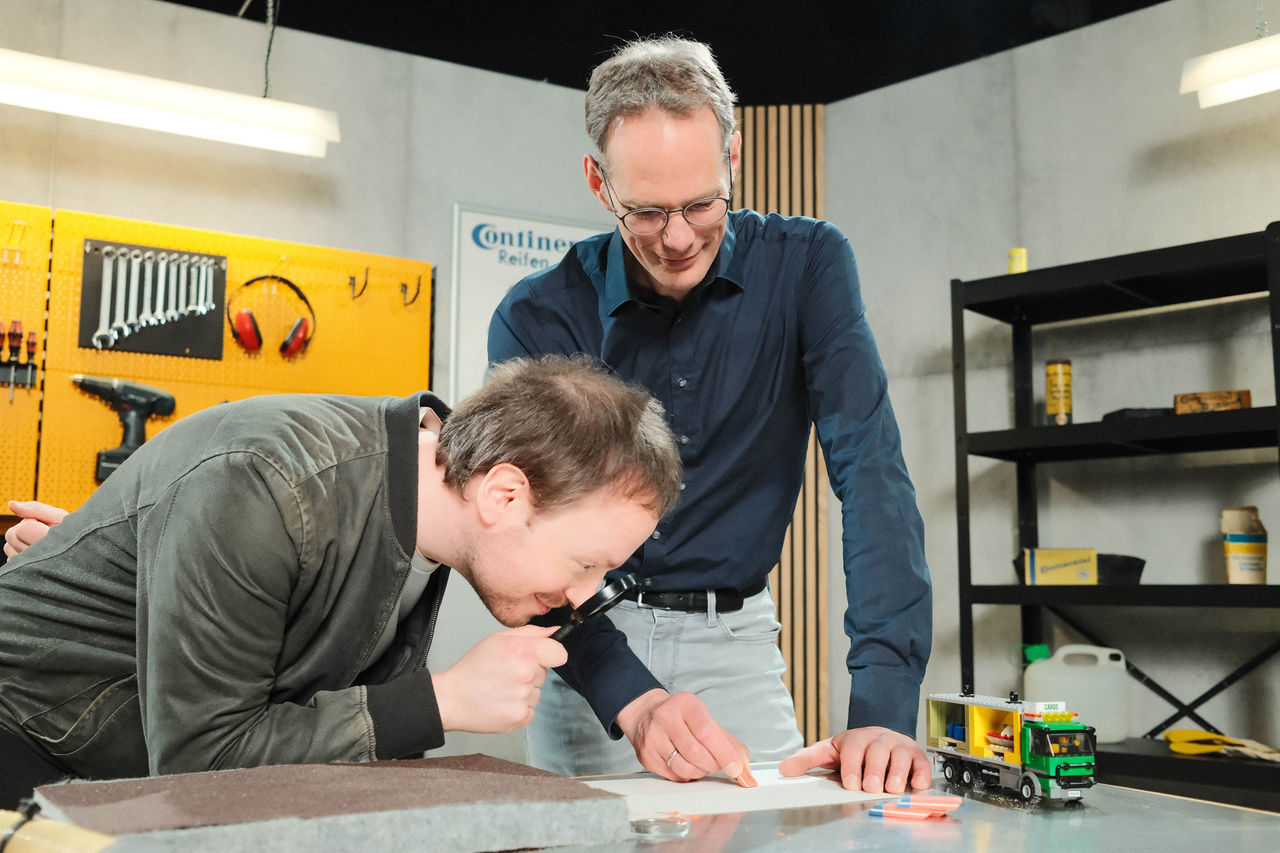 Dr. Kramer uses an eraser to show how abrasion is created.
We deliberately pursue multiple approaches in parallel, focusing on three key areas. First, we work to reliably understand and measure how particles are created under real driving conditions. This is where our analysis method using the specially adapted vacuum device comes into play. Second, we develop advanced materials and tire designs that reduce wear without compromising on safety or performance. Our EcoContact 6 tire model, for example, generates 30 percent less wear per kilometer than its predecessor while also delivering 20 percent more mileage. Third, we drive comprehensive analysis of the environmental impact of these particles by studying their behavior and distribution in the environment.
Collaboration is also a key part of this effort. Within industry initiatives such as the Tire Industry Project (TIP), we work with partners, universities, researchers and other stakeholders to harmonize methods, improve data comparability and advance overall scientific understanding of tire and road wear particles. What’s more, we were the only tire manufacturer to take part in the RAU project funded by the German Federal Ministry of Research, which developed a filtration system capable of capturing up to 97 percent of solid particles from road runoff.
This shows that the issue is highly relevant not only for us but across the entire tire industry and in policymaking. With the upcoming Euro 7 standard, which for the first time will set limits for tire wear starting in 2028, we’re well prepared. Our research and product development are already aligned with these requirements.
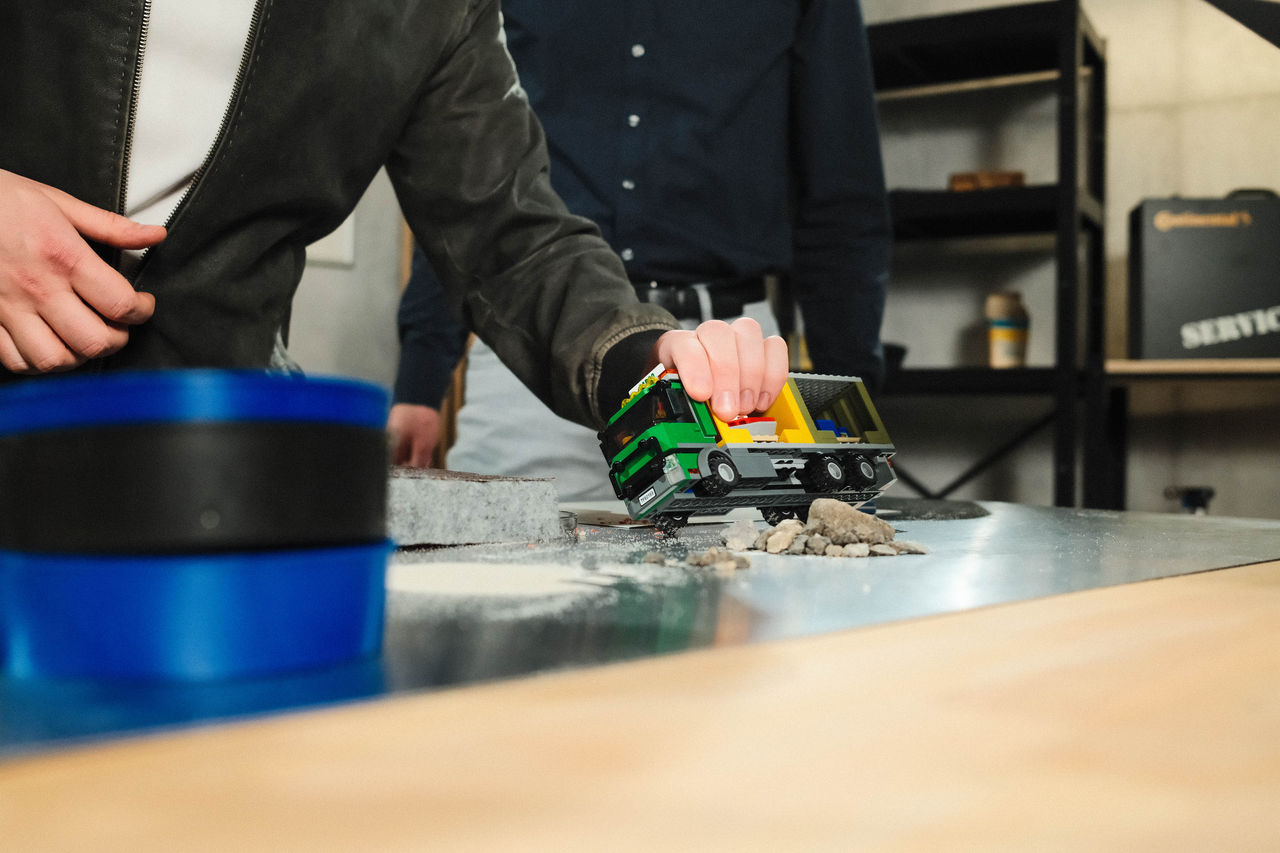 The amount of tire and road wear particles is influenced different factors such as the surface.
Studies show that driving style can have up to three times more impact on wear than tire design itself. Our measurements demonstrate clear correlations between particle concentration and speed profiles. High longitudinal and lateral acceleration – in other words, heavy braking, rapid acceleration and fast cornering – considerably increase tire abrasion. Driving more smoothly, braking gently and maintaining a steady speed can noticeably reduce wear. Having the correct tire pressure and avoiding unnecessary loads also help. In fact, these are the same measures that lower fuel consumption. In this sense, energy efficiency and reducing wear go hand in hand.
.jpg/_jcr_content/renditions/cq5dam.web.1280.1280.jpeg)