The Rubber Code
Summer, winter, or all-season tires? Continental explains why the rubber compound is so crucial—and what the 7-degree rule means for your safety.
Read more




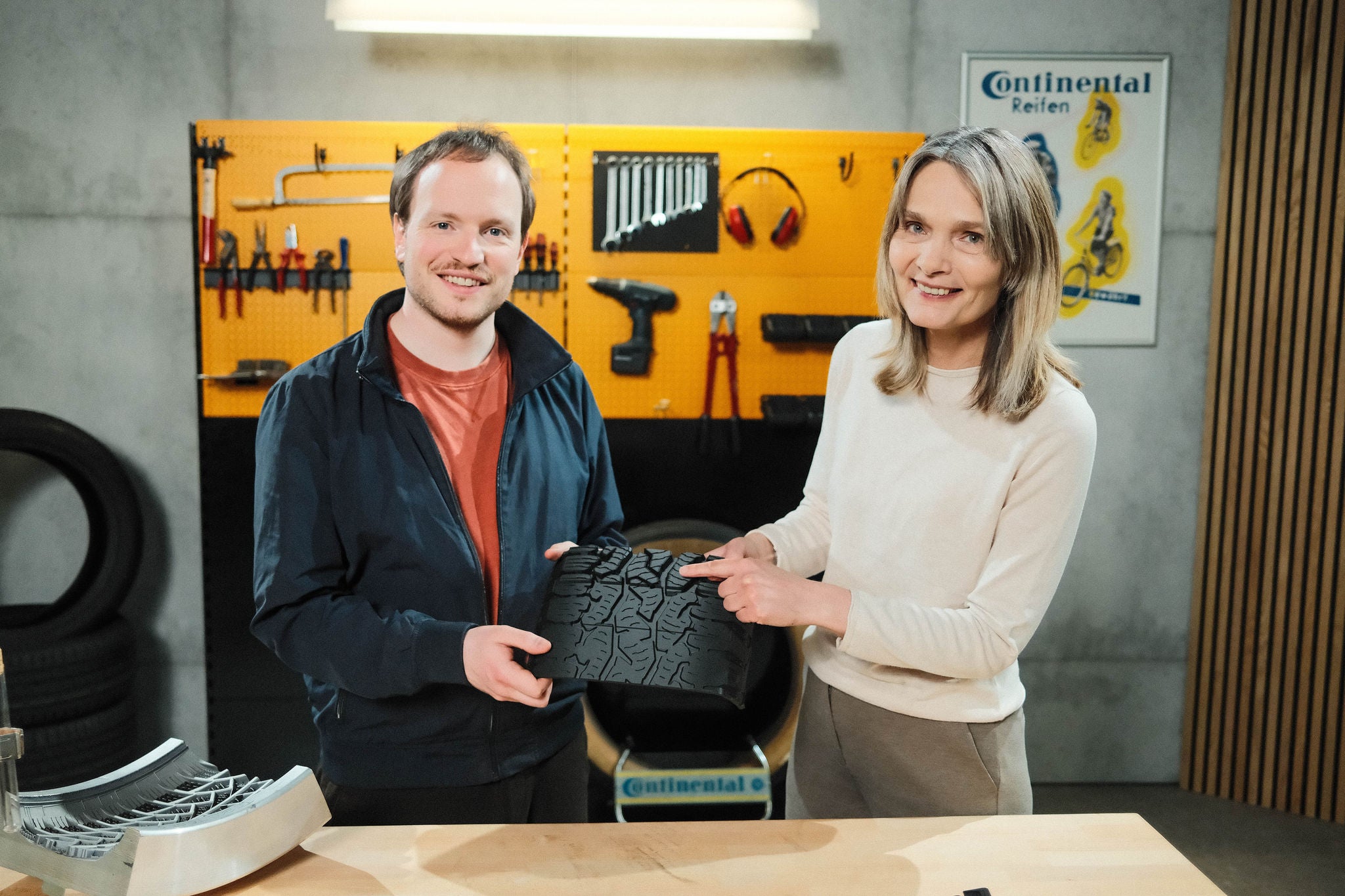
A car tire may look simple – just a piece of rubber with a few grooves. Yet its contact area with the road is no bigger than a postcard, making the tread vital. Claudia Bauer, an engineer at Continental, and her team design this often-overlooked yet safety-critical component. In this interview, she explains why every groove is a piece of high-performance architecture – and why there are better ways to measure tread depth than using a €2 coin.
That’s correct. Per wheel, it’s only about 155 square centimeters. Because of the grooves, sipes and the roughness of the road surface, the actual load-bearing area is reduced to roughly five by five centimeters. All forces during braking, accelerating and steering are transmitted through this tiny area. That’s why the tread pattern is not decorative – it’s a carefully engineered piece of architecture designed to make this contact area work as effectively as possible.
Every tread design consists of four basic elements. The tread blocks are the raised rubber segments that make contact with the road and transmit forces. The grooves channel water away and are crucial for aquaplaning (or hydroplaning) resistance. The ribs – rows of interconnected blocks – provide driving stability and steering precision. And the sipes are small, thin slots molded into the tread blocks that create additional biting edges, especially important on wet or snowy surfaces.
Learn more about the parts of a tire tread: Tire tread | Continental Tires
For me, the biggest leap was the transition from manual craftsmanship to molding. Back in 1904, grooves were carved into rubber by hand using special tools, which was difficult to reproduce. Only with precision-engineered steel molds did it become possible to achieve consistent quality at scale. Everything that followed – simulation, AI, 3D printing – is a logical evolution of that idea. Continental holds more than 1,700 active patents for tread patterns alone.

Today, most of our work is done virtually. We design digital prototypes and use simulation tools and AI to predict how a tread pattern will perform under a wide range of conditions. Only after multiple optimization cycles do we create 3D-printed patterns and build test tires for lab and track testing. This saves hundreds of physical test tires every year and conserves valuable raw materials. AI excels at analyzing large volumes of data, and simulation tools at predicting physical properties – but they cannot replace human perception. Subjective steering feel, feedback in corners and noise perception still rely on human expertise.
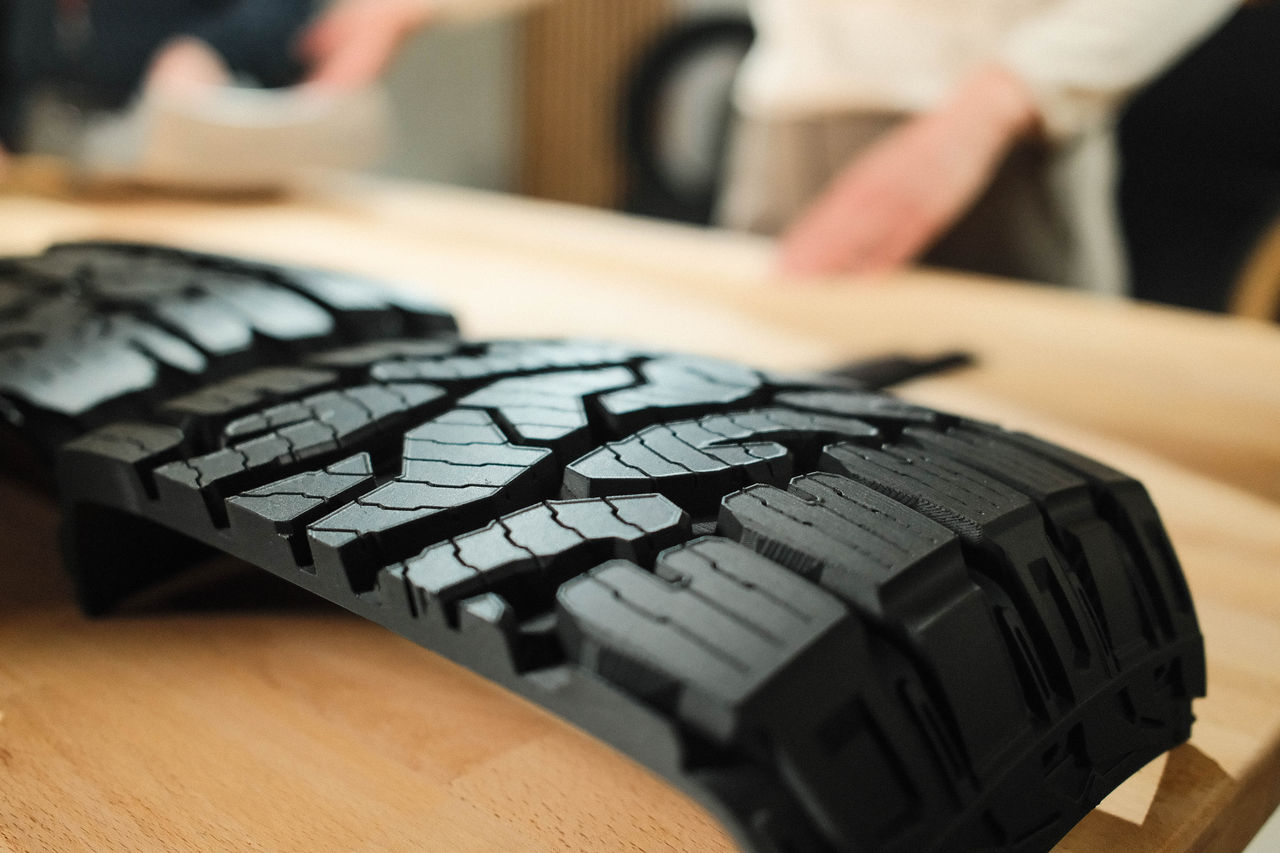 Patterns, grooves and sipes ensure safety
 Grooves were carved into rubber by hand using special tools
Learn more about the history of tire tread design: Tire design – about construction, tread and materials
That’s exactly the challenge. Every tread pattern is a compromise. For example, adding more edges through sipes can reduce dry grip. In tire development, we call this a trade-off. Rather than designing one all-purpose tire, we develop tires optimized for specific use cases.
Aquaplaning (or hydroplaning) is a great example of how much physics goes into each groove. A modern car tire can channel 25 to 30 liters of water per second. If the grooves can no longer handle that volume, a water film forms between rubber and asphalt and the tire starts to float. At that point, you lose steering, braking and traction simultaneously. That’s why groove depth and design are so critical. In winter, there’s an additional effect: on snow, it’s not just the rubber that provides grip but also compacted snow within the tread itself – because snow sticks best to snow. The block and sipe edges of a winter tire pack snow into the tread, creating numerous gripping edges and snow pockets. On a summer tire, however, that many sipes would make the tread blocks unstable. On dry roads, you need stiffer blocks for precise steering and short braking distances.
Then there’s noise of the tire rolling. In electric vehicles, there is no engine noise to mask it. As a result, tire rolling noise is more noticeable inside the car. At the same time, electric vehicles are heavier and deliver instant torque, which affects rolling resistance and tire wear. All of this must be factored into tread design.
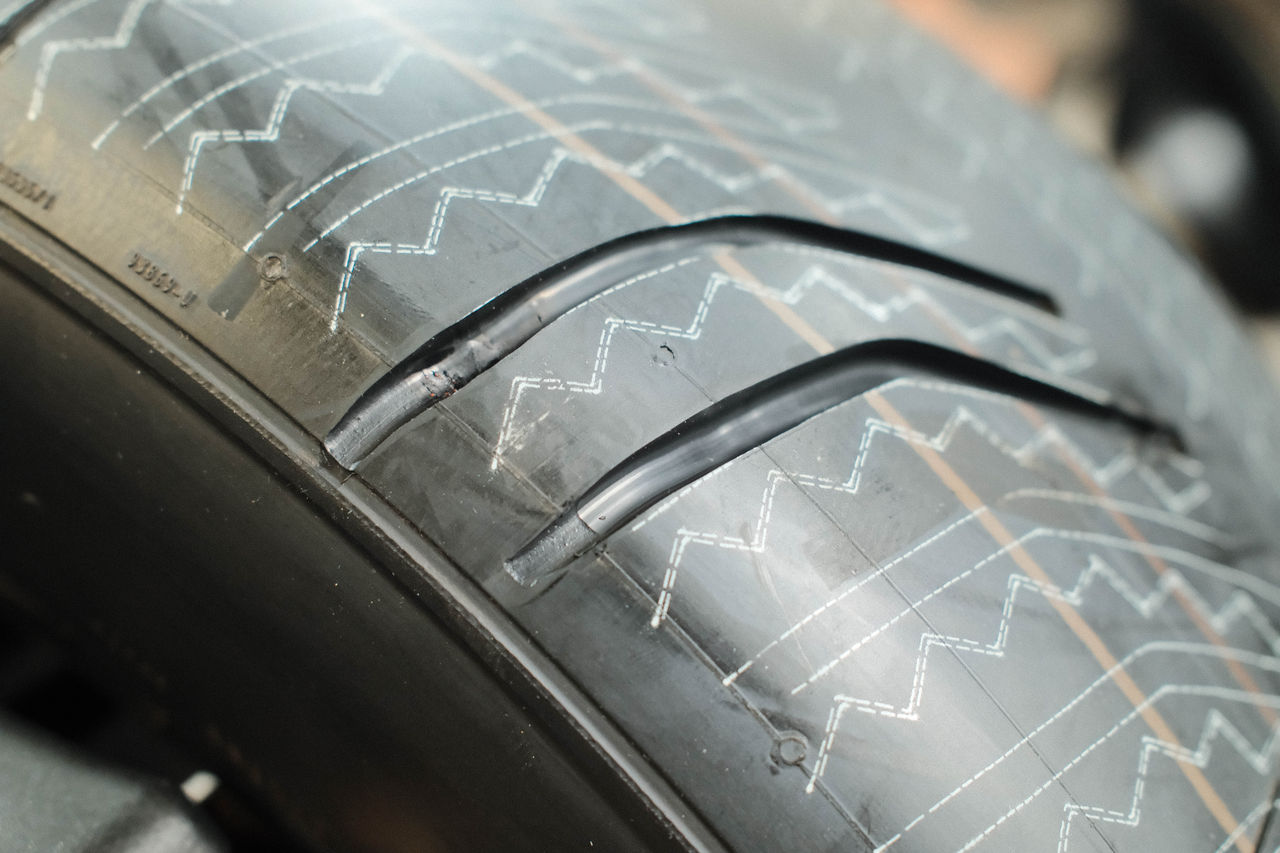
The coin test is popular, but it’s imprecise. Coins are not standardized for this purpose and vary around the world – not every country uses the euro. Modern tires have a much more accurate solution built in: tread wear indicators, or TWIs. These are small raised bars located in the base of the grooves. Once the tread wears down to their level, the legal minimum tread depth has been reached, and the tire must be replaced. Small markings on the sidewall indicate where these indicators are located, often labeled “TWI” or shown with a triangle symbol.
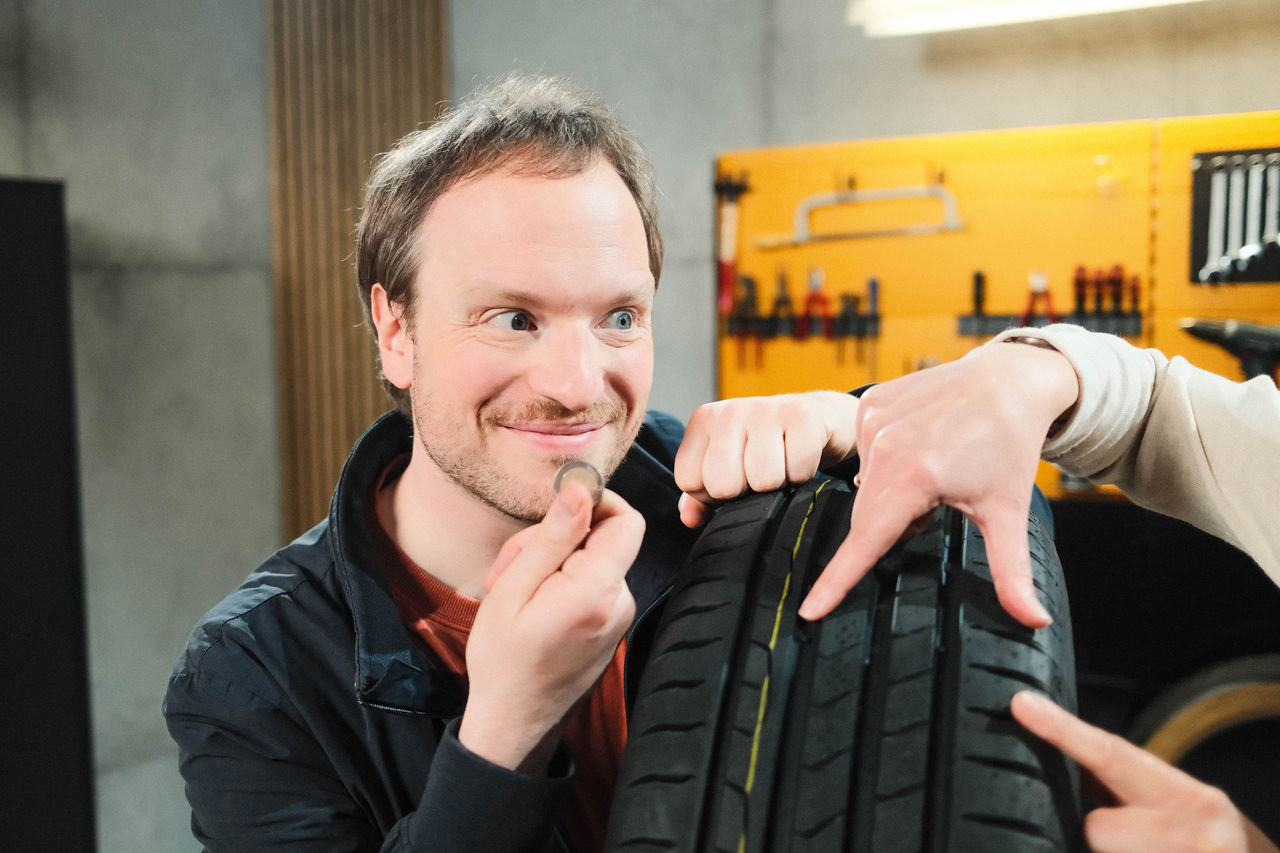
Continental tires often include an additional, higher indicator that signals when tread depth is no longer sufficient for optimal safety performance – even if the tire is still legally usable.
As tread depth decreases, water displacement drops dramatically and braking distances on wet roads increase noticeably. In everyday use, three warning signs are often overlooked: uneven wear, which may indicate incorrect tire pressure or misalignment; fine cracks in the sidewall, signaling aging; and the tire’s age itself – after six to eight years, it should be inspected carefully regardless of appearance. Ultimately, it all comes down to that postcard-sized contact area. How well we design it determines safety, efficiency and comfort – just as it did 120 years ago.
.jpg/_jcr_content/renditions/cq5dam.web.1280.1280.jpeg)