Concept Tires
Tires are our passion. Many of our innovations are now technological standards. And we want things to stay that way.
Read more


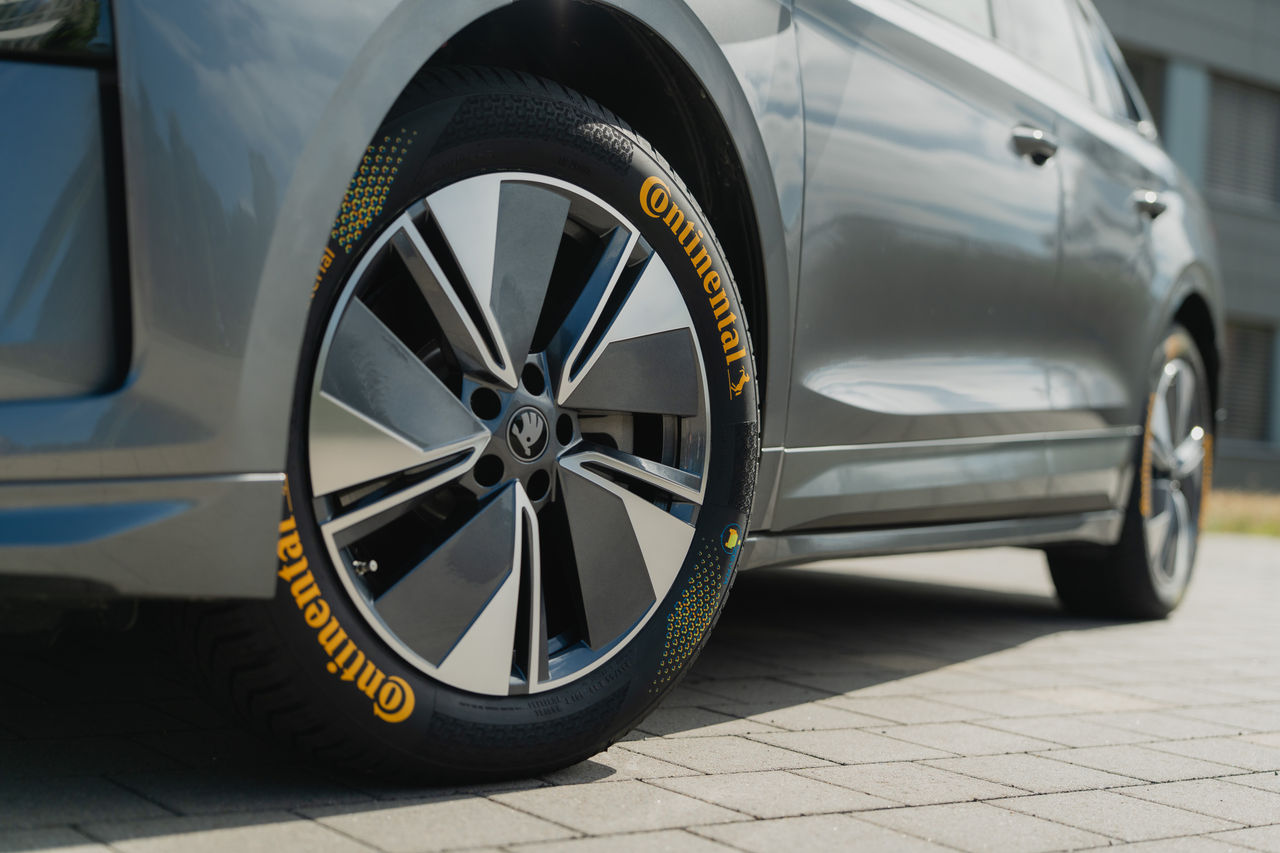
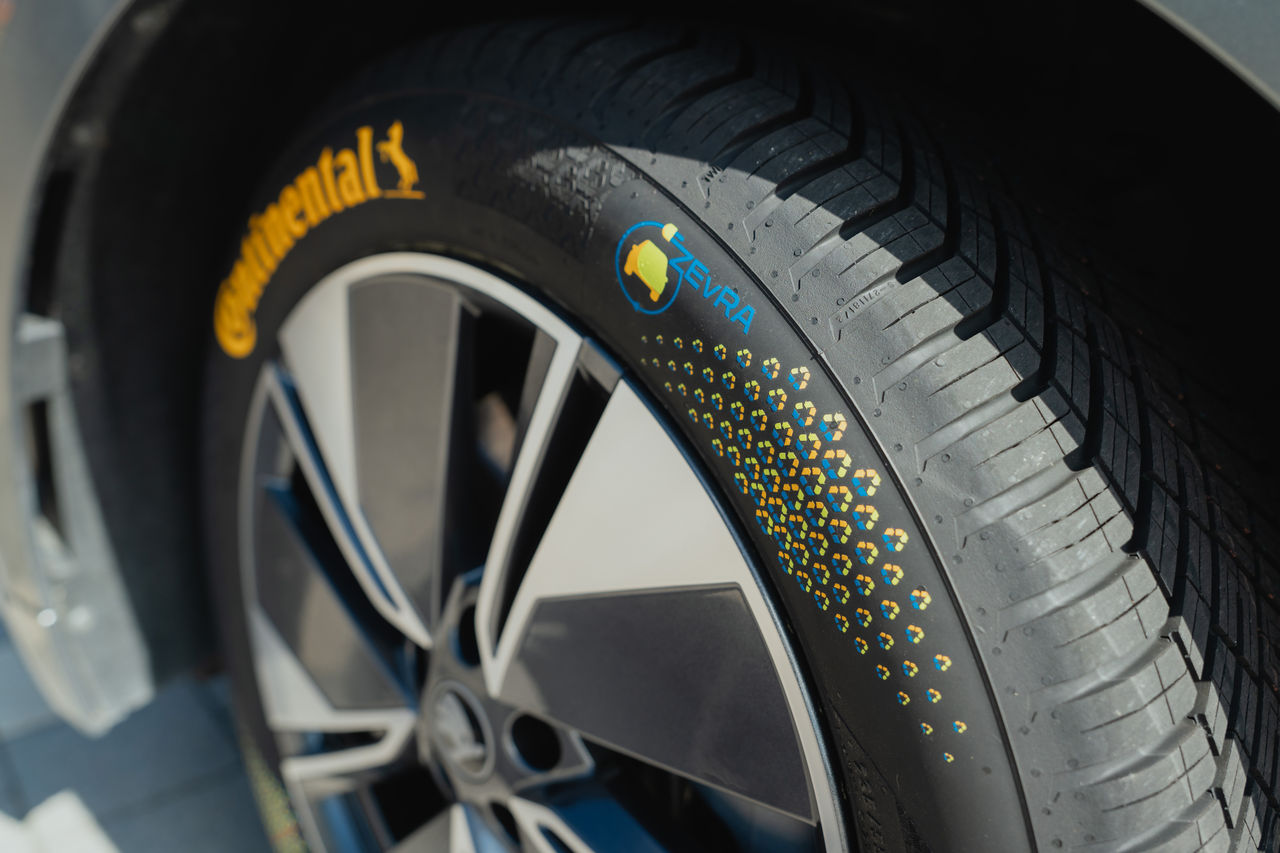
As part of the EU-funded ZEvRA project (Zero Emission Electric Vehicles Enabled by Harmonized Circularity), Continental has developed a concept tire made from around 43 percent recycled raw materials. The concept tire highlights the potential of innovative material approaches. It also demonstrates the need for a reliable framework when adopting recycling technologies on an industrial scale.
Tires are among the most technically demanding products in the automotive industry. Dozens of high-performance materials must work together precisely to ensure safety, efficiency and longevity. This is exactly what makes using recycled materials in tire production so challenging.
Incorporating a high percentage of recycled materials into a safety-critical product while still meeting high performance standards is therefore a major step forward.
ZEvRA stands for “Zero Emission Electric Vehicles Enabled by Harmonized Circularity.” The EU-funded project has a clear objective: to improve the circular economy of electric vehicles along the entire value chain. Twenty-eight project partners from various industries are working together to advance circular solutions for electric mobility, with Continental the only tire manufacturer in the consortium.
The two-year project runs until the end of 2026. It provides a platform for demonstrating the potential of circular materials and for identifying the conditions necessary for industrial-scale implementation.
“Circular materials can help save resources and energy while reducing greenhouse gas emissions. They are key to making mobility more sustainable,” explains Dr. Andreas Topp, head of Platform Development and Industrialization for passenger-car tires at Continental.
Recycled steel
Provides structural stability within the tire. Steel from end-of-life tires is processed and integrated into the reinforcement structure of the new tire. Continental has already expanded the use of recycled steel in production and utilizes it in selected tires.
Recycled rubber from end-of-life tires
Obtained through a mechanical recycling process known as reclaiming. The vulcanized rubber from end-of-life tires is processed so that it can be reused as a raw material in tire production. Continental uses different methods to integrate this secondary raw material into tire compounds in line with its quality requirements.
Polyester yarn from recycled PET bottles
Forms the tire carcass and provides structural rigidity. Continental has been using this material in selected production tires since 2022.
Recovered carbon black (rCB)
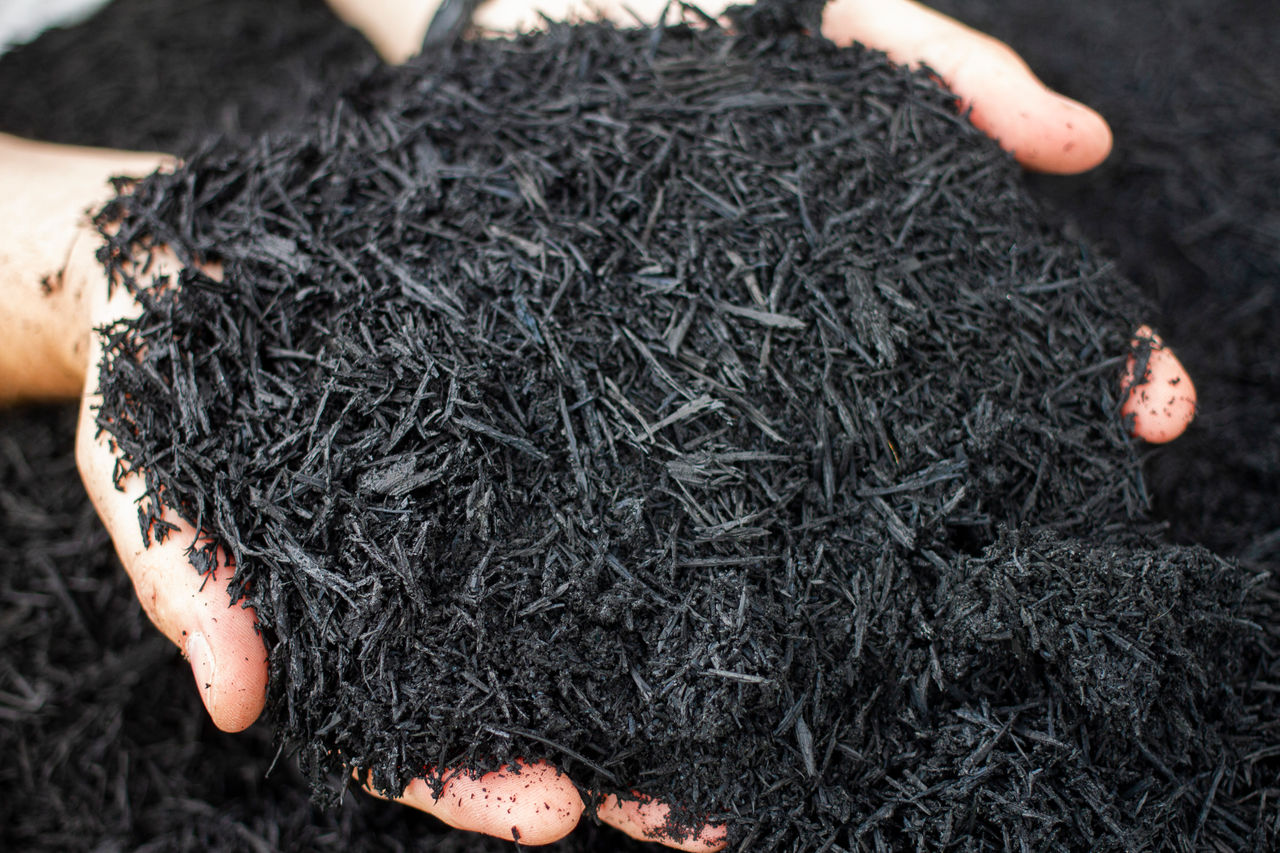
Obtained from end-of-life tires through pyrolysis. Continental’s partners in this area include the technology company Pyrum Innovations. The recovered carbon black is used in selected material-handling tires, such as solid rubber tires for forklifts.
Recycled sand (rSand)
A residual material from foundries. Through a specialized recycling process, it is converted into an alternative form of silica. Silica is an important filler in modern tire compounds and has a significant impact on rolling resistance and wet grip.
The concept tire shows that sustainability and performance can go hand in hand, achieving the highest rating for rolling resistance on the EU tire label. It proves that a safety-critical product such as a tire can meet high performance standards even when a large share of its raw materials come from recycled sources.
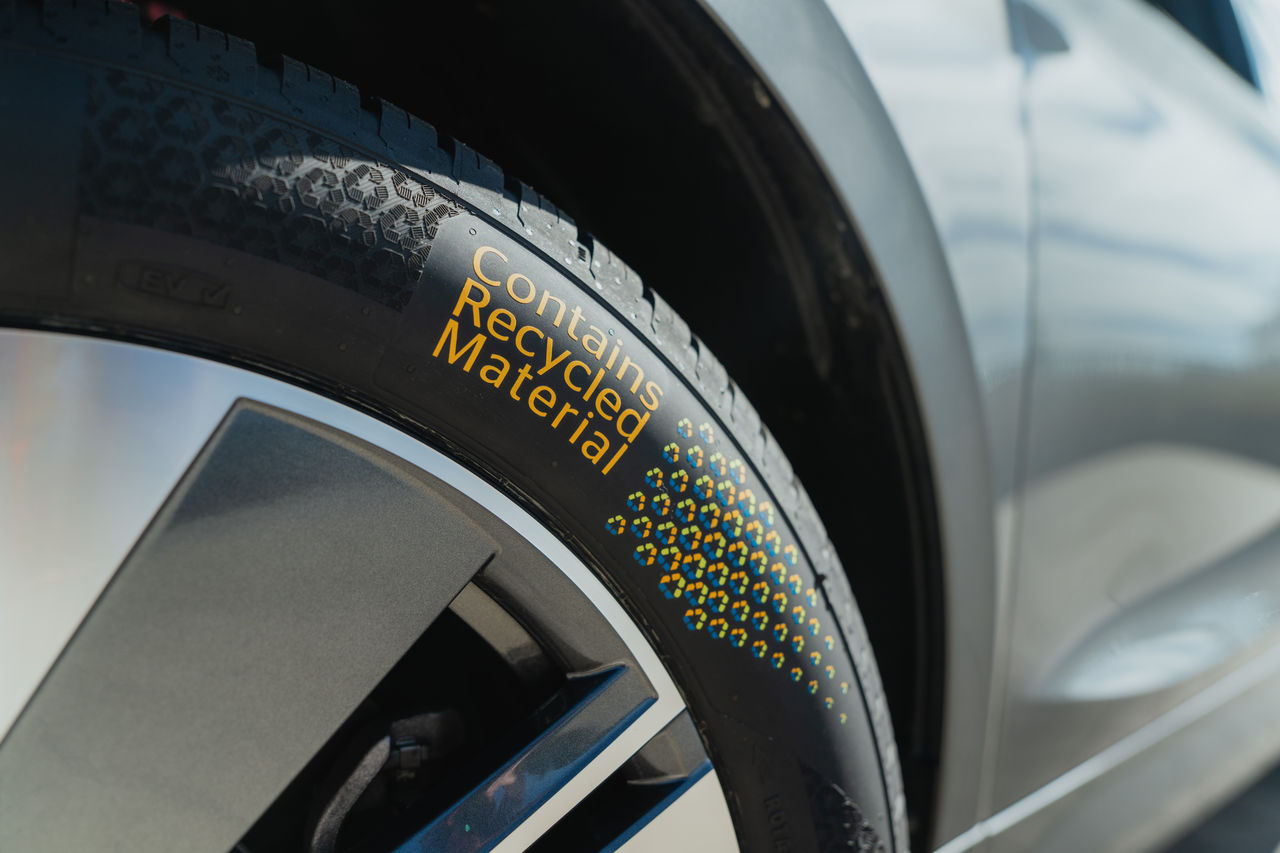
Renewable and mass-balance-certified raw materials also play an important role in the ZEvRA concept tire, alongside recycled materials. Around 13 percent of the materials used come from renewable sources. A further 25 percent consist of mass-balance-certified materials. Together with the roughly 43 percent share of recycled materials, more than 80 percent of the materials come from recycled, renewable or mass-balance-certified sources.
This reflects Continental’s strategic direction. In 2025, the share of purchased renewable and recycled production materials in the entire tire portfolio was 28 percent. By 2030, Continental aims to increase this figure to at least 40 percent. The ZEvRA concept tire already far exceeds this target and provides valuable insights for achieving it.
The ZEvRA concept tire is not an isolated research project. Rather, it is part of a series of tangible steps through which Continental is steadily increasing the share of alternative materials in production. A prime example is the UltraContact NXT tire, which is already in production and contains up to 65 percent renewable, recycled and mass-balance-certified materials. As one of the most sustainable production tires in Continental’s portfolio, it demonstrates how the company is translating insights gained from research projects into commercially available products.
The findings from the ZEvRA project will serve as the foundation for further development. The focus is on the industrial availability of suitable recycled materials and their integration into production, as well as the scaling up of manufacturing processes. The aim is to further increase the share of recycled materials used in future tire generations.
We have extensive experience in developing high-performance materials from renewable and recycled sources. Our concept tire shows what is technically possible today – while serving as a catalyst for the innovations of tomorrow.
Dr. Andreas Topp, head of Platform Development and Industrialization for passenger-car tires at Continental