Taraxagum
Read more



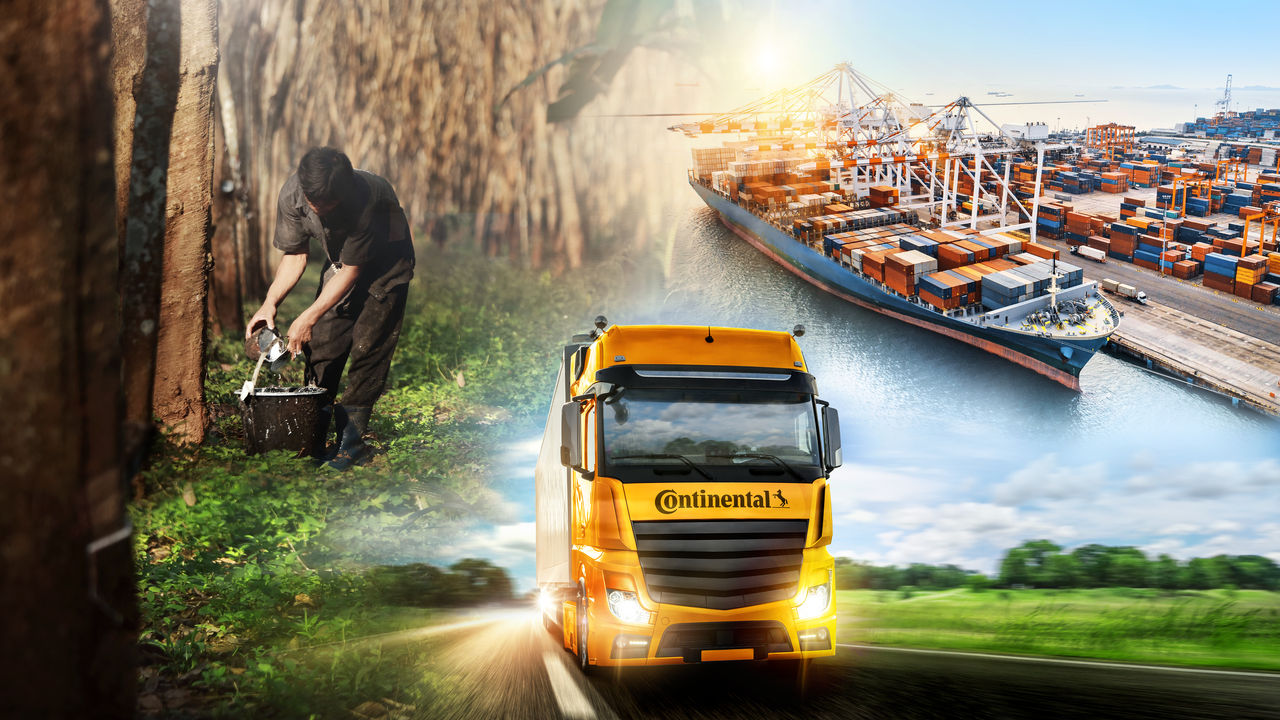
Continental takes a holistic approach to making the complex and fragmented supply chains for natural rubber more sustainable: By using the latest digital technologies, engaging locally in rubber cultivation, and cooperating closely with strong partners, we are creating greater transparency along the entire value chain.
Natural rubber is still essential for ensuring outstanding tire performance. It accounts for 10 to 40 percent of the total weight of modern, high-performance tires. Its exceptional strength and durability result from the strain-induced crystallization of the rubber. Today, natural rubber is obtained almost exclusively from the Hevea Brasiliensis tree.
Continental's ambition is to source all natural rubber for its tire production responsibly. To achieve this, we are increasing the transparency of supply chains through innovative technology, digitalization, education projects, and systematic risk mapping.
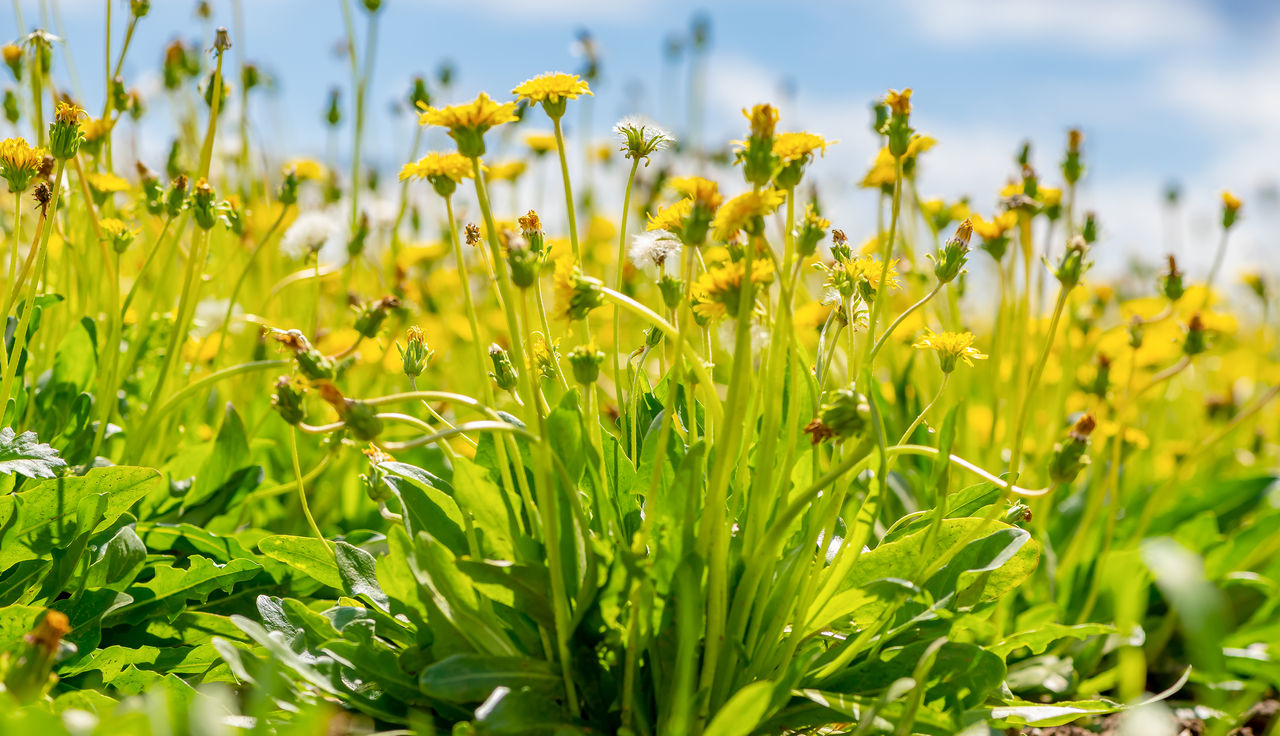
Natural rubber is a raw material that is used in more than 50,000 products, according to the Fraunhofer Institute. At 73 percent, the tire industry is the biggest consumer of global rubber production. Due to the high global demand for natural rubber, Continental is looking for more ways to extract natural rubber. Together with partners, the tire manufacturer has therefore been researching innovative sustainable materials such as natural rubber from dandelions for years.
The central goal of Continental’s Taraxagum project is for natural rubber no longer to be imported exclusively from the tropics in the future and to be produced as close as possible to the tire plants. In this way, further deforestation is to be prevented and CO2 emissions reduced by means of shorter transportation distances.

As part of an expanded development partnership with the German development aid agency Deutsche Gesellschaft für Internationale Zusammenarbeit (GIZ), Continental is involved right at the start of the supply chain in Indonesia, the world’s second biggest producer of natural rubber. The project focuses on the Kapuas Hulu district on the island of Borneo, where production is carried out mainly by independent smallholders. More than 2.5 million Indonesian farmers cultivate around 85 percent of the country’s rubber-growing areas.
Many of the farmers live in remote areas, making access to support and training difficult. Through this joint development partnership, smallholders are being trained locally in sustainable cultivation practices. Since 2018, around 5,000 smallholders have been trained to cultivate high-quality natural rubber according to clearly defined sustainability criteria. These efforts improve rubber quality, strengthen the livelihoods of local communities, and help prevent deforestation.
RubberWay is a joint venture between Continental, Michelin and software developer SMAG that specializes in developing technological solutions to the problem of mapping sustainability practices in the value chain for natural rubber.
The objective is to identify potential risks in the supply chain at an early stage. An app gathers and then evaluates data on potential environmental impacts as well as on social and human rights risks. The findings form the basis for minimizing social, human rights, environmental and economic risks along the supply chain.
With RubberWay, Continental and its joint venture partners are supporting wider use of responsible business practices in the natural rubber industry. The joint venture and its concept are in line with the goals of the Global Platform for Sustainable Natural Rubber (GPSNR). As a founding member of the GPSNR, Continental works with other partners to further increase traceability in the value chain for natural rubber.
Since 2011, suppliers and service providers working with Continental have been required to respect the Code of Conduct for the company’s business partners. This covers ethical, social and environmental aspects. Our objective is to minimize environmental risks and emissions as well as social and human rights risks.
To allow us to assess the sustainability performance of suppliers, we have been working with EcoVadis since 2017 and regularly conduct sustainability audits on our suppliers. EcoVadis is the world’s leading provider of sustainability ratings for companies and global supply chains.
Continental is a founding member of the Global Platform for Sustainable Natural Rubber (GPSNR), a multi-stakeholder initiative.
The GPSNR works to develop and harmonize policies for better maintaining human rights along the value chain for natural rubber, preventing land-grabbing and protecting biodiversity and water resources. It also aims to achieve better yields and to make supply chains more transparent.
The stakeholders in the GPSNR reflect the complex global supply chain, ranging from natural rubber farmers and rubber manufacturers to companies that process rubber, dealers, tire manufacturers, automobile manufacturers and civil society.
In its Sustainable Natural Rubber Sourcing Policy, Continental sets out clear responsibilities and obligations for itself and all suppliers and service providers along the entire value chain for natural rubber. Its sustainable sourcing policy is intended to minimize risks in connection with the environment, human rights, and society.
Sustainable Natural Rubber Sourcing Policy
Sustainable Natural Rubber Sourcing Policy
pdf 905 KB Download