Tire pressure
Read more




As the seasons change, you may need to think about changing your seasonal tires. Whether you're switching to winter tires or to summer tires, it's important to think about how you store your off-season set.
You may have them changed by a professional or do it yourself in your garage at home. But what do you do after they have been taken off? Knowing how to store tires after removing them from your vehicle is essential – whether you’ve got a car or motorcycle. In fact, it’s more important than most people realize.
If you don’t handle and store your tires properly, their characteristics can change. This can shorten their life. They can even deteriorate so badly in storage that they need to be replaced. But if you handle and store them correctly, they will deliver years of service – and you will save money.
Before your tires get removed or you remove them yourself, mark their position on your car – for example by labeling them with FR (front right) or BL (back left). This is important so you can rotate the tires properly the next time you mount them, ensuring even wear.
Using some detergent, water and a tire brush, clean tires before storing them. This will help remove a season’s worth of road grime and brake. Clean your wheels, too, if you store your tires on them. Make sure they’re completely dry before the next step.

This next step requires inaction, rather than action. Tires don’t need any kind of dressing or gloss product applied prior to storage. Tire compounds are formulated to resist ozone cracking and other environmental stressors. Such products can hinder rather than help extend the longevity of your tires.
Find a large, airtight plastic bag to fit each tire. Try yard bags or leaf bags. Ensure the bag (and tire) is free of moisture, then remove as much air as possible from the bag (use your vacuum cleaner!) and tape it shut. This airtight environment will reduce evaporation of oils from the rubber compounds. Specific tire storage caddies or tire totes are also available. These make transporting and storing tires easier and help keep them grime and dust free. However, they aren’t air tight. If you want to use them, bag tires as above first, then place them in your tire tote.

UV rays and the sun’s heat can wreak havoc on rubber. Your tire storage location should keep them out of direct sunlight.

Whether in cold or warm weather, tires should never be stored in the open air, even under a protective covering.
UV rays and the sun’s heat can wreak havoc on rubber. Your tire storage location should keep them out of direct sunlight. Think cool, dry and moderately ventilated. Your basement or another climate-controlled space is ideal. If there is a heat source in the room, the tires must be shielded from it. Most garages, sheds and attics undergo a range of temperatures, precipitation and humidity. You want to avoid these fluctuations.

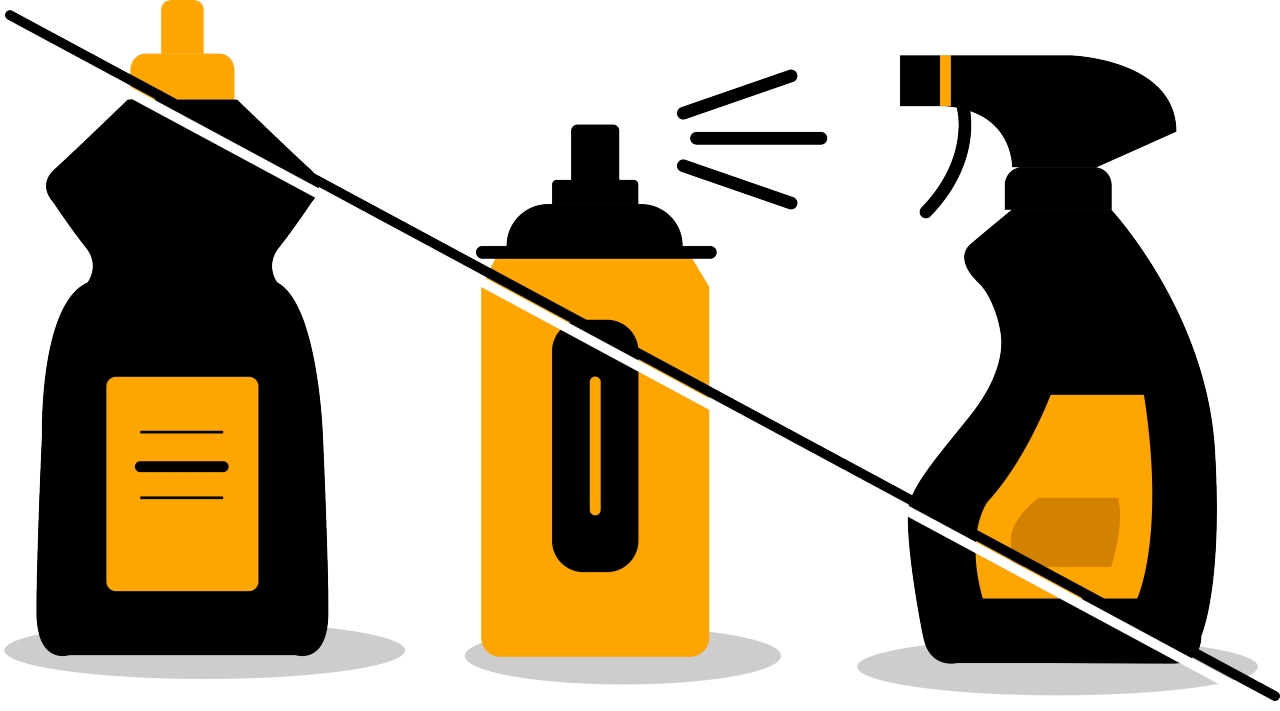
Keep the tires away from harsh chemicals like gasoline, oils, solvents, etc. Chemicals can degrade rubber, causing premature wear and safety hazards. Avoid placing tires near chemical containers. Also check storage areas for contamination if repairs or maintenance were done.
Your number one chemical to avoid: Ozone. It’s particularly damaging to tires. Electric motors that use contact brushes generate ozone. These can include:

Ensure your storage area contains none of these items. Also avoid fuels and lubricants. Being careful regarding chemical exposure helps extend tire life and ensures better performance.
Got whitewalls – or other white parts (like lettering) on your tires? In case you’ve decided not to bag your tires, store them with white areas touching other white areas, and black touching black. Here’s why: The black rubber on the white side is compounded differently than the black rubber on the other side. A layer of non-staining black rubber is used on the tire's white side to prevent oils migrating from the black to the white areas and causing discoloration. The black sidewall uses standard rubber. Therefore, store black-to-black and white-to-white to help keep white rubber bright and avoid marks.
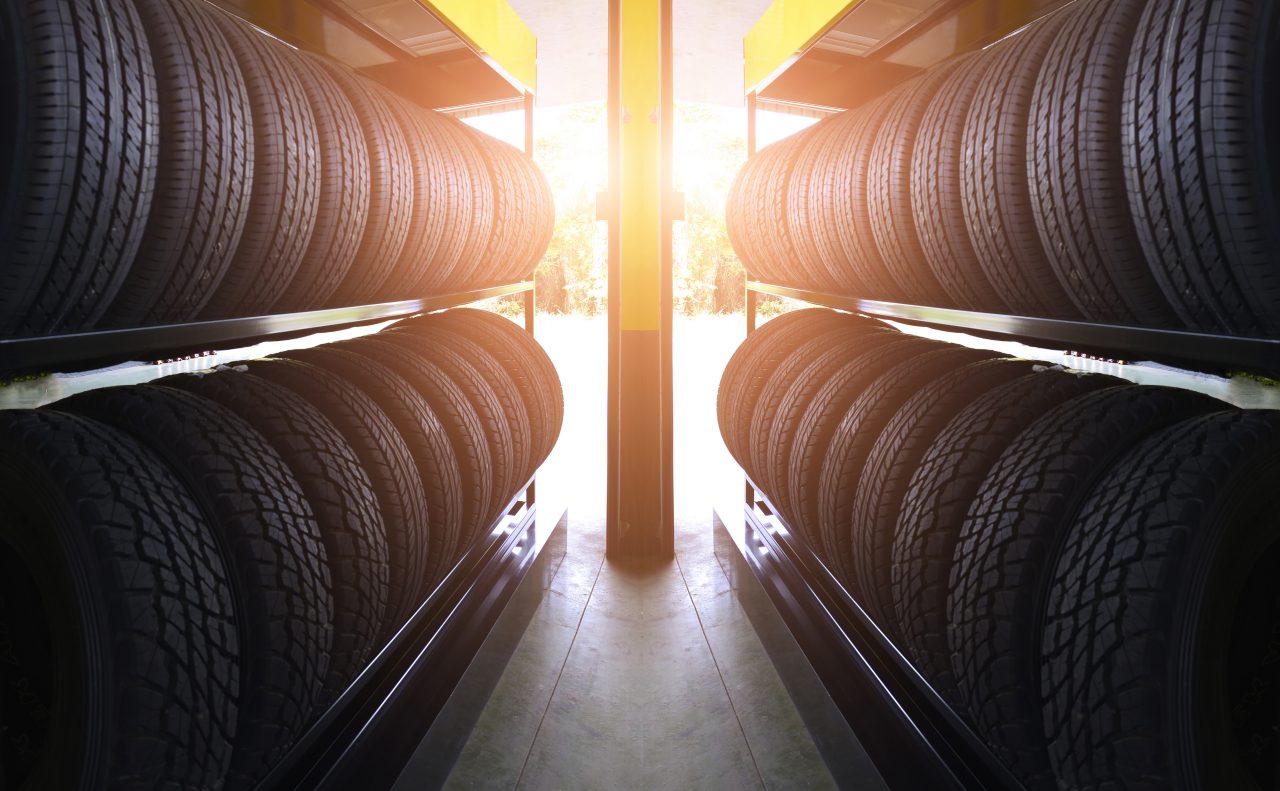
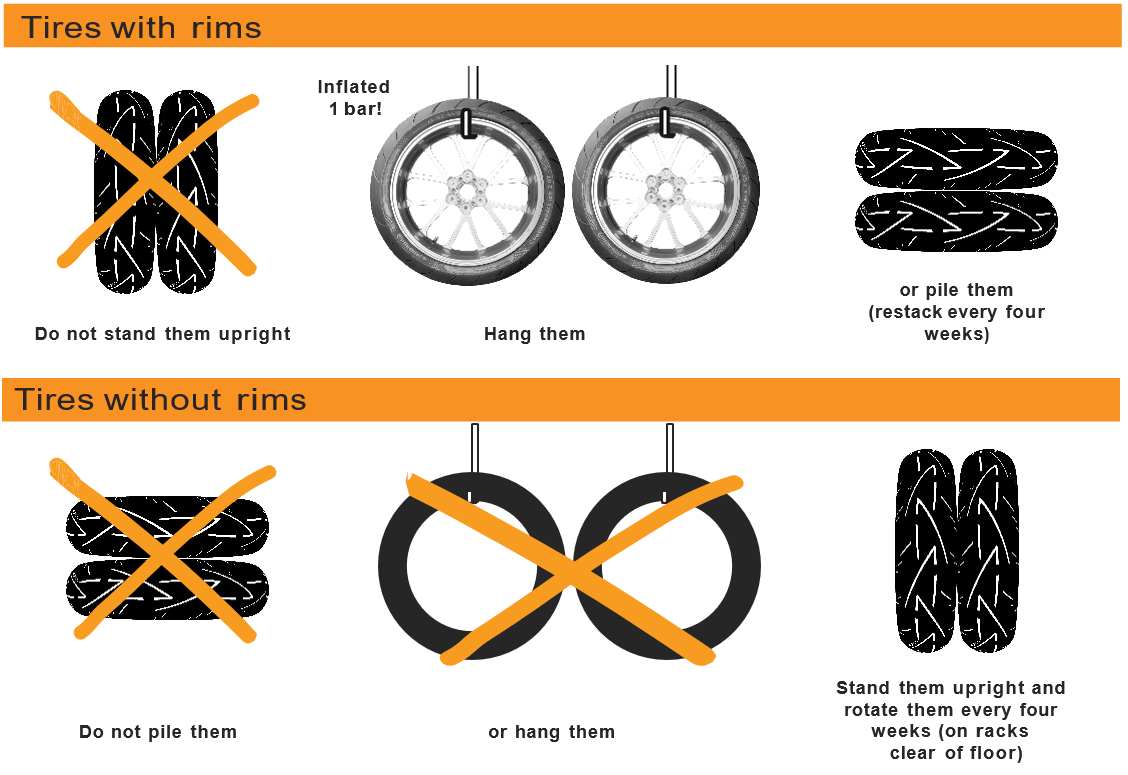
You have three options for how to store your tires:

The best option is standing, as it puts less stress on the tires. If you must stack, try not to stack too high. You want to avoid it tipping and damaging the tires.
Tires mounted on rims? Stacking is actually preferable in this case. Another great option for tires on rims is hanging them from tire racks or hooks. Never hang unmounted tires as this can distort and damage them.
A properly stored, unused car tire up to 5 years old can be sold as a new tire, if no local legal regulations are opposed to it. Continental recommends that all tires that are over 10 years old (as shown on the tire’s date stamp) should be replaced with new tires. The same guideline applies to motorcycle and scooter tires
Preferred positions are shown below:
If possible, store the vehicle on the main stand or on a motorcycle jack to remove all weight from the tires and cover them to protect them from environmental exposure.
If the vehicle cannot be lifted from the storage surface, completely unload the vehicle, so minimum weight will rest on the tires. The storage surface should be firm, reasonably level, well drained and clean.
In cases where the tires will be supporting the vehicle, it is permissible to inflate the tires to the maximum pressure listed on the sidewall. Be sure to return the inflation pressure to the recommended usage pressure before operating the vehicle.
It is also recommended that the vehicle be moved every month to minimize ozone cracking in the contact area and also to minimize a "flat spot" from developing. If the tires do develop "flat spots," they will usually disappear in a short period of service.
Tires will age. But these tips will help extend their life. If you want to make sure that the storing of your tires is in professional hands we would recommend to let them be stored at your tire dealer. And remember: It’s a great idea to get your tires checked by a tire professional before they are mounted onto your vehicle again for another good season of driving.