Curvy rides
Read more




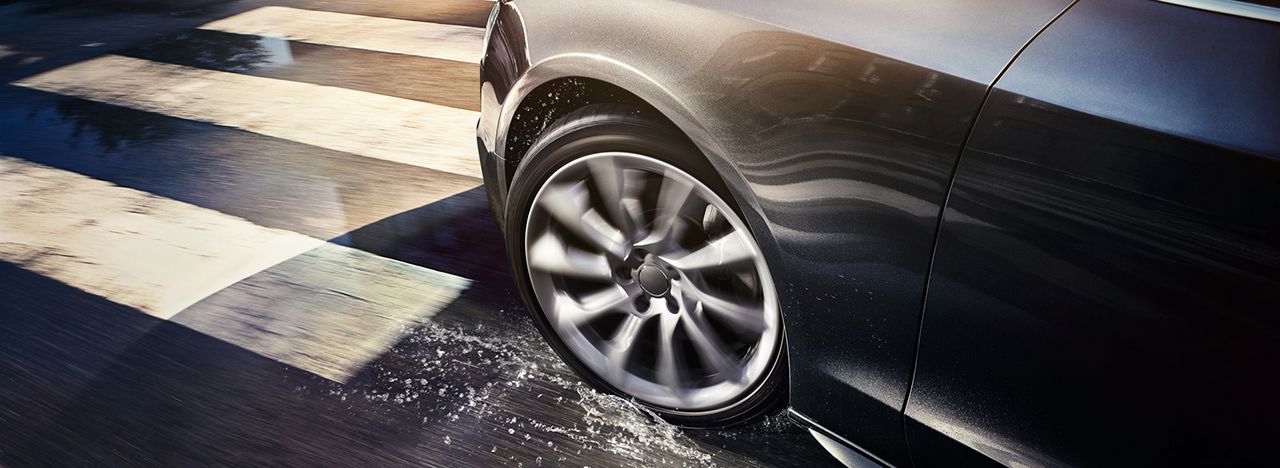
Tires on public roads are legally required to have a tread pattern. The primary job of the tread pattern is to expel water, which can affect the contact patch with the road in wet conditions, and to provide grip and traction.
When driving on wet roads at high speed, a wedge of water can build up between the tire and the road surface. The tire loses road contact, and the vehicle is no longer responsive to steering. This phenomenon is known as aquaplaning or hydroplaning.
Aquaplaning, also known as hydroplaning, is a dangerous driving situation where your tires lose contact with the road surface due to a layer of water. This typically happens when water builds up faster than your tires can disperse it, causing your vehicle to “float” and lose traction. Aquaplaning is different from regular skidding because, in this case, the tires are not touching the road at all – they’re gliding on water.
Aquaplaning is most likely to happen during heavy rain , when puddles form, or on roads with deep ruts and poor drainage. The risk increases with different factors. Understanding these risk factors is key to staying safe:
Driving habits
Driving at higher speeds gives your tires less time to disperse water, making it easier for a layer of water to build up between the tire and the road. Sudden braking and accelerating on wet roads can trigger aquaplaning.
Tire condition
Incorrect tire pressure (underinflation) and wide, low-profile tires can increase the risk. Also, worn tires with shallow tread (near the 1.6 mm/0.06 in legal limit) are far less effective at clearing water.
Vehicle weight
Lighter vehicles may aquaplane more easily, as they exert less pressure on the tires. However, heavier vehicles are not immune – worn tires or deep water can still cause loss of traction.
Pavement type
Smooth or worn road surfaces are more prone to water buildup, while rougher surfaces may help channel the water away.
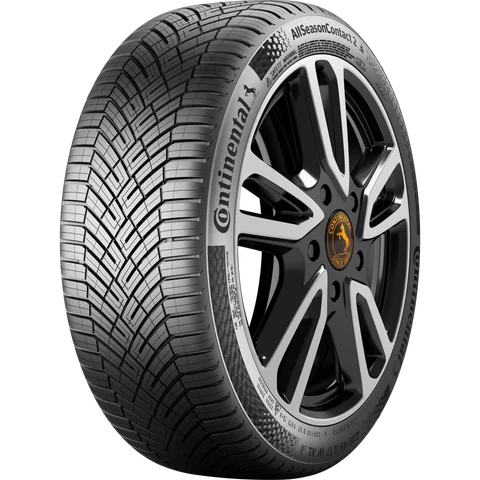
You can’t control the weather. But you can be prepared.
View detailsRecognizing aquaplaning quickly is crucial for your safety. Look out for these warning signs:
If you notice any of these symptoms, act immediately to regain control and avoid potential accidents.
Taking proactive steps can greatly reduce your risk of aquaplaning. Follow these best practices:
New tires are capable of dispersing up to 30 liters (almost 8 gal) of water a second at 80 km/h (approx. 50 mph). But the depth of the tire tread wears down over the course of regular usage. Consequently, tires disperse significantly less water as the depth of the tire tread decreases.
If car tires only have a tread depth of 1.6 mm (0.06 in), for example, then water displacement is effectively and dramatically reduced. With a remaining tread depth of 3 mm (0.12 in), tires can still retain a high amount of their water displacement capability.
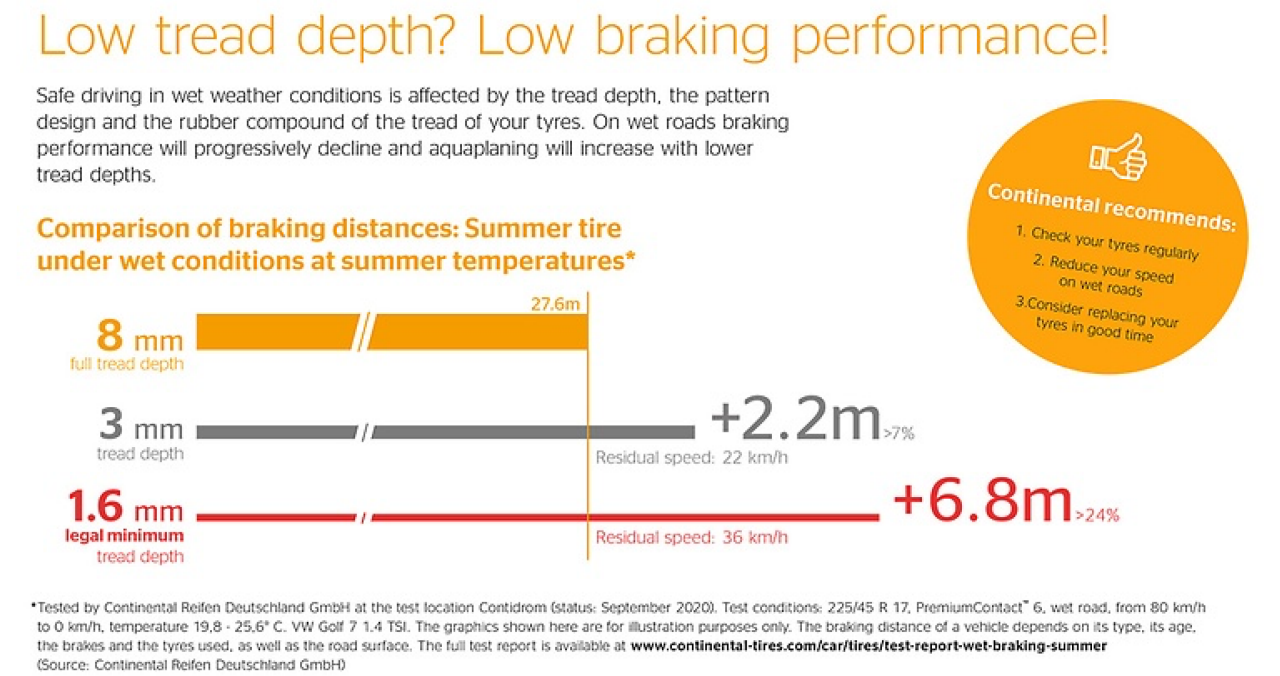
After this point, the risk of hydroplaning increases dramatically. In addition, a diminished tread also affects braking performance. The more worn the tread on a car’s tires becomes, the longer it takes to come to a complete stop, as test results show.
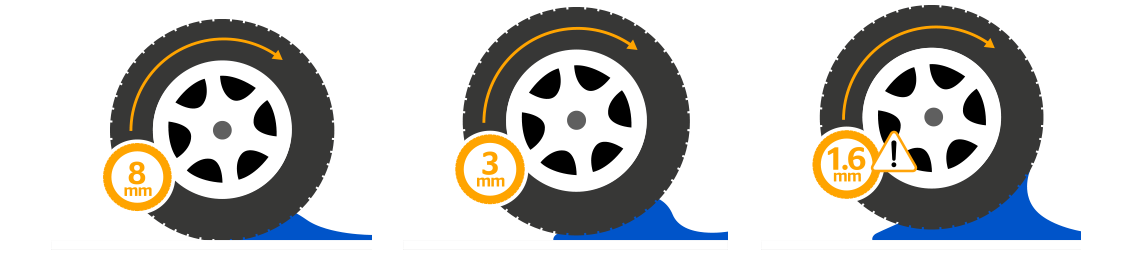
In a test performed at Continental’s test location Contidrom, the braking distance increased by 6.8 meters (22 ft) on tires with the legal minimum tread depth of 1.6 mm (0.06 in), compared to the full thread depth of 8 mm (0.31 in). Tires with a 3 mm (0.12 in) tread only took 2.2 meters (7.2 ft) longer to come to a full stop.
If you find yourself aquaplaning, follow these steps to stay safe:
Whether your tires are new or old, drivers should always slow down on wet road surfaces to reduce the risk of aquaplaning.
If aquaplaning should occur – which is still possible depending on weather and road conditions that a driver cannot prevent – drivers are advised to immediately take their foot off the gas pedal and depress the clutch. Avoid moving the steering wheel or braking suddenly.
However, if there is a danger of a collision or severe accident, the emergency brake should be initiated at once. In most cases, the rear wheels will still have enough grip to slow the vehicle.
As soon as the tires are back in contact with the road and traction is regained, it should be safe to continue driving at reduced speed.
Maintaining the manufacturer’s recommended tire pressure is crucial for optimal safety and performance, especially in wet conditions. Under-inflated or over-inflated tires can compromise the contact with the road and increase the risk of aquaplaning.
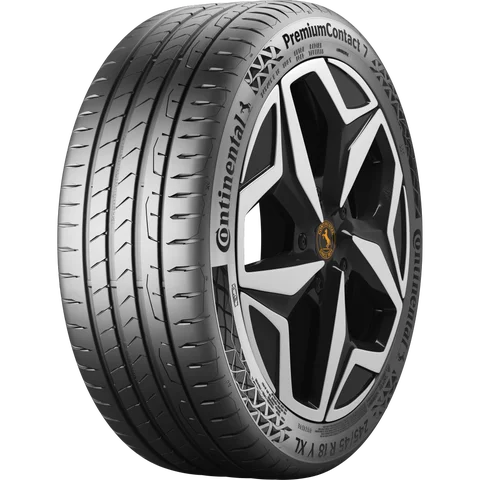
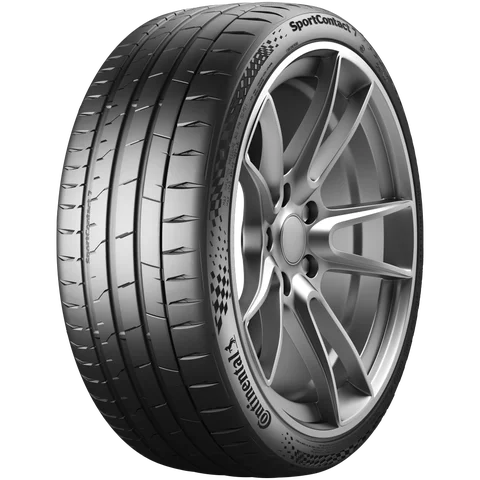
Tires designed for wet weather typically feature tread patterns that efficiently channel water away from the contact patch. A directional tread is V-shaped or arrow-like and quickly pushes water out from under the tire – which makes it more capable to resist aquaplaning. Asymmetric tread patterns also have a good grip in wet conditions. Good to know: Especially the inner tire tread is responsible for water displacement.