Tire pressure
Read more




Wheel alignment, a critical aspect of vehicle maintenance, ensures that your car’s wheels are set in the optimum position as specified by the manufacturer. Proper alignment not only extends tire life and improves handling but also increases fuel efficiency. To achieve the ideal tire orientation on the road, the process involves adjusting wheel angles, including camber, toe, and caster.
Wheel alignment – sometimes called "tracking" – is a mechanical adjustment of your vehicle’s suspension system, not the wheels themselves. It is the process of adjusting the angles of the wheels so they are set to the car manufacturer's specifications. This ensures that the vehicle travels straight without pulling and that the tires maintain optimal contact with the road surface.


Tire wear and longevity
Correct alignment prevents uneven tread wear, significantly extending the lifespan of your tires and ensuring consistent performance over time.
Fuel efficiency and performance
Regular alignment checks reduce rolling resistance to boost fuel economy and prevent expensive mechanical repairs, keeping your car safe.
Safety and vehicle control
Proper tire alignment ensures precise steering response and maximizes vehicle stability for a safer, more controlled driving experience.
It's important to know when your vehicle needs its wheels aligned to maintain optimal performance. Common indicators include:
Regular tire checks—such as those performed during the annual vehicle inspection—can help spot uneven wear early, which is frequently linked to wheel alignment issues.
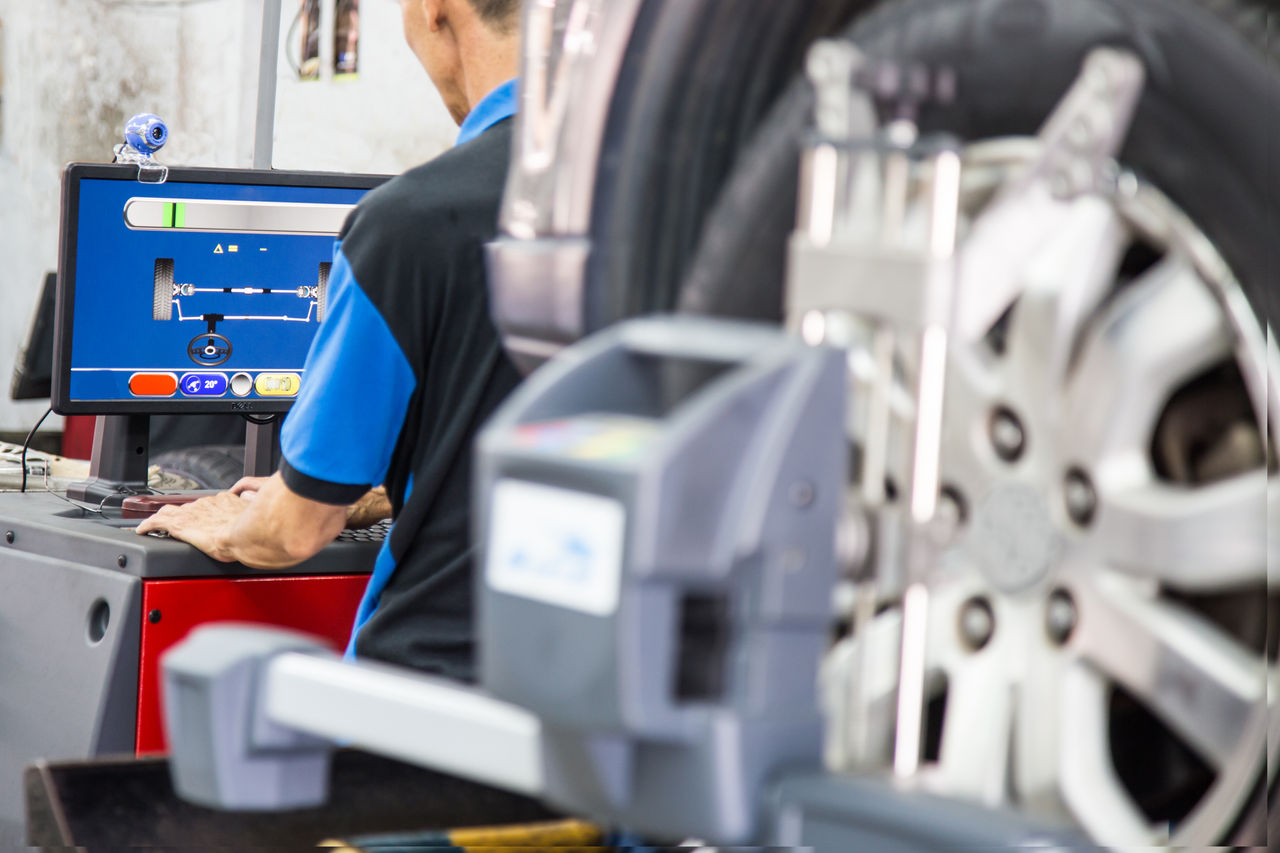
Adjusting the camber, toe,and caster during an alignment affects not only the driving experience but also thevehicle efficiency. Proper alignment, as performed by certified experts, reduces rolling resistance, which canimprove fuel or energy efficiency.
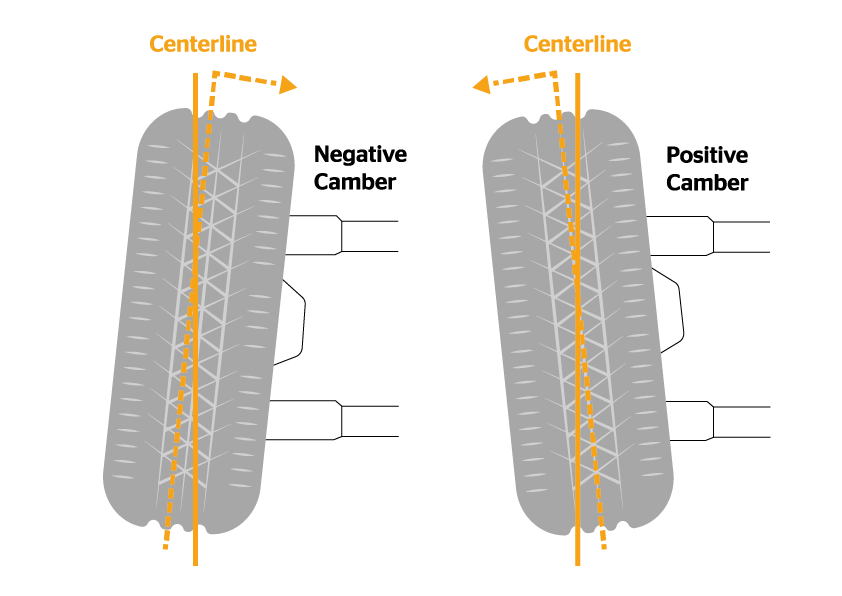
This is the angle of the tire relative to the vertical direction of the vehicle when viewed from the front or rear. Camber can be positive or negative and is measured in degrees and minutes. Positive camber is when the top of the tire is tilted away from the vehicle. It affects traction, tire wear and handling.
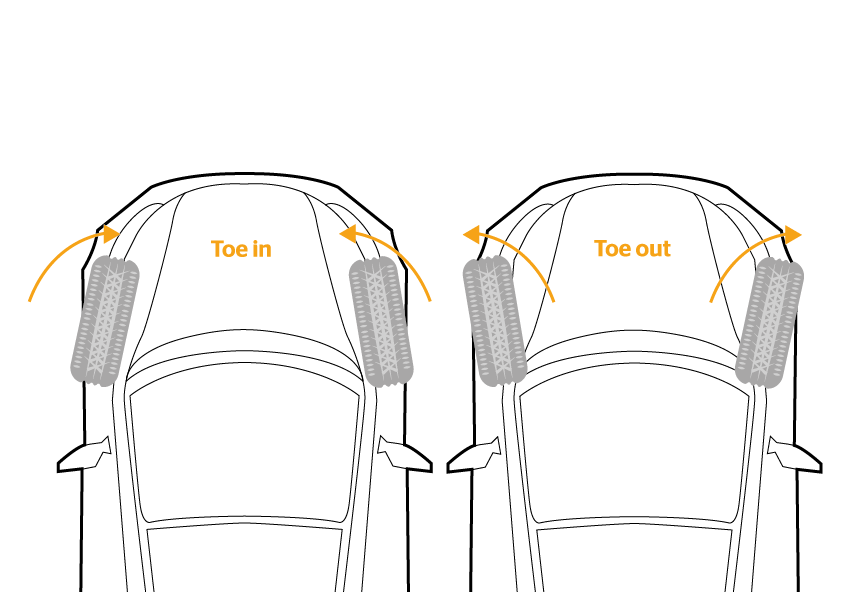
The toe is the direction in which the tires point relative to each other when viewed from above. If the tires point inward at the front, it's called "toe-in," and if they point outward, it's called "toe-out." Toe settings affect tire wear and how the vehicle tracks on the road. Correct toe alignment is crucial for preventing “scrubbing,” which causes rapid tread wear.
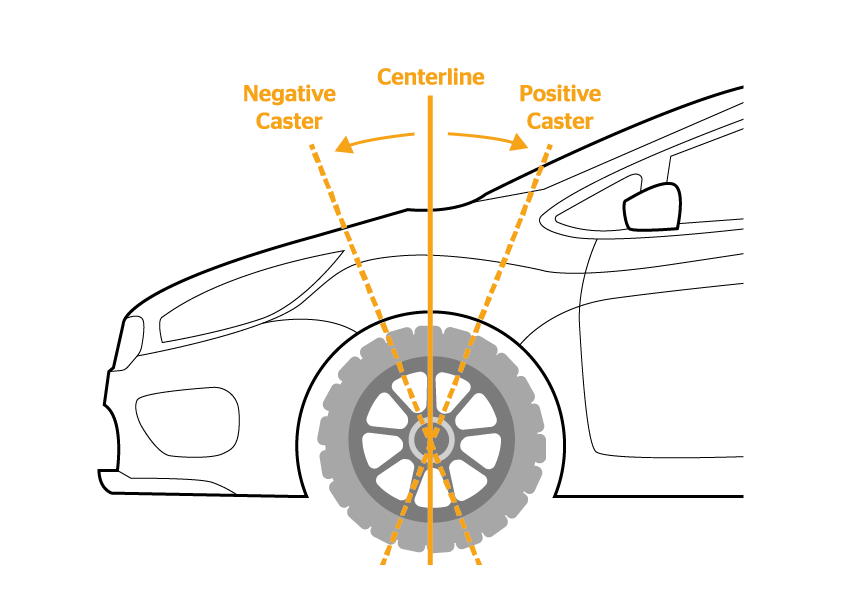
This is the angle of the steering axis relative to an imaginary vertical line through the center of the wheel when viewed from the side. Positive caster helps improve steering stability, self-centering of the steering-wheel, and cornering.
Modern vehicles almost always require a four-wheel alignment because even though only the front wheels steer, the rear wheels still influence handling. As a result, both front-wheel alignment (camber, caster, and toe) and rear-wheel alignment (camber and toe) are checked to ensure optimal performance, even though rear adjustments are limited on some models.
Older cars with solid axles typically needed only a basic front-end alignment, whereas today’s independent suspension systems demand a more comprehensive approach for safety and reduced tire wear.
To maintain optimal safety, you should have your wheel alignment checked at least once a year. However, immediate inspection is necessary if you notice your vehicle pulling to one side, an off-center steering wheel, or uneven tire wear.
Additionally, it is a professional best practice to verify alignment whenever you install new tires or after hitting a significant road hazard like a deep pothole or curb.
Regular wheel alignment checks and maintenance can prevent costly repairs and replacements down the road. This practice ensures continued vehicle safety and performance, as well as a commitment to efficient vehicle operation.
When wheels are misaligned, the tires do not roll smoothly – instead, they "drag" across the pavement. This leads to excessive wear on one side of the tread. Keeping your alignment in check ensures the tread wears down evenly, potentially adding thousands of miles to the life of your tires.
Misalignment increases rolling resistance, meaning the engine has to work harder and burn more fuel or energy to move the car forward. Proper alignment reduces this resistance, contributing to better fuel/energy usage and lower CO2 emissions.
A properly aligned vehicle is more predictable. It stays in its lane without constant correction and responds accurately to steering inputs, which is vital during emergency maneuvers.
Proper wheel alignment prevents a "domino effect" of mechanical damage. Misaligned wheels place constant, uneven stress on your vehicle’s steering and suspension systems. By correcting these angles early, you protect expensive components like ball joints, tie rods, and wheel bearings from premature wear.
A routine alignment check is a small investment that prevents costly, major repairs to your vehicle's chassis down the road.
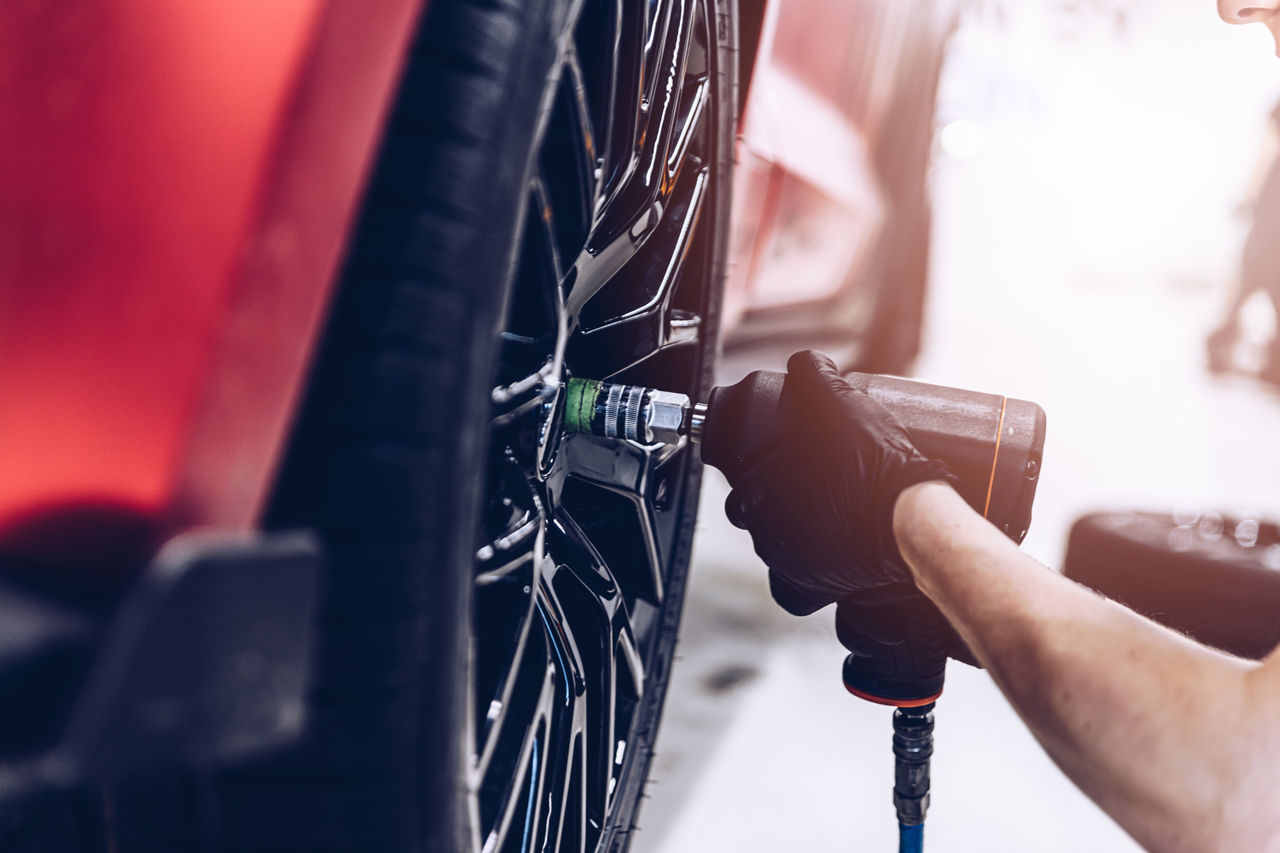
"Proper wheel alignment enhances driving safety while also optimizing tire mileage and fuel consumption
Eugen Geyer, TCS Product Services PLT EMEA
It is common for drivers to confuse these two services. Wheel alignment deals with the angle of the tires and their relationship to the suspension, whereas wheel balancing corrects the weight distribution within the tire and wheel assembly. If your car pulls to one side, you likely need an alignment. If the steering wheel vibrates at high speeds, you likely need your wheels balanced.
No. Wheel alignment should be performed by a professional with the proper equipment to ensure accurate and safe alignment. Modern vehicles require high-precision laser sensors and specialized alignment racks to ensure the settings meet manufacturer specifications.
Under normal conditions, a front-wheel or four-wheel alignment takes about 45 to 60 minutes. However, it may take longer if suspension parts are rusted or require replacement before the adjustment can be made.
Yes. To protect your investment, we recommend have an alignment check when installing new tires. This ensures your new set doesn’t start wearing unevenly the moment you leave the shop.
Yes, hitting a pothole or other road hazard can knock your wheels out of alignment instantly, potentially damaging your steering linkage as well.
There isn’t a fixed interval that applies to all drivers. In normal driving conditions on well‑maintained roads, wheel alignment usually doesn’t need to be checked regularly. It’s generally recommended after events that can affect alignment—such as hitting a pothole or curb—or if you notice uneven tire wear, steering pull, or an off‑center steering wheel. In harsher driving conditions or on poorly maintained roads, more frequent checks may be advisable.
Regular wheel alignment checks and maintenance can prevent costly repairs and replacements down the road. It is recommended to check wheel alignment annually or after any significant impact or the purchase of new tires. This practice ensures a continued vehicle safety and performance as well as commitment to environmental sustainability.